You know that buzz you feel after your morning brew, heart ticking a little faster, mind sharper? That’s caffeine blocking adenosine, your body’s natural brake for nerve activity. With that brake off, adrenaline surges, your heart responds, and you’re wide awake.
It kicks in within 15 minutes and can last hours, depending on your cup and your genes. But not every heartbeat spike is the same, some coffees and bodies react much more strongly.
Table of Contents
Why does coffee increase heart rate?
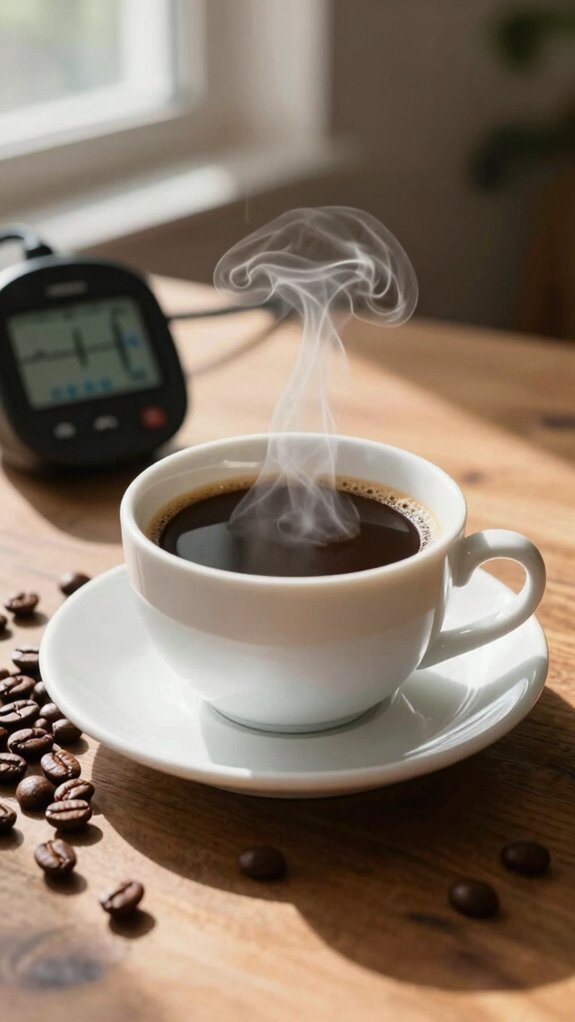
When you sip that morning brew, caffeine quickly gets to work, usually within 15 to 45 minutes, revving up your heart rate by blocking adenosine receptors, the chemical that calms your nervous system, and kicking your adrenal glands into gear to release adrenaline and noradrenaline.
This natural stimulant amps up alertness but can also cause palpitations, especially if you’re sensitive or drink too much.
Regular coffee lovers often build tolerance, so their heart rate doesn’t spike as much.
But if you’re an occasional drinker, that same cup might leave you feeling jittery or fluttery.
Genetics, medications, and even pregnancy affect how long caffeine sticks around, anywhere from 1.5 to 9 hours, so listen to your body.
How caffeine spikes adrenaline and blood pressure
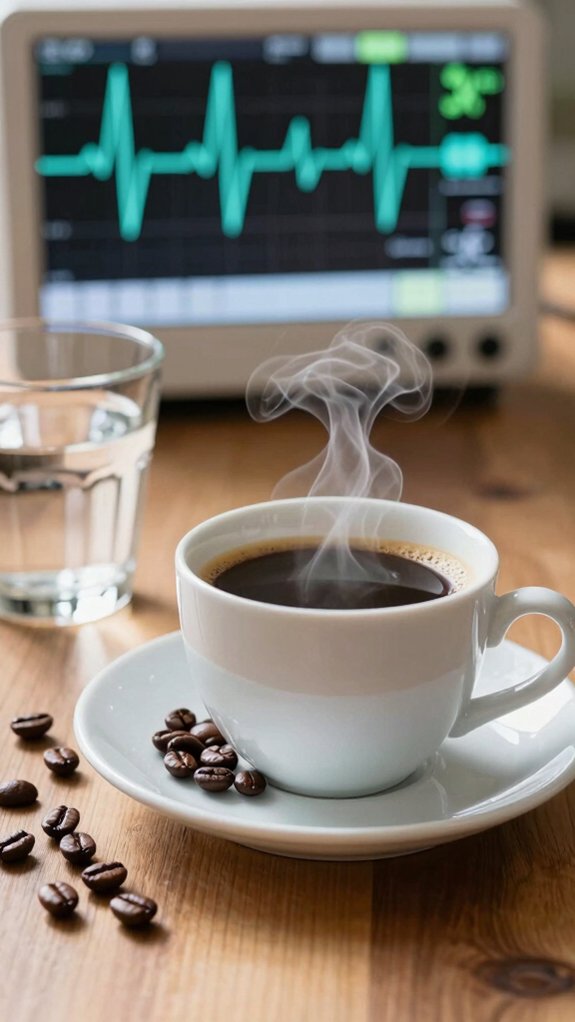
That jittery, wired feeling after your morning cup? That’s caffeine revving your sympathetic nervous system. It blocks adenosine receptors, spiking adrenaline within 30–60 minutes.
This surge boosts heart rate and blood pressure, raising systolic and diastolic levels by several mm Hg in some. Adrenaline increases cardiac contractility and causes vasoconstriction, making your heart work harder. Effects last hours, thanks to caffeine’s 4–5 hour half-life (though it ranges from 1.5–9 hours).
Individual responses vary widely, genetics, medications, or habits like smoking can amplify or mute the effect. So while one person feels palpitations, another feels nothing. Know your body. Listen closely.
Which coffees spike heart rate more?
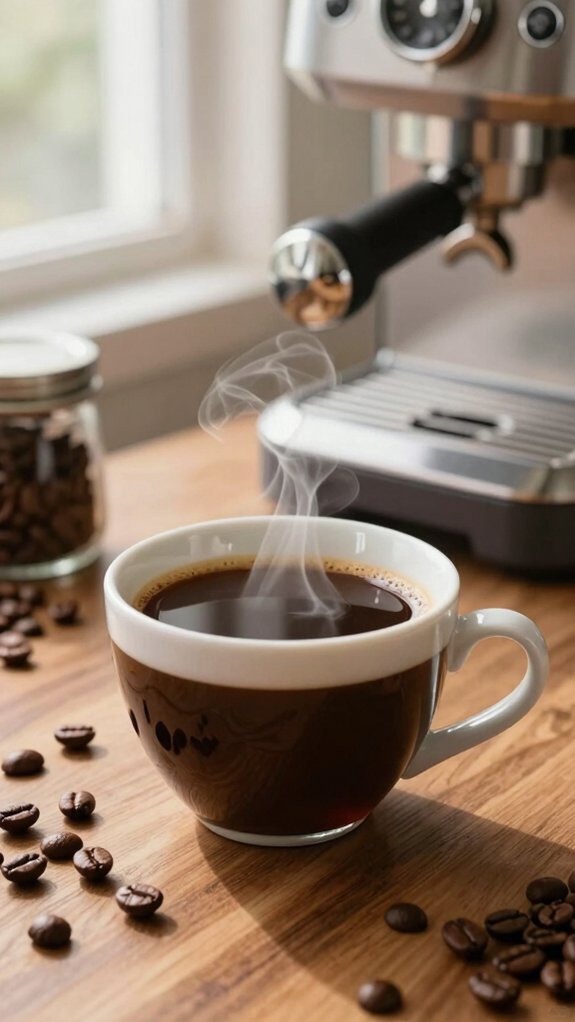
Sometimes, the coffee you choose can make a real difference in how much your heart races after that first sip, especially if you’re sensitive to caffeine.
Which Brew Packs More Punch?
It’s all about caffeine content. Espresso and other concentrated coffee forms deliver more caffeine per ounce than drip, spiking heart rate faster.
Cold brew often has higher caffeine per serving due to strong ratios and big cups, so it can hit harder than standard coffee. Energy-coffee blends with added stimulants (like guarana or extra shots) can contain 300–600 mg of caffeine, leading to longer heart-rate increases.
Decaffeinated coffee? With only 2–15 mg per cup, it rarely causes a spike.
What raises risk: dose, genetics, medications
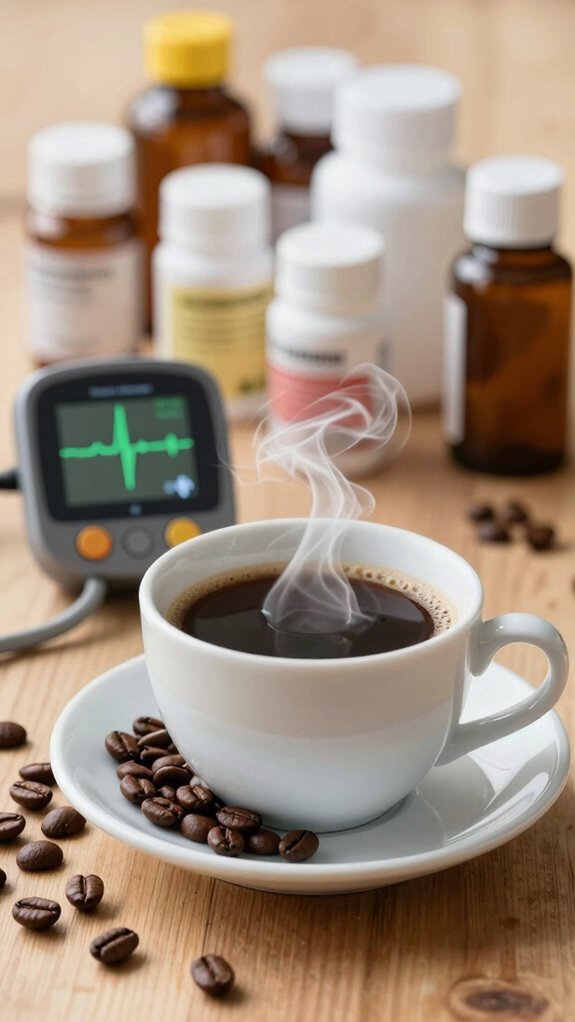
Your heart racing after coffee isn’t just about what you’re drinking, it’s also about how much you’re having, your DNA, and even the meds in your medicine cabinet.
Caffeine intake matters: Over 400 mg (about 4 cups) can spike heart rate and slow recovery.
Genetics play a role: If you’re a slow metabolizer due to CYP1A2 gene variants, caffeine lingers, up to 9 hours, amplifying effects.
Medications like birth control or antidepressants can slow clearance, boosting caffeine’s impact.
Stimulant co-use (e.g., ADHD meds) increases arrhythmia risk.
If you have atrial fibrillation or heart issues, even moderate doses may trigger symptoms, listen to your body.
Brewing tweaks to reduce caffeine load
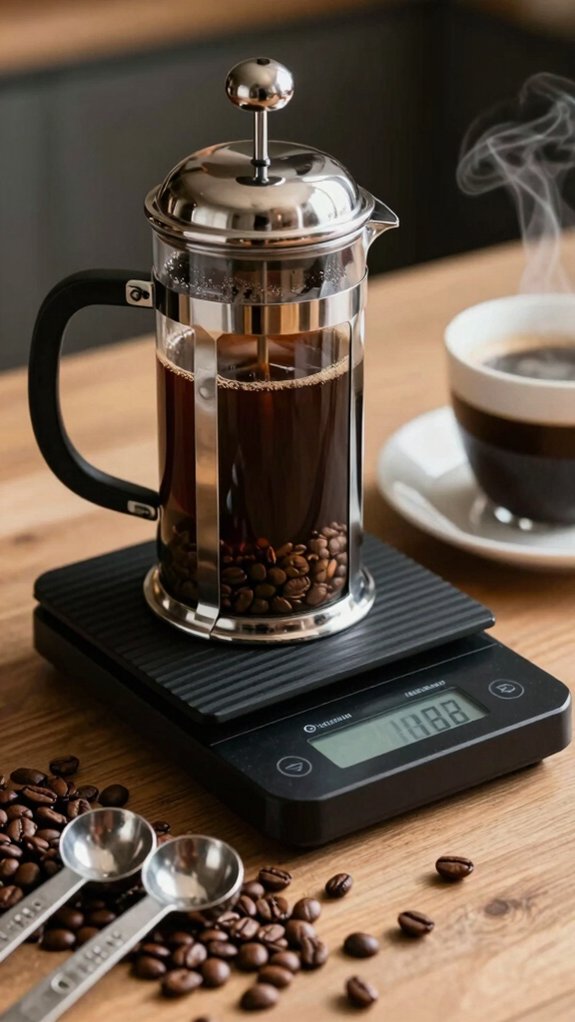
If you’re looking to enjoy your daily brew without the jitters, adjusting how you brew can make a real difference in your caffeine intake.
Try these simple tweaks:
- Choose a dark-roast or blend in decaffeinated beans, darker roasts lose mass during roasting, reducing caffeine per scoop.
- Use a coarser grind and shorter extraction time, like a 2–3 minute pour-over, to pull less caffeine.
- Opt for a smaller serving size (6–8 oz) and brew with a paper filter, it traps compounds and slightly lowers caffeine versus French press.
These changes can cut caffeine by up to 50%, per USDA data, helping you sip smarter.
How to calm coffee jitters fast
When the caffeine hits a little too hard and your heart starts racing, don’t panic, there are fast, science‑backed ways to steady your pulse and reclaim your calm.
Calm Your Coffee Jitters Fast
First, drink water and eat a small carb‑protein snack, like toast with peanut butter. This slows caffeine absorption and helps decrease heart rate within 20–45 minutes.
Next, try slow breathing: six breaths per minute for a few minutes to lower sympathetic activity.
A 5‑10 minute brisk walk also helps redistribute caffeine and burn off adrenaline. Swap your next cup for decaf tea or warm water, no more caffeine today! If jitters or high heart rate persist, especially with chest pain, seek medical help.
When should I seek care after caffeine?
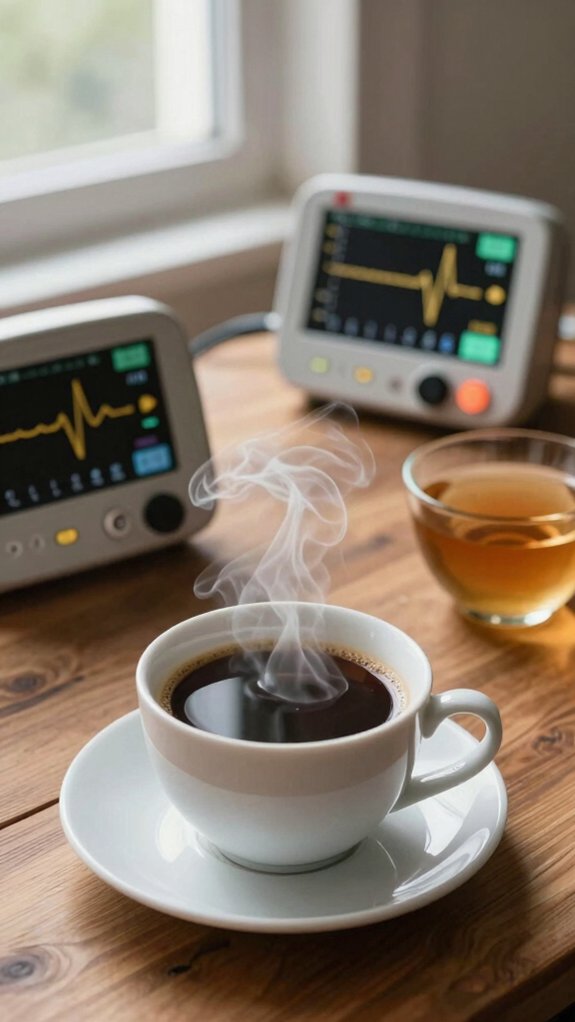
Though most of us can handle our morning brew just fine, there are times caffeine pushes our bodies too far, and knowing when to seek help could be lifesaver.
If you experience:
- Severe chest pain, fainting, or a rapid heartbeat after caffeine, seek urgent care, it could signal a life‑threatening issue.
- Persistent palpitations, lightheadedness, or near-fainting, even after stopping coffee, this might point to arrhythmia.
- Nausea, tremor, or high blood pressure after downing multiple energy drinks or caffeine pills.
Even if symptoms seem mild, like jitteriness or brief palpitations, back off and call your doctor if they linger.
Over 400mg of caffeine (about 4 cups) can overwhelm some, listen to your body.
Frequently Asked Questions
Is It Normal for Coffee to Raise Your Heart Rate?
Yes, it’s normal for coffee to raise my heart rate. Caffeine boosts adrenaline, which can make my heart beat faster. I usually feel it within minutes, but it’s typically harmless unless I’m overly sensitive or have an underlying condition.
How to Stop Heart Racing After Coffee?
My heart races, then slows, I sip water, breathe deep, and wait. Jittery buzz meets calm breath; panic fades as caffeine fades.
I skip stimulants, rest, and trust my body. It always evens out.
In Conclusion
Yes, coffee raises your heart rate mainly because caffeine blocks adenosine, kicking your nervous system into higher gear. I’ve felt that jittery buzz too, especially after a strong espresso. Interestingly, one study found 25% of people experience a noticeable heart rate increase of 10+ beats per minute within 30 minutes of drinking coffee.
Your genes, brew choice, and daily habits all shape your reaction. Stick to lighter roasts, sip slowly, and stay hydrated to smooth out the edge.