

According to the USDA, black coffee contains only 2 calories per 8-ounce cup, yet the average flavored coffee beverage from popular chains can pack anywhere from 200 to 500 calories-a staggering increase that catches many health-conscious coffee drinkers off guard. If you’ve ever wondered why your daily coffee habit seems to sabotage your weight loss goals despite coffee’s reputation as a nearly calorie-free drink, you’re asking the right question.
The truth is, plain brewed coffee is virtually calorie-free, but the syrups, creamers, milk, and sugar we add transform it into something entirely different. In this post, you’ll discover exactly what adds calories to your coffee, how much each common ingredient contributes, and practical strategies to cut back without sacrificing flavor-so you can enjoy your morning brew guilt-free.
Table of Contents
Why does plain coffee still have calories

Ever wondered why your black coffee isn’t truly zero calories? Plain coffee contains a tiny caloric footprint, typically 2–5 calories per cup, derived from the coffee beans themselves.
Soluble oils, trace sugars, and dissolved proteins extracted during brewing contribute these minimal calories. Factors like brew strength and bean type subtly influence the calorie count, with different methods yielding slight variations.
A shot of espresso might clock in around 3 calories, while a 12-oz cold brew could range from 5–10 calories. It’s essentially negligible for most diet considerations, but fascinating to understand the science behind your morning brew.
How many calories in black coffee
Wondering exactly how many calories are lurking in your daily black coffee? Black coffee contains just 2–5 calories per 8-ounce cup, a negligible amount that won’t derail your diet.
A shot of espresso clocks in around 3 calories, while Cold Brew typically sits at about 5 calories per 12-ounce serving. These minimal calories come from trace proteins, carbohydrates, and oils naturally present in coffee beans.
The catch? Added sugar transforms your zero-calorie beverage into a potential calorie bomb. So if you’re watching your intake, stick to plain black coffee and skip the sweeteners that can quickly escalate your caloric consumption.
What actually adds calories to coffee
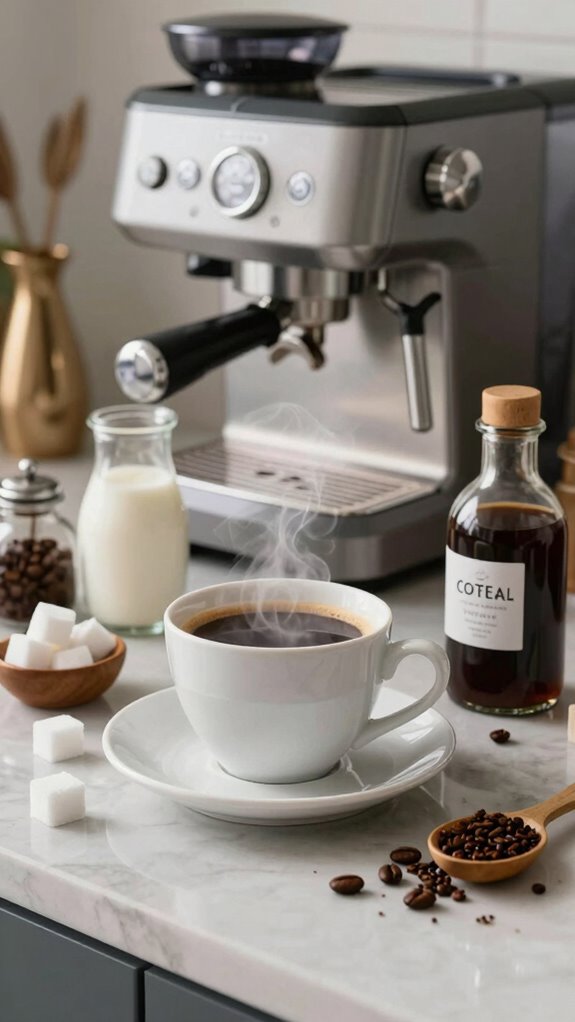
While black coffee starts out as a nearly calorie-free beverage, various additions can quickly transform your innocent morning brew into a calorie-dense drink. Let’s break down what actually adds calories to your coffee.
| Addition | Calories | Impact |
|---|---|---|
| Sugar | 16/tsp | High |
| Whole Milk | 18-20/tbsp | Moderate |
| Flavored Syrup | 20-50/pump | Significant |
| Whipped Cream | 50-100 | Very High |
| Non-Dairy Creamer | 30-50/serving | Substantial |
Coffee calories skyrocket when you add sugar, milk, flavored syrups, and toppings like whipped cream. A simple latte can jump from 2 calories to 180 calories with just a few additions. The culprits? Sweeteners, dairy, and flavor-enhancing extras that turn your low-cal drink into a potential meal replacement.
Brewing method, roast, and strength impact calories
Beyond the typical coffee add-ins, the brewing method, roast type, and coffee strength can subtly influence your cup’s calorie count. A double-strength brew or methods like espresso and French press extract more soluble solids, marginally increasing calories.
Paper-filtered drip coffee tends to have fewer dissolved fats compared to unfiltered brewing styles. Interestingly, lighter roasts can yield slightly more extractable solids per bean, while concentrated shots pack more calories per ounce.
Your brewing choices-from roast darkness to extraction technique-quietly shape those tiny caloric differences in your morning cup.
Milk, syrups, and toppings calorie comparisons
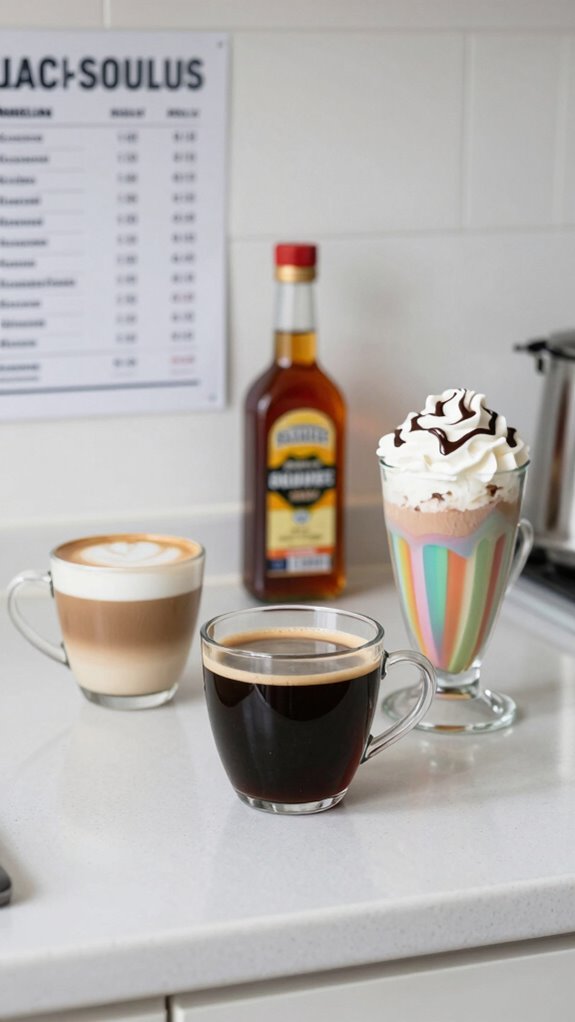
Most coffee lovers unknowingly transform their low-calorie brew into a calorie-packed beverage through common additions like milk, syrups, and toppings.
A tablespoon of whole milk adds 18–20 calories, while skim milk brings just 10 calories. Sugar compounds the calorie count-two teaspoons contribute about 32 calories. Flavored syrup pumps range from 20–50 calories each, quickly escalating your drink’s caloric content. Half-and-half adds roughly 40 calories per two tablespoons, and whipped cream introduces another 50 calories.
Combining these additions can easily push a simple coffee from zero to 200–400 calories, turning your morning pick-me-up into an unexpected dessert.
Does espresso, cold brew, decaf change calories
After exploring how milk and syrups can transform a simple coffee into a calorie-laden treat, you might wonder if different coffee brewing methods themselves affect calorie content. Spoiler alert: they don’t.
Whether it’s espresso, cold brew, or decaf, the calories in coffee remain remarkably consistent. A single espresso shot contains about 3 calories, while an 8 oz serving of cold brew or hot coffee ranges from 2-5 calories.
Decaffeination doesn’t change the calorie profile either. The brewing method might alter taste and strength, but it won’t significantly impact your calorie intake.
How to make lower calorie coffee drinks
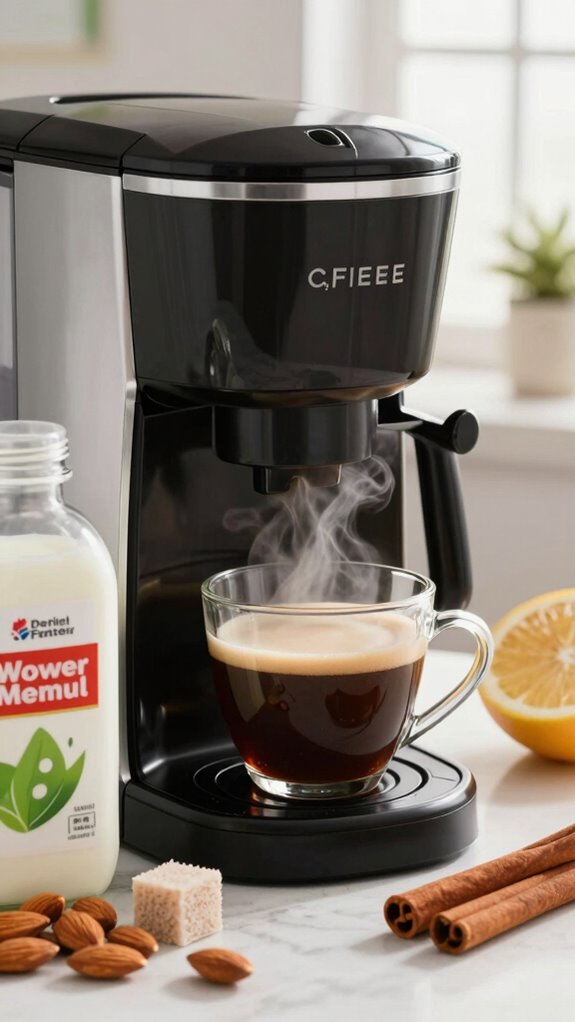
If you want to enjoy your coffee without guilt, making lower calorie drinks is easier than you might think.
I’ll show you how to transform your favorite coffee beverages by focusing on smart ingredient swaps and mindful preparation techniques.
With a few simple strategies, you can create delicious, lighter coffee drinks that won’t derail your nutritional goals.
Ingredients
When you’re looking to enjoy your favorite coffee without breaking the calorie bank, choosing the right ingredients can make a world of difference. Milk, cream, sugar, and syrups are the primary culprits adding unexpected calories to your morning brew. Non-dairy milks offer lighter alternatives, with unsweetened almond milk clocking in at just 7-8 calories per tablespoon.
| Ingredient | Calories (per tablespoon) |
|---|---|
| Whole Milk | 18-20 |
| Half-and-Half | 40 |
| Sugar | 16 |
| Flavored Syrup | 20-50 |
Smart swaps like skim milk or sugar-free syrups can slash 30-100 calories per drink.
Equipment
Level up your coffee game with the right equipment, and you’ll whip up lower-calorie drinks that don’t skimp on flavor. Here’s how to make coffee that’s both delicious and diet-friendly:
- Use a precise digital scale to measure coffee beans, ensuring you’re not over-extracting and adding unnecessary calories.
- Invest in a milk frother to transform low-fat or plant milks into creamy, aerated goodness without extra calories.
- Get a thermometer to steam milk perfectly between 60-65°C, creating microfoam that adds richness without volume.
These tools help you craft coffee drinks that are lean, mean, and totally delicious.
Instructions
Now that you’ve got the right equipment dialed in, let’s brew some low-calorie coffee magic that’ll satisfy your caffeine craving without derailing your diet. Check out this quick guide to crafting delicious, low-calorie coffee drinks:
| Ingredient | Low-Cal Option | Calories |
|---|---|---|
| Milk | Skim/Almond | 10/3 kcal |
| Sweetener | Stevia | 0 kcal |
| Creamer | Splash of milk | 10 kcal |
| Syrup | Skip/Spices | 0 kcal |
Pro tip: At home, you’ll control every calorie in your cup. Swap sugar and cream for smarter choices like cinnamon or a tiny splash of unsweetened almond milk. Your taste buds and waistline will thank you!
Frequently Asked Questions
What Makes Coffee Have Calories?
I’ll reveal coffee’s calories come from trace proteins, oils, and carbohydrates in the beans, but it’s minimal-just 2-5 calories per cup. Most calories actually come from what you add: sugar, milk, cream, or flavored syrups.
What Adds Calories to Coffee?
Let’s cut to the chase! Milk, cream, sugar, flavored syrups, and liquid creamers pack extra calories into my coffee. Each tablespoon or pump can add anywhere from 10 to 50 calories to my morning brew.
What Is the Coffee Loophole That Burns Calories?
The coffee loophole suggests black coffee’s minimal calories can boost metabolism and potentially aid fat burning without significantly disrupting intermittent fasting. However, I’d caution against relying on it as a primary weight loss strategy.
Is Coffee Really Calorie Free?
No, coffee isn’t truly calorie-free. A plain black coffee contains 2-5 calories per cup, derived from tiny amounts of proteins, carbs, and oils extracted during brewing. It’s so low-calorie that it won’t significantly impact most diets.
In Conclusion
Coffee’s calorie journey is like a flavor expedition-start pure, then customize mindfully. Understanding why coffee has calories empowers you to make informed choices that align with your health goals. Black coffee’s minimal 2-5 calories can quickly transform with sugary syrups, rich creamers, and sweet toppings, but by choosing wisely-skim milk, sugar-free options, spices-you’ll craft delicious, lighter drinks that satisfy without derailing your day.
Your coffee, your calories: navigate smartly and savor every sip without guilt. Whether you’re brewing at home or ordering out, being mindful of what adds calories helps you enjoy your favorite beverage on your terms. Ready to elevate your coffee experience? Check out our coffee machine reviews to explore smart, well-reviewed options that make crafting the perfect cup easier than ever.