
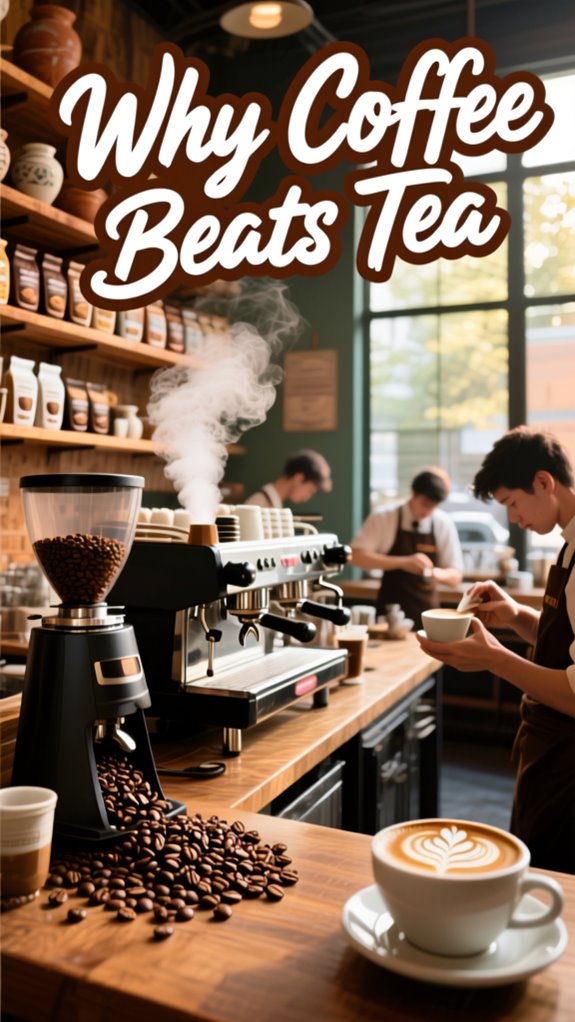
According to a 2023 study published in the European Journal of Preventive Cardiology, coffee drinkers who consume 2-3 cups daily have a 27% lower risk of cardiovascular disease compared to non-coffee drinkers. Yet millions still debate whether coffee truly outperforms tea as their go-to morning beverage.
If you’ve wondered whether coffee is actually better than tea-or if you’re trying to justify your coffee habit with science-you’re not alone. This post breaks down the health advantages, taste complexities, and brewing versatility that make coffee stand out. You’ll discover why coffee delivers more antioxidants per serving, how its flavor profiles surpass tea’s range, and what brewing methods unlock its full potential.
Table of Contents
Why coffee is better than tea?
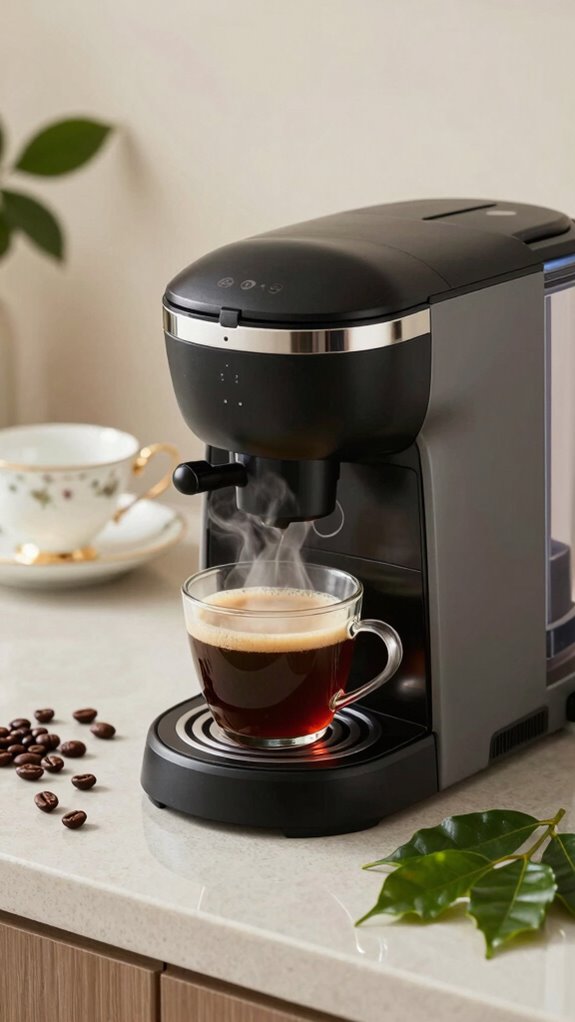
Coffee reigns supreme over tea, delivering a powerhouse of benefits that make it the ultimate morning companion. With its robust caffeine content, coffee provides a more intense alertness boost compared to tea, instantly energizing your day.
The health benefits associated with coffee are remarkable-packed with antioxidants like chlorogenic acids, it helps lower risks of type 2 diabetes, Parkinson’s disease, and dementia.
Beyond nutrition, coffee offers an unparalleled sensory experience with its complex flavor profile and diverse brewing methods. Whether you’re craving an espresso shot or a smooth cold brew, coffee adapts to your taste, making it the clear winner in the beverage world.
Is coffee healthier than tea overall?

While coffee’s robust advantages make it seem like the ultimate health champion, the reality of its overall healthiness is more nuanced. Coffee delivers powerful health benefits, but tea isn’t far behind. Let’s compare their wellness profiles:
| Coffee | Tea |
|---|---|
| Higher antioxidants | More diverse polyphenols |
| Stronger cognitive boost | Gentler energy support |
| Metabolic health benefits | Lower caffeine impact |
I’ve found coffee’s unique antioxidants like chlorogenic acid offer remarkable health advantages. However, tea’s gentler composition provides balanced wellness benefits. While coffee edges out tea in specific health markers, both beverages contribute positively to overall health. The key? Moderation and comprehension each drink’s distinct nutritional profile.
Does coffee taste better than tea?
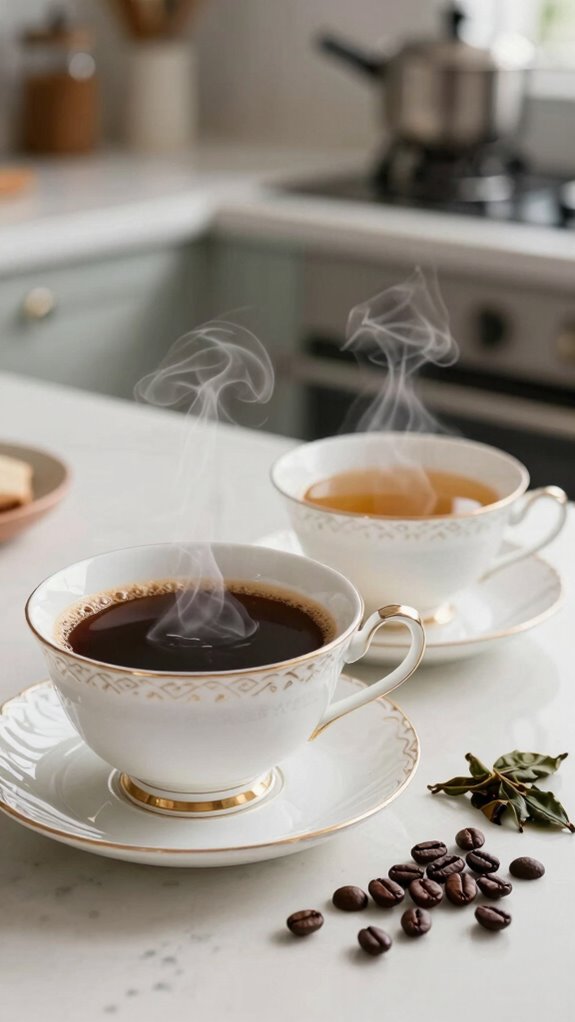
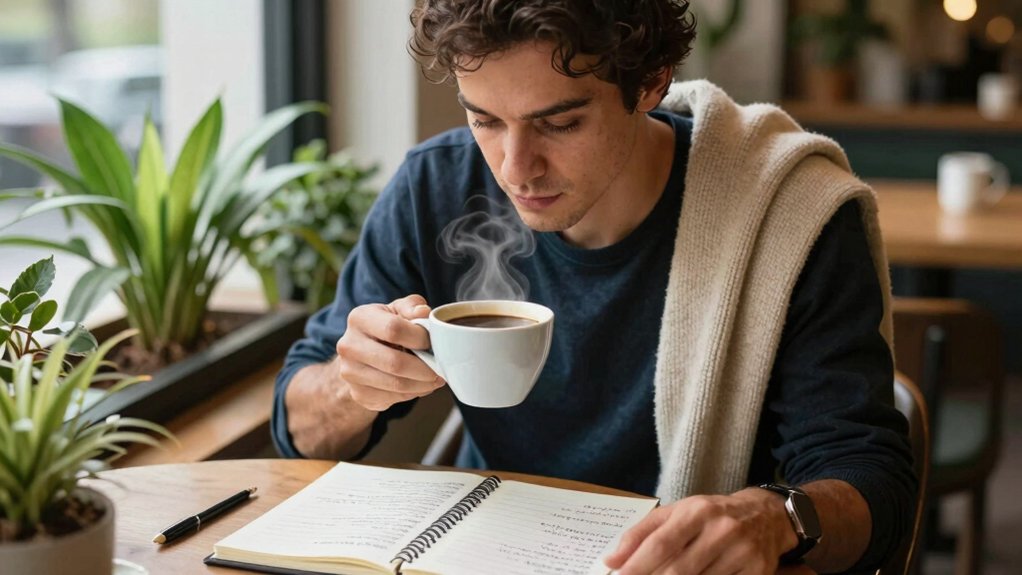
When it comes to taste, coffee undeniably trumps tea for many flavor-seeking enthusiasts, offering a more robust and complex sensory experience that tea struggles to match. Coffee’s stronger flavor comes from its rich, intense profile-ranging from fruity to chocolatey notes that dance across your palate.
The higher caffeine content further amplifies the taste perception, making each sip feel more vibrant and alive. Its complex brewing methods and bean origins create a depth of flavor that tea simply can’t compete with, delivering a fuller mouthfeel and more satisfying sensory experience that keeps coffee lovers coming back for more.
Coffee culture and producing countries influence taste
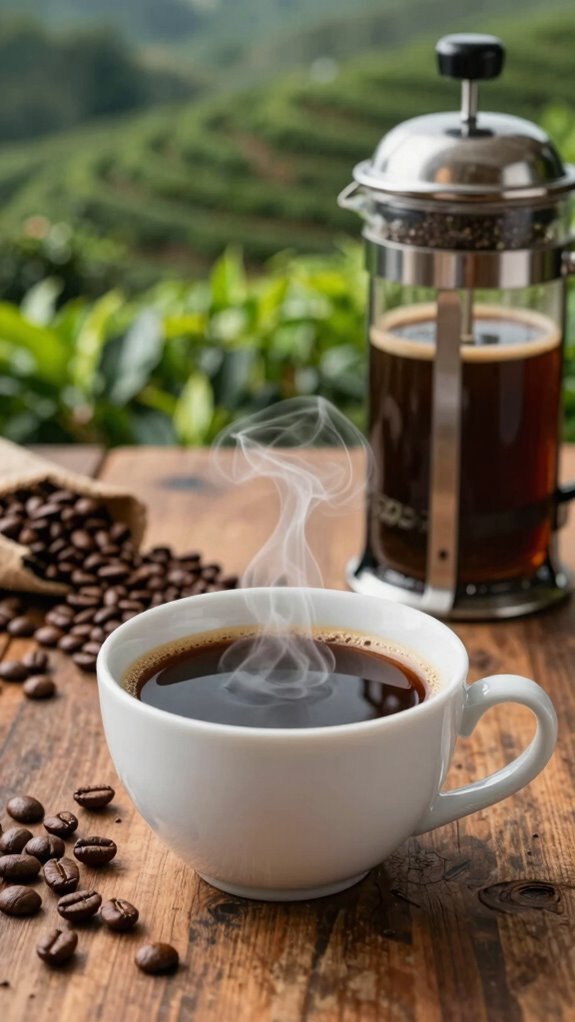
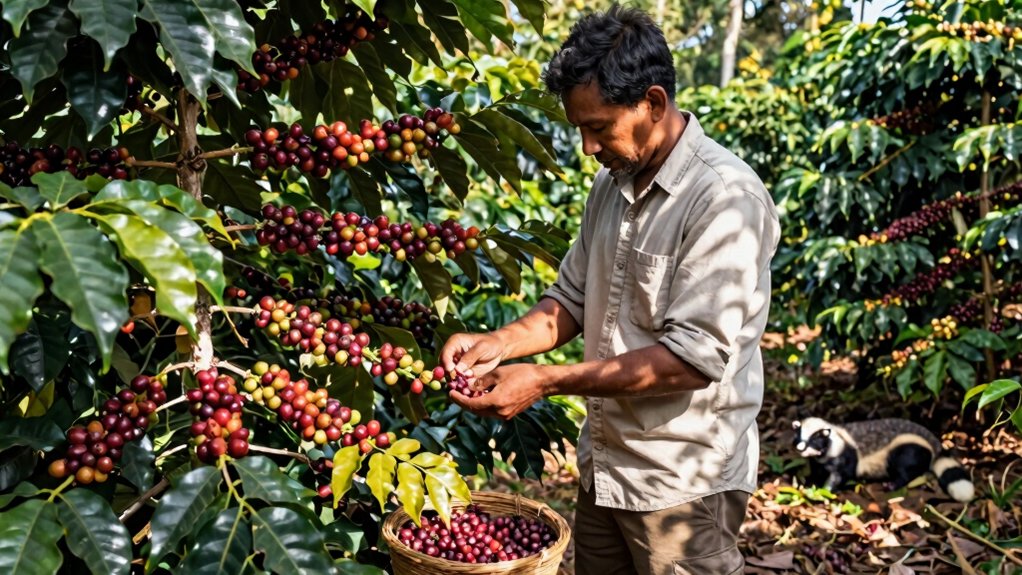
Delving into the world of coffee reveals how deeply a nation’s culture and geography shape its unique flavor profile, transforming each cup into a liquid narrative of its origin.
From Ethiopia’s fruity, floral beans to Brazil’s chocolatey and nutty varieties, the origin significantly impacts taste. Processing methods like natural or washed techniques further define a coffee’s character, while roast levels unlock different sensory experiences.
High-altitude Colombian farms produce distinctly different cups compared to lowland Vietnamese Robusta, proving that terroir plays a crucial role in crafting each coffee’s distinctive personality.
Your morning brew tells a global story.
Best coffee machines and smart brewing tips
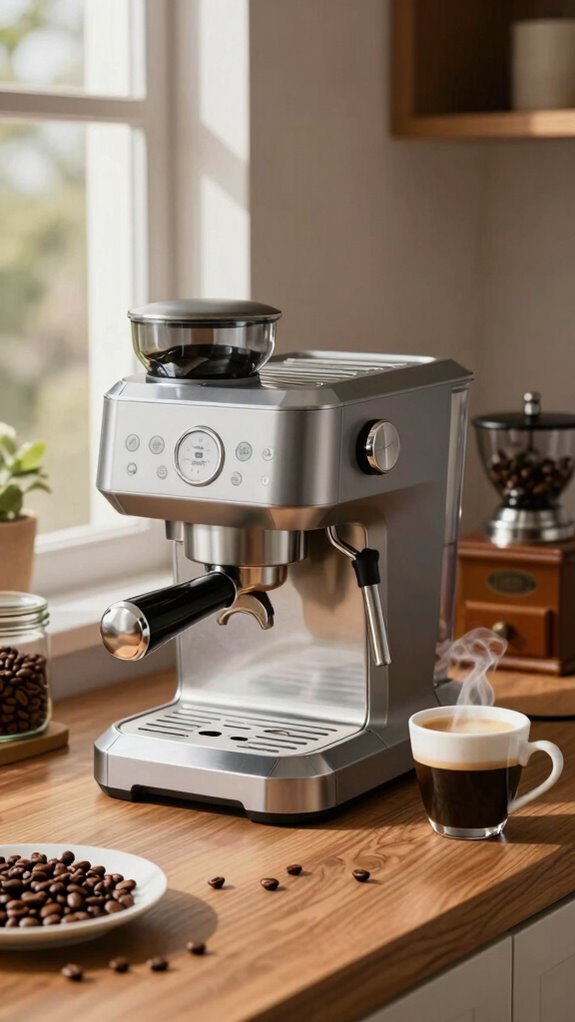
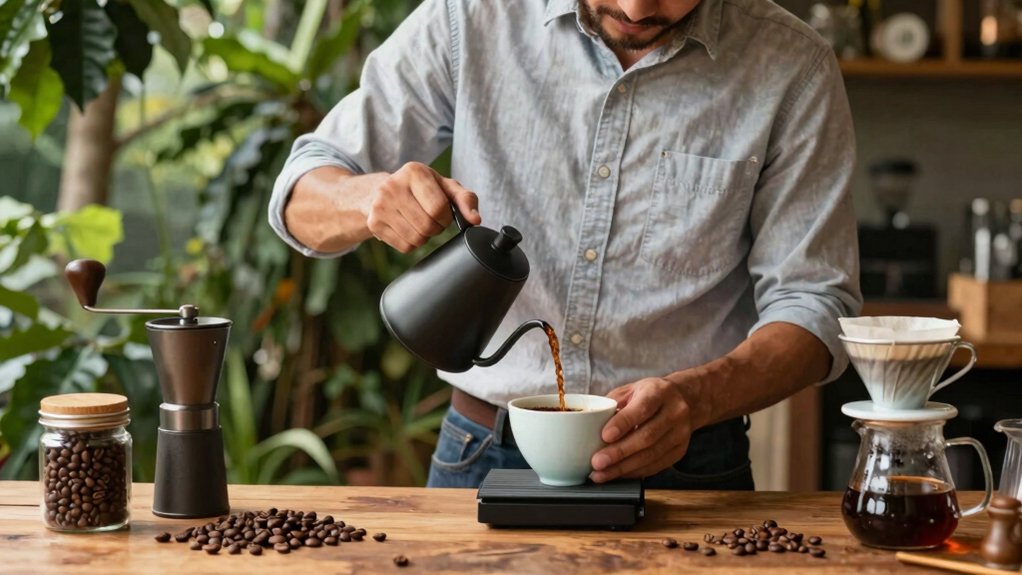
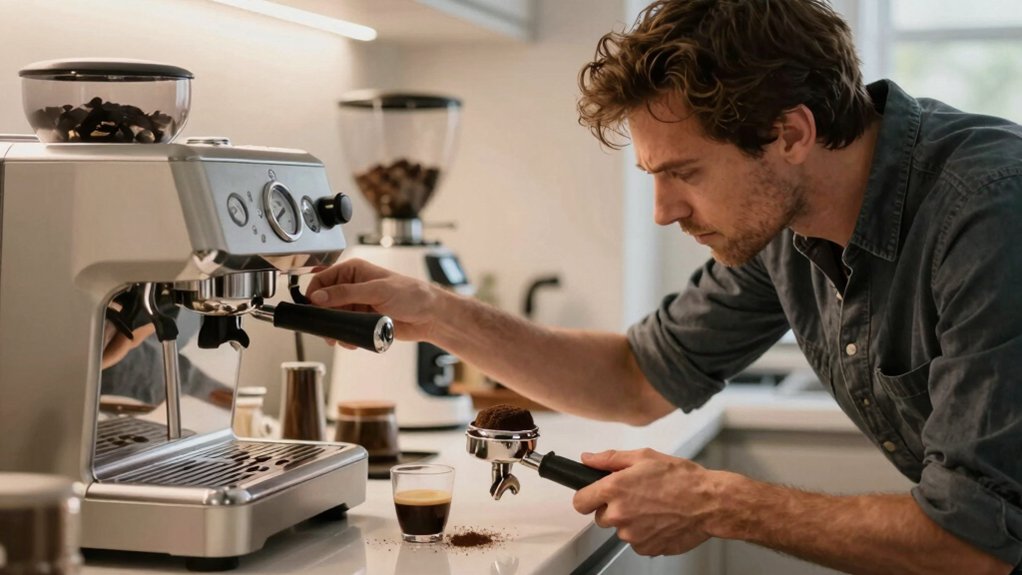
Just as a coffee’s origin shapes its flavor, the right brewing equipment can transform your morning cup from ordinary to extraordinary. Investing in key gear elevates your home brewing game dramatically.
Key coffee machine essentials include:
- Select an automatic drip brewer with showerhead-style dispersion
- Use a precision conical burr grinder with <20% micron variance
- Maintain a consistent brew ratio of 1:16 coffee to water
- Target water temperature between 90–96°C for balanced extraction
Smart features like pre-infusion and app control can further enhance your brewing precision and enjoyment.
How to make smooth cold brew coffee
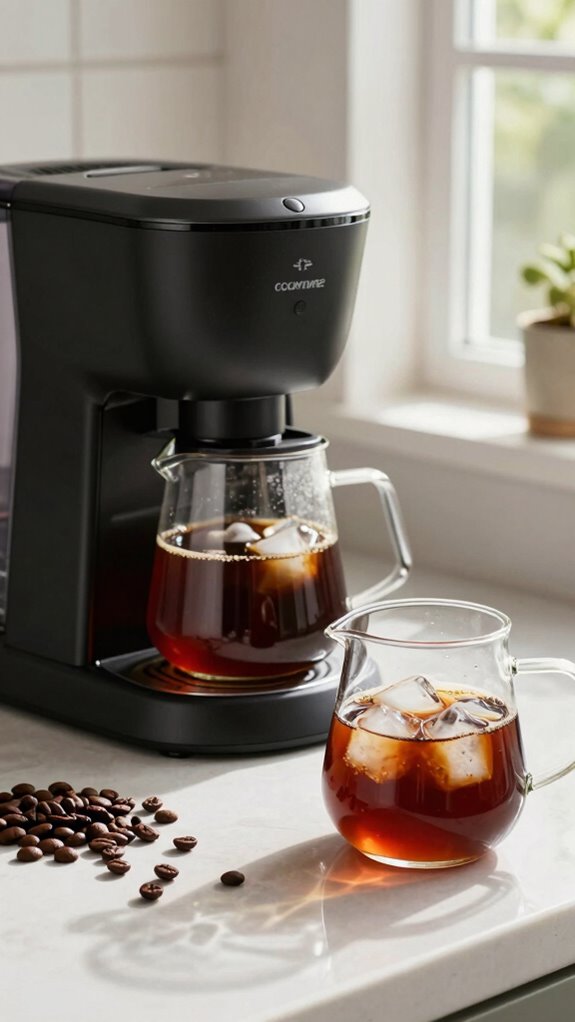
Cold brew coffee is a smooth, refreshing alternative to traditional hot brewing methods that delivers rich flavor with less acidity.
You’ll need just a few key ingredients like coarsely ground coffee beans, filtered water, a large container, and a fine-mesh strainer or dedicated cold brew filter to create this delightful beverage.
Ingredients
When crafting a smooth cold brew at home, you’ll want to start with high-quality ingredients and precise ratios that transform ordinary coffee beans into a rich, velvety concentrate.
The secret’s in selecting the right components for an exceptional caffeine experience.
Key ingredients for perfect cold brew:
- Medium to dark-roast Arabica beans
- Coarse ground coffee (similar to raw sugar)
- Filtered cold or room-temperature water
- Fine mesh strainer and paper filter
Your coffee-to-water ratio should range between 1:8 and 1:10 by weight, ensuring a balanced, smooth extraction that highlights the beans’ deep, chocolatey flavor profile.
Equipment
To craft a sublime cold brew, you’ll need a few key pieces of equipment that transform your kitchen into a home brewing sanctuary.
Start with a large glass jar or pitcher for steeping, a digital scale for precise coffee-to-water ratio measurement, and a fine mesh sieve lined with a paper filter.
Your grinder should produce a coarse grind that resembles raw sugar.
Insider tip: Use medium to dark roast beans for a rich, chocolatey cold brew concentrate.
A sealed container for storage and refrigeration will keep your brew fresh for up to 10 days, ensuring maximum flavor and enjoyment.
Instructions
After gathering your brewing arsenal from the equipment section, mastering smooth cold brew coffee is surprisingly straightforward.
I’ll walk you through creating a delicious cold brew concentrate that’ll revolutionize your coffee game:
- Use a 1:8 to 1:10 coffee-to-water ratio by weight
- Grind beans coarsely, like raw sugar granules
- Steep in a sealed container for 12-18 hours
- Strain twice through mesh and paper filter
The key is patience and precision.
Coarsely ground coffee steeps gently, extracting rich flavors without bitterness.
Once strained, dilute your concentrate with water or milk, serve over ice, and enjoy a silky-smooth cold brew that’ll keep in the fridge for up to a week.
Frequently Asked Questions
Why Does Coffee Taste Better Than Tea?
Coffee’s bold flavor dominates because its roasted compounds, higher caffeine, and complex aromas create a richer, more intense taste that’ll wake up your senses and deliver a more exciting drinking experience compared to tea.
Is Coffee Better for Health Than Tea?
Powerful, potent coffee packs a punch! I’d argue it’s healthier, offering more antioxidants that combat serious diseases like diabetes and Parkinson’s, while delivering a stronger caffeine boost that enhances mental and physical performance compared to tea.
What Is the 2 Hour Coffee Rule?
I follow the 2-hour coffee rule as a guideline for timing caffeine intake around activities like exercise, medication, iron absorption, and sleep. It helps me manage caffeine’s peak effects and potential interactions for better health and performance.
Did Jesus Drink Tea or Coffee?
No, I’ll tell you straight: Jesus didn’t drink tea or coffee. Picture ancient Palestine’s dusty landscape-he sipped water, wine, and herbal infusions. These beverages weren’t introduced until centuries after his lifetime, making caffeine drinks impossible for him.
In Conclusion
So why is coffee better than tea? The answer lies in its superior health benefits, more robust and complex flavor profiles, and incredible brewing versatility that lets you customize every cup to perfection. Coffee delivers more than just a caffeine kick-it offers a complete sensory experience backed by science and celebrated across cultures worldwide.
Ready to elevate your coffee game? Check out our comprehensive coffee machine reviews to find the perfect brewer that matches your lifestyle and budget. From budget-friendly drip makers to premium espresso machines, we’ve tested and reviewed the best options to help you brew café-quality coffee at home, every single time.