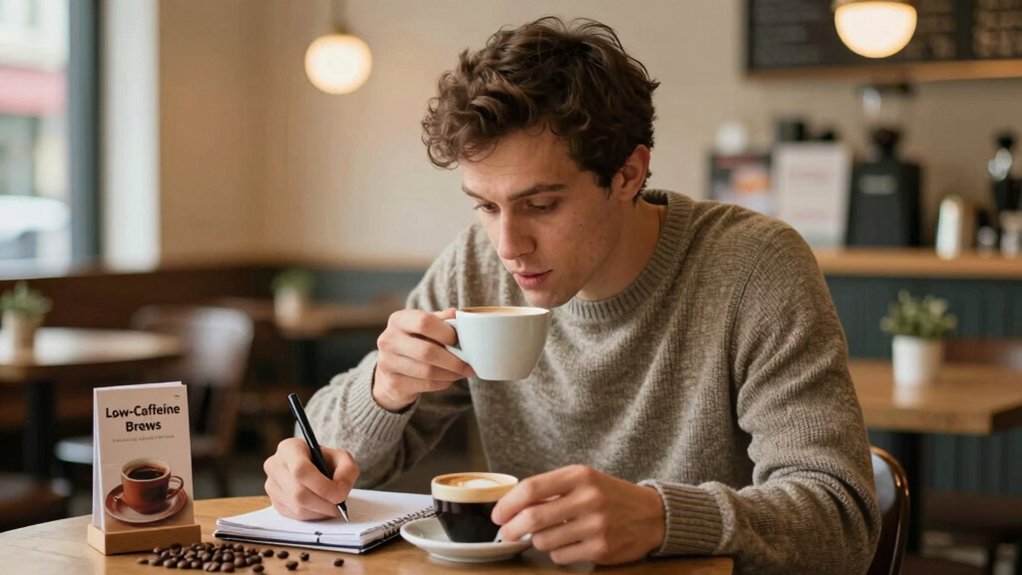
I’d guess you’re surprised that a dark roast actually has slightly less caffeine by volume than a light roast, since the roasting process burns off some caffeine.
If you want the absolute least caffeine, decaf is your best starting point, but the bean type and your brewing method are huge factors, too.
I’ll break down how to control your caffeine intake without sacrificing flavor, so you can enjoy your cup without the jitters.
Table of Contents
What coffee has the least caffeine?
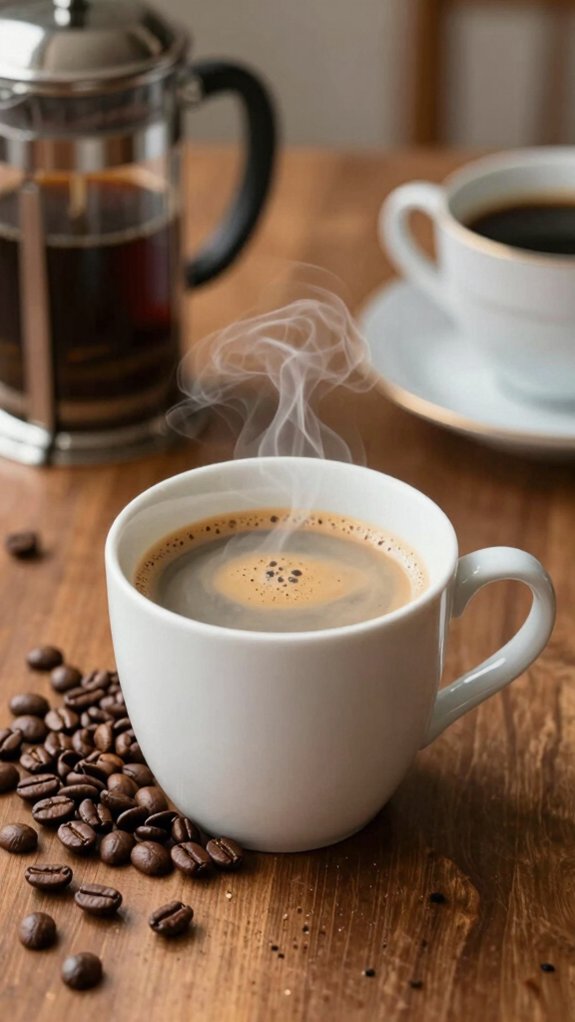
If you’re looking for the coffee with the absolute least caffeine, decaffeinated coffee is your clear winner, typically containing just about 2mg per cup.
It’s your best bet for enjoying flavor with minimal buzz.
Beyond decaf, choosing Arabica beans over Robusta is a smart move for low caffeine.
Some brands also craft low-caffeine blends with half the usual content.
While roast levels don’t majorly affect caffeine, a dark roast can offer a less acidic coffee experience.
For a naturally low-buzz single origin, seek out rare varietals like Bourbon Pointu or Laurina.
They’re bred for lower caffeine content in different, flavorful cups, perfect for enthusiasts wanting to explore.
Does roast level change caffeine much?
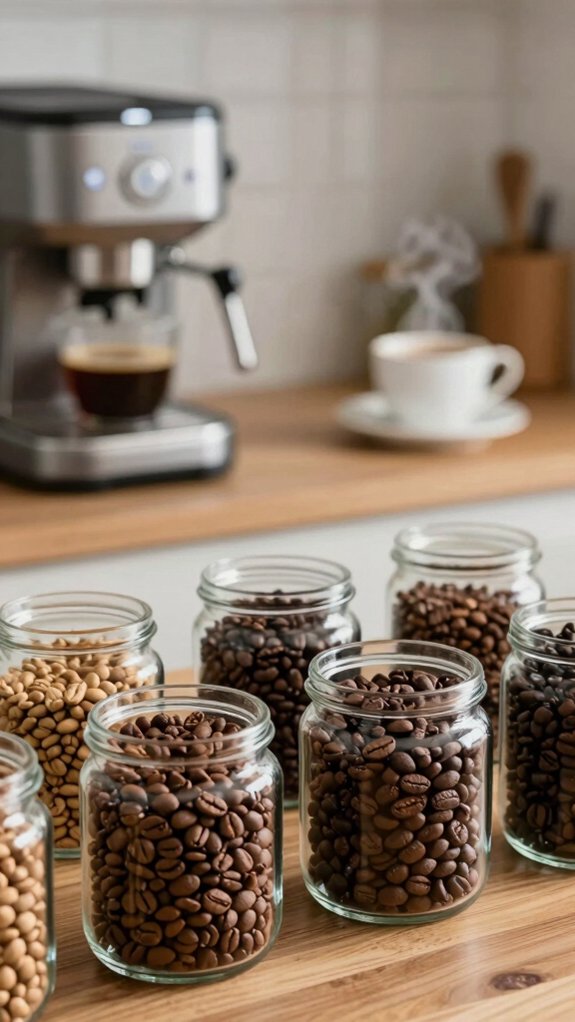
While many assume a bolder, darker roast means a bigger caffeine kick, the truth is roast level actually has a minimal impact on your cup’s buzz.
Caffeine is stable during roasting, so dark roast beans don’t gain more.
In fact, light roast is slightly denser, so by weight, it can have a touch more caffeine, think 179 mg versus 173 mg per cup. That’s only a 5-10 mg difference!
The roast color influences flavor, not potency.
For genuinely lower caffeine, focus on your beans, choose 100% Arabica over Robusta, and your brewing method.
Espresso vs drip vs cold brew caffeine
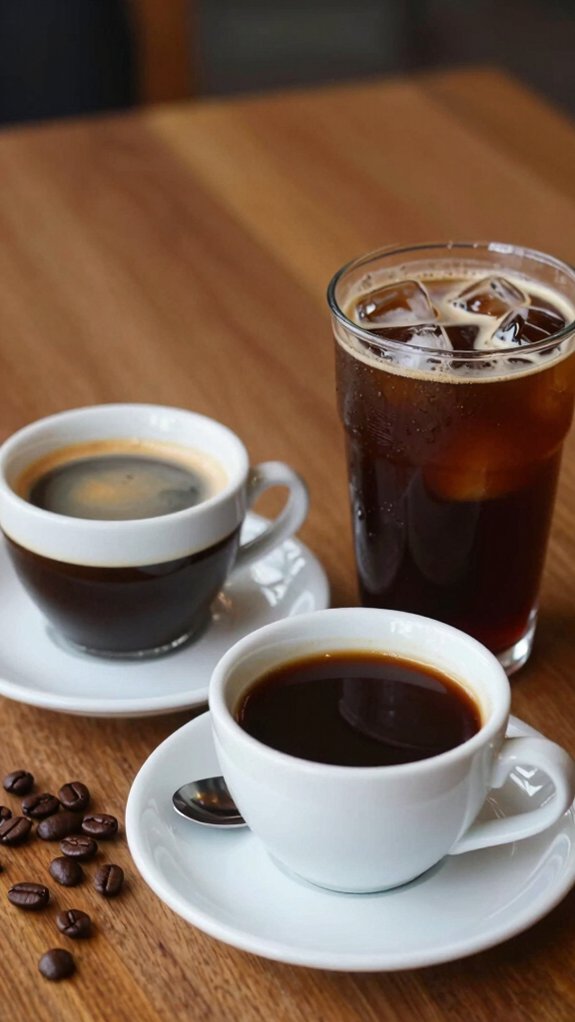
Many of us choose our daily brew based on the caffeine kick we expect, but the method you use, espresso, drip, or cold brew, dramatically changes that result.
Let’s compare caffeine content. While a 1-ounce espresso shot packs 63 mg, its small serving size means less total caffeine.
An 8-ounce cup of drip coffee typically delivers 95-120 mg, so it often has more.
However, cold brew can be the strongest, ranging from 100-200 mg per cup due to its long brewing method.
Which beans and origins have less caffeine?
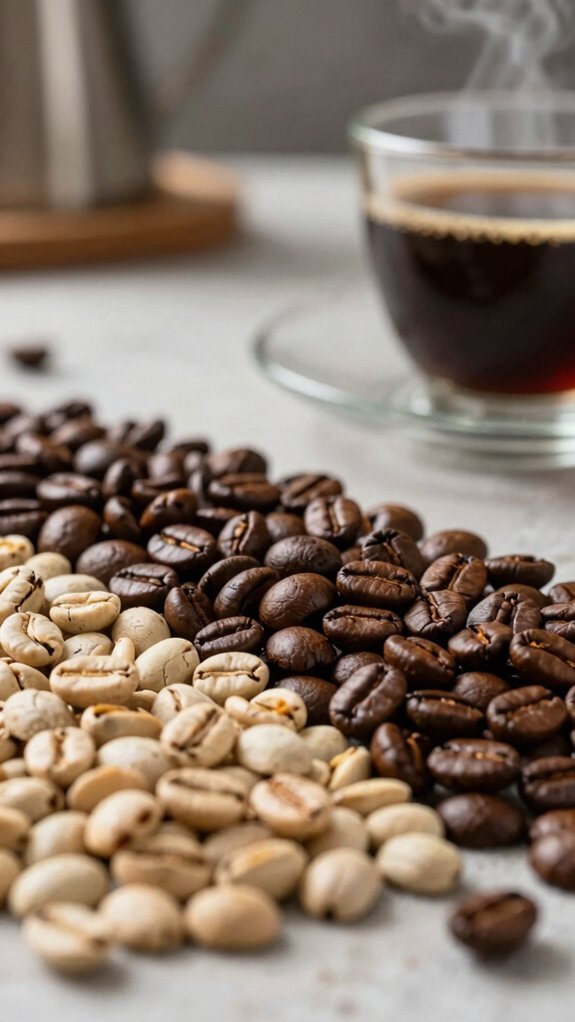
Ever wondered which coffee beans naturally give you a gentler buzz?
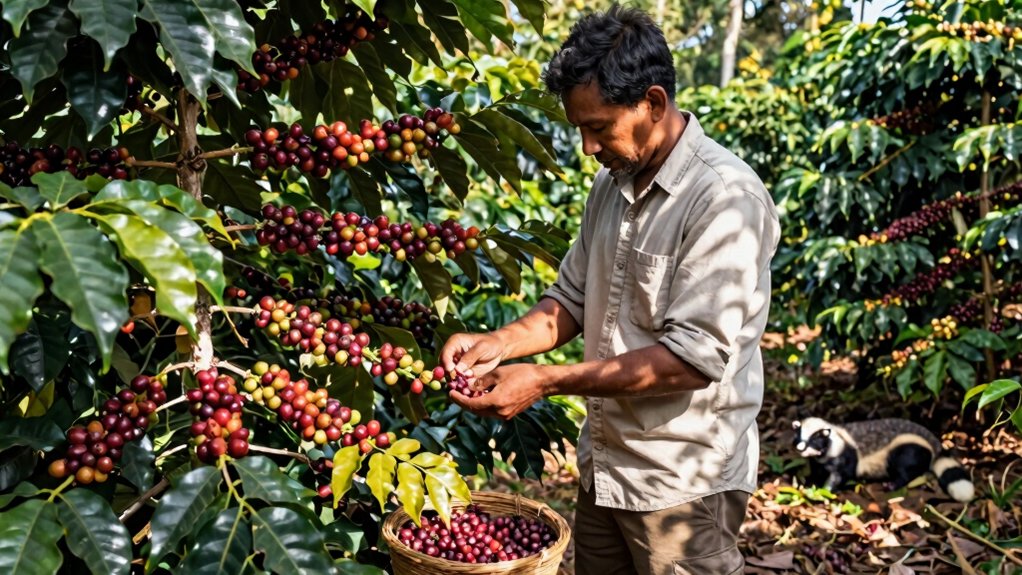
Start by choosing Arabica vs. Robusta beans; Arabica is consistently lower in caffeine. For even less, seek specific varieties like Bourbon Pointu or the ancestral Eugenoides Coffee.
Where your beans are grown matters, too. High-altitude grown beans often develop more slowly, leading to a slightly lower caffeine concentration.
Finally, consider your roast. While it doesn’t change caffeine per bean, dark roasts are less dense, so a scoop has marginally less than a light roast.
Some coffee brands now highlight these less acidic coffee options perfect for a smooth, low-buzz cup.
Your choice of bean, origin, and roast all help craft that perfect mild lift.
Is decaf coffee truly caffeine free?
So, is decaf coffee truly caffeine free? In short, no. While the decaffeination process removes about 97% of caffeine, some residual caffeine remains, typically 2-5 mg per cup.
This small amount means most coffee lovers can enjoy a low-buzz brew without the jitters. The exact caffeine content varies by bean type and method.
I recommend the Swiss Water Process for a cleaner taste and minimal caffeine.
If you need to avoid caffeine entirely, decaf isn’t suitable. For the rest of us, it’s a perfect way to savor the ritual of coffee later in the day.
How to brew a low-caffeine cup
To brew a low-caffeine cup, I focus on three things: my ingredients, equipment, and method.
I start with 100% Arabica beans and a coarser grind, as both naturally contain and extract less caffeine.
Then, I choose a method like French press or cold brew, which gives me more control over the final strength.
Ingredients
Three simple ingredient choices can help you brew a satisfying cup with less caffeine.
First, your coffee beans matter most. Always choose Arabica beans over Robusta, as they naturally contain less caffeine and offer a smoother flavor.
Second, consider your grind; a coarse grind paired with a longer steeping time (like for cold brew) gently extracts less caffeine.
Finally, manage your brew strength. Using a higher coffee-to-water ratio, such as 1:8, dilutes your cup. For ultimate control, blend regular beans with decaf.
This low-caffeine approach lets you tailor the caffeine level perfectly, so you enjoy the ritual without the buzz.
Equipment
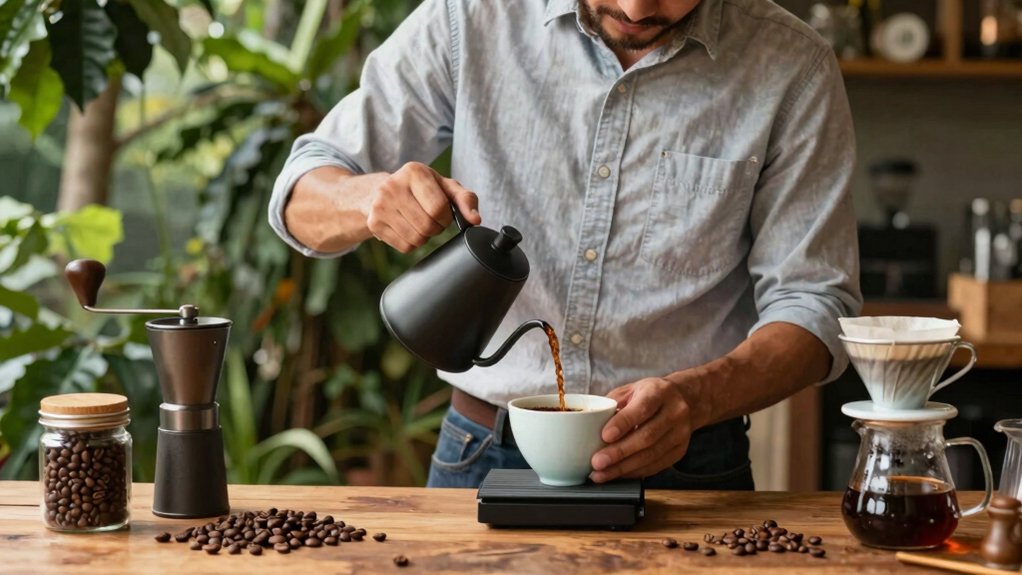
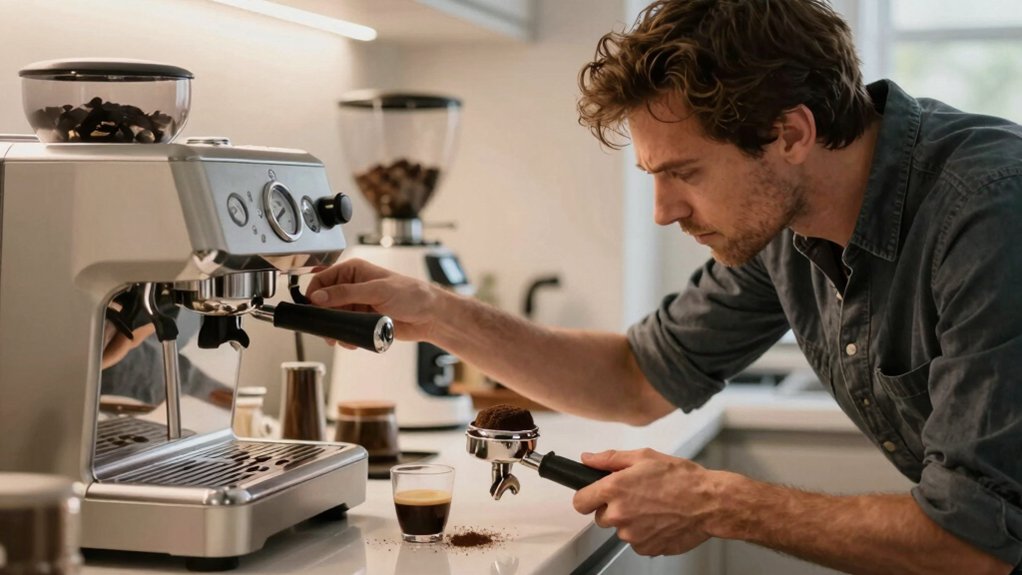
I often start with low-caffeine bean varieties, then grind them coarse for my French press, timing the steep carefully.
Blending those beans with some decaf in your grinder is my go-to trick for a perfect low-caffeine blend.
This hands-on control over equipment and ingredients is the real secret to managing your caffeine intake without sacrificing flavor.
Instructions
Brewing a satisfying low-caffeine cup is wonderfully straightforward once you know a few key steps.
First, I always start with Arabica beans, as they naturally have less caffeine than Robusta. For my cold brew, I use a coarse grind and a 1:8 water-to-coffee ratio, which creates a smoother, lower caffeine content.
Steep it for just 12 hours; any longer extracts more caffeine. This method still delivers a gentle energy boost without the jitters.
If you prefer hot coffee, brewing methods like French press work great too.
For the most balanced coffee, I sometimes blend regular and decaf beans. The result is a flavorful, low-buzz cup that lets you enjoy the ritual without the high stakes.
Best coffee makers for low-caffeine brewing
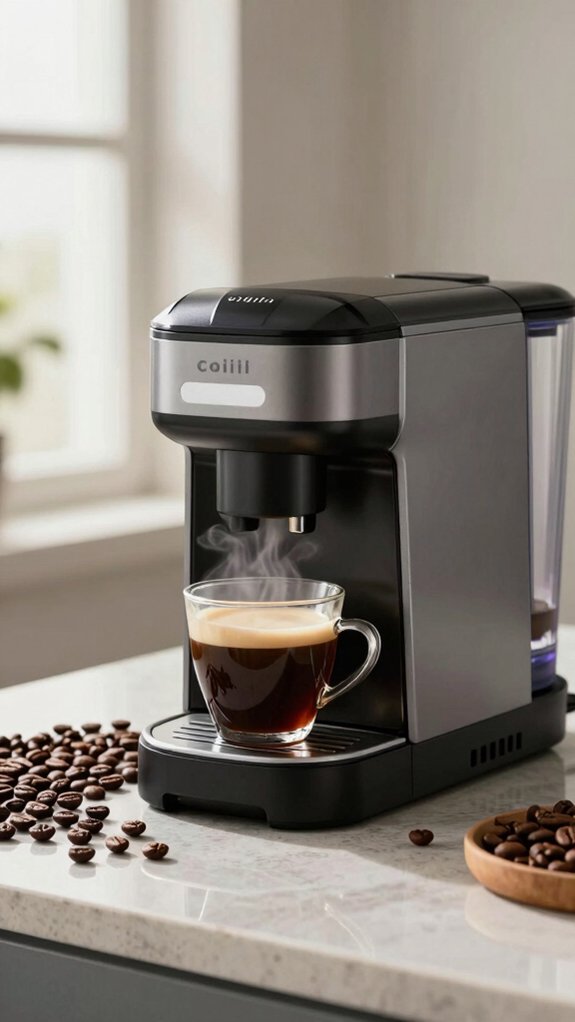
If you’re looking to enjoy coffee with less caffeine, choosing the right brewer can make all the difference, as many machines offer clever ways to control your daily intake.
Your method directly impacts caffeine extraction, so picking the right one is key.
Here are my top picks for a gentler brew:
Single-serve coffee makers are fantastic for precision; just pop in a low-caffeine K-Cup for a controlled, half-caff cup instantly.
A French Press with coarse grounds and a shorter brewing time naturally yields a mellower cup.
For ultimate smoothness, a cold brew system steeped longer with more water creates a low-acid, low-caffeine concentrate.
Even with espresso machines, a single shot basket reduces your buzz.
For pour-over coffee makers, simply start with low-caffeine coffee beans to control the outcome from the very first step.
Frequently Asked Questions
What Coffee Has the Lowest Caffeine?
I’d say decaf coffee has the lowest caffeine, followed by specific low-caffeine varieties like Bourbon Pointu.
Using lighter roasts from Arabica beans also helps minimize my caffeine intake per cup.
What Coffee Gives the Best Buzz?
I find a cold brew made with Robusta beans gives the best buzz. It has nearly double the caffeine of Arabica, and the long steeping can make it twice as strong as regular coffee for a huge energy boost.
What 7 Brew Drinks Don’t Have Caffeine?
I can name seven caffeine-free brews. Interestingly, decaf still contains 2-5 mg per cup.
My top picks are herbal teas like chamomile, plus lemonade, fruit smoothies, and classic hot chocolate for a cozy, buzz-free drink.
What Coffee Doesn’t Cause Jitters?
I choose half-caffeine blends like Community Coffee’s Half-Caff or cold brew for lower acidity. I also look for Arabica beans or adaptogen-infused options like mushroom coffee to enjoy my cup without the jitters.
In Conclusion
So, for the absolute least caffeine, you must choose decaf. I find it fascinating that a standard decaf cup contains only about 2mg of caffeine, that’s roughly 97% less than your typical brew!
With the right beans and a method like cold brew, you can easily craft a delicious, low-buzz cup that lets you enjoy the ritual without the major jolt.