


According to the National Coffee Association, Americans drink approximately 400 million cups of coffee per day, generating massive amounts of used coffee grounds that typically end up in landfills. Many gardeners wonder whether these nutrient-rich leftovers can benefit their yards or if they might actually cause more harm than good.
If you’ve been tossing your coffee grounds into the trash while questioning whether they could serve a better purpose in your garden, you’re not alone. This post will explore the science-backed benefits of using coffee grounds in your yard, examine the potential risks that catch many gardeners off guard, and provide practical guidelines for applying them correctly so you can make an informed decision about this popular gardening practice.
Table of Contents
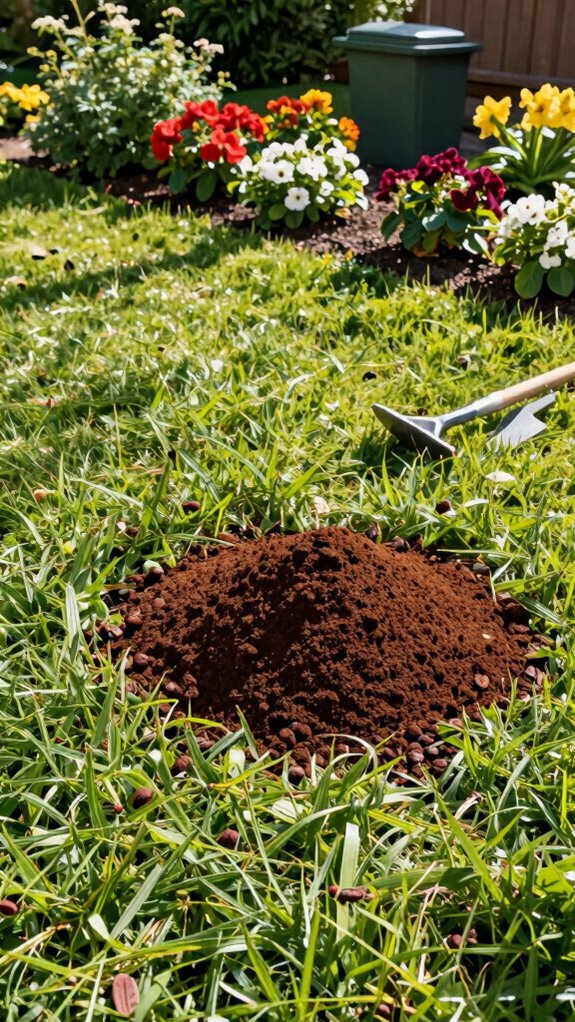
Spread coffee grounds in my yard?
Spread coffee grounds in my yard?
From garden enthusiast to coffee lover, spreading used coffee grounds in your yard can be a smart recycling strategy, but you’ll want to do it carefully.
While these grounds add valuable organic matter and nitrogen to soil, they can cause problems if applied incorrectly.
Avoid spreading them directly on the ground, as they might compact and block water absorption.
Instead, mix grounds into compost or soil, being cautious around seeds, since they can inhibit seed germination.
The key is moderation and proper integration to maximize their gardening benefits without risking plant health.
Lawn benefits, risks, and better alternatives
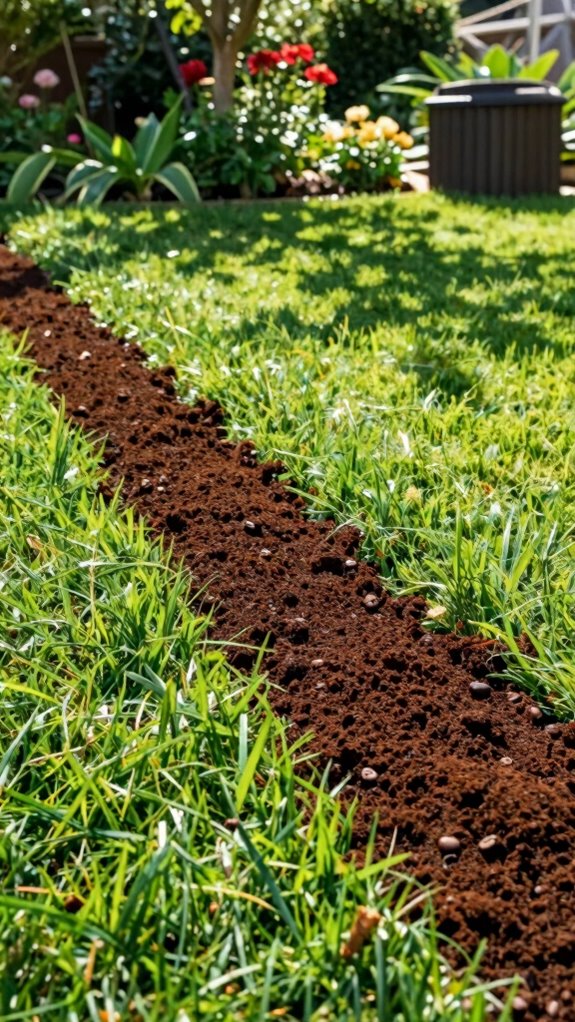
When considering coffee grounds for lawn care, you’ll want to weigh the potential benefits against real-world risks. Spent coffee grounds can serve as a soil amendment, but they’re not a miracle solution. While they add small nitrogen amounts, thick layers can actually suppress the growth of your grass and create water-resistant crusts that damage roots.
Instead of dumping grounds directly on your lawn, try mixing them into compost or incorporating thin layers into topsoil. This approach prevents potential pest attraction and ensures healthier grass development. Professional lawn care means using targeted, balanced fertilizers for optimal results.
Do coffee grounds lower soil pH?
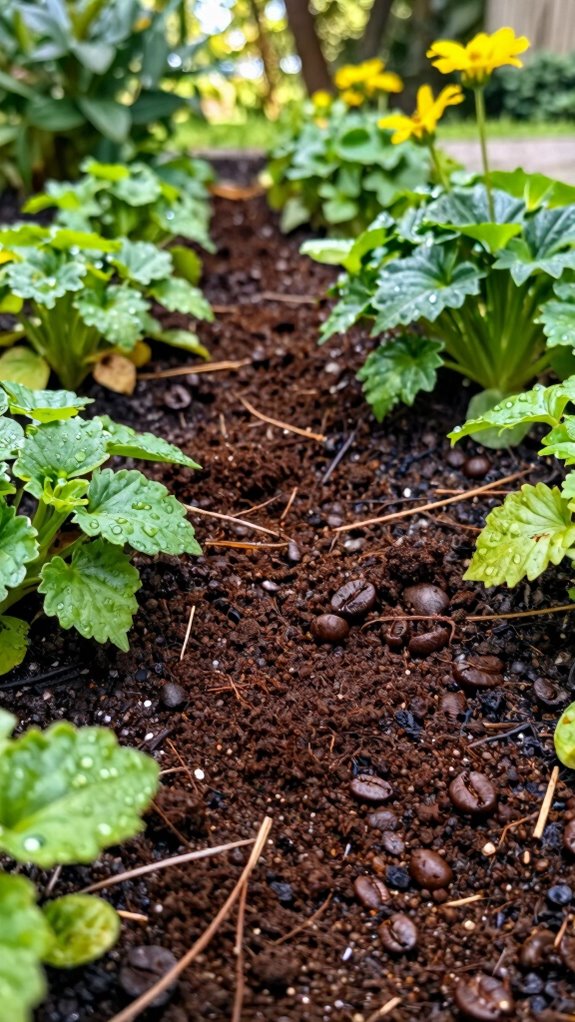
Wondering if coffee grounds can magically transform your soil’s pH? Think again.
Used coffee grounds don’t significantly lower soil pH as many gardeners believe. While fresh coffee is acidic, brewing removes most of that acidity, leaving nearly neutral grounds. Multiple studies confirm that spreading used coffee grounds rarely creates meaningful long-term soil acidification.
Any temporary pH changes are typically localized and quickly neutralized by soil minerals and microbial activity. For truly acidic soils, stick to proven amendments like elemental sulfur.
Insider tip: Compost your coffee grounds first to further neutralize pH and ensure even application in your garden beds.
Best ways to apply without problems
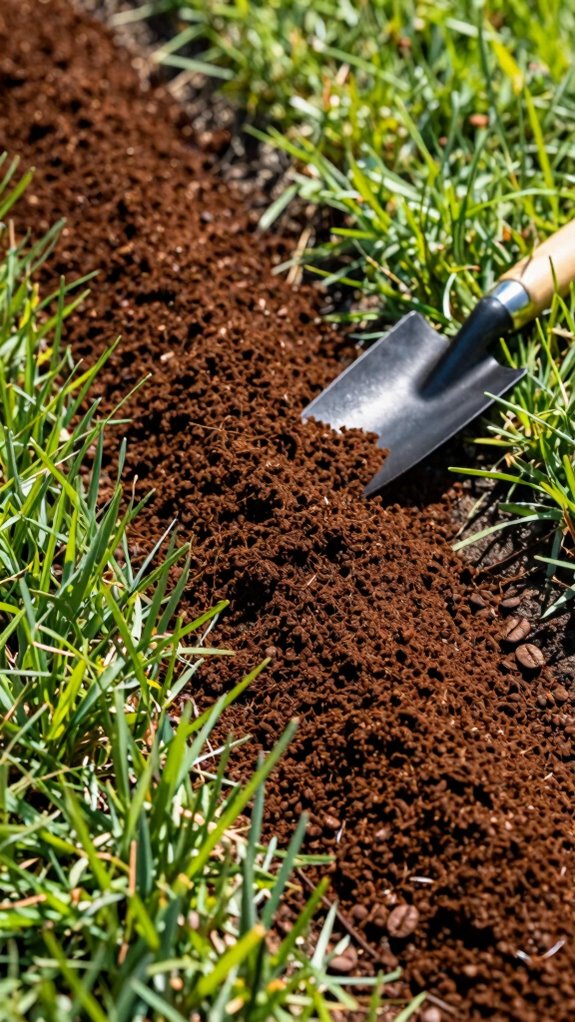
While coffee grounds won’t dramatically alter soil pH, they can still be a garden ally when applied correctly.
Here’s how to use grounds in your garden without causing harm:
- Mix coffee grounds into your compost pile, maintaining a 4:1 browns-to-greens ratio for balanced decomposition.
- Sprinkle thin layers (no more than 1/4 inch) and gently rake into the top soil layer to prevent compaction.
- Avoid direct application near young seedlings or pet areas, as caffeine can be toxic.
Composted grounds provide nutrients without risking seedling suppression or creating water-resistant crusts in your garden beds.
Are coffee grounds safe for pets?
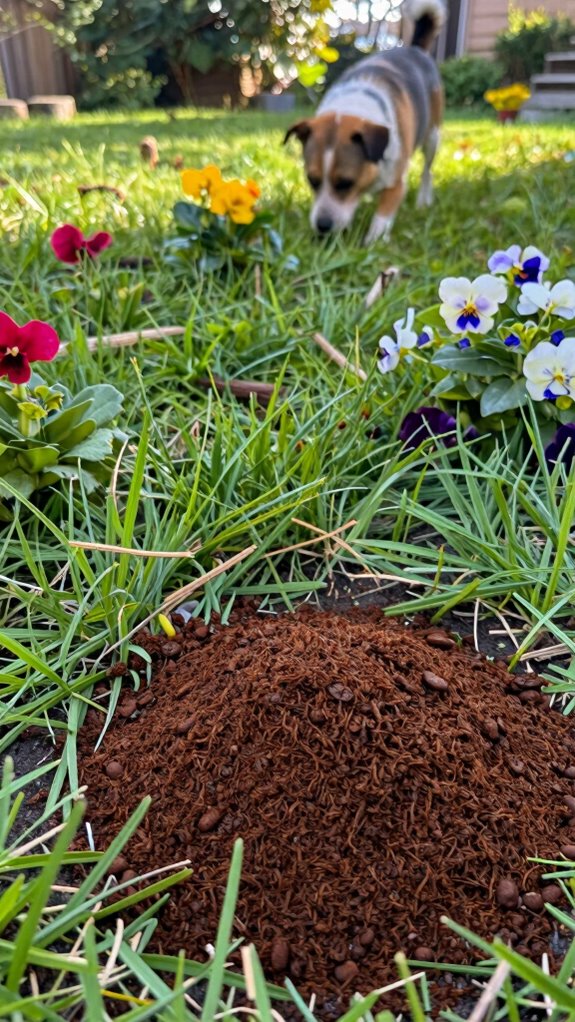
Are coffee grounds a hidden hazard for your furry friends? Coffee grounds contain caffeine that’s toxic to pets, potentially causing serious health issues if ingested. While gardeners love using spent grounds, pet owners must exercise caution.
| Symptom | Mild | Severe |
|---|---|---|
| Restlessness | Mild tremors | Seizures |
| Breathing | Rapid breathing | Respiratory distress |
| Heart Rate | Increased pulse | Palpitations |
| Digestion | Vomiting | Collapse |
| Overall Risk | Moderate | Critical |
Safely dispose of used coffee grounds in a compost bin, keeping them away from pet access. If your pet consumes grounds, contact your veterinarian immediately for professional guidance.
Which plants, pests are affected by grounds?
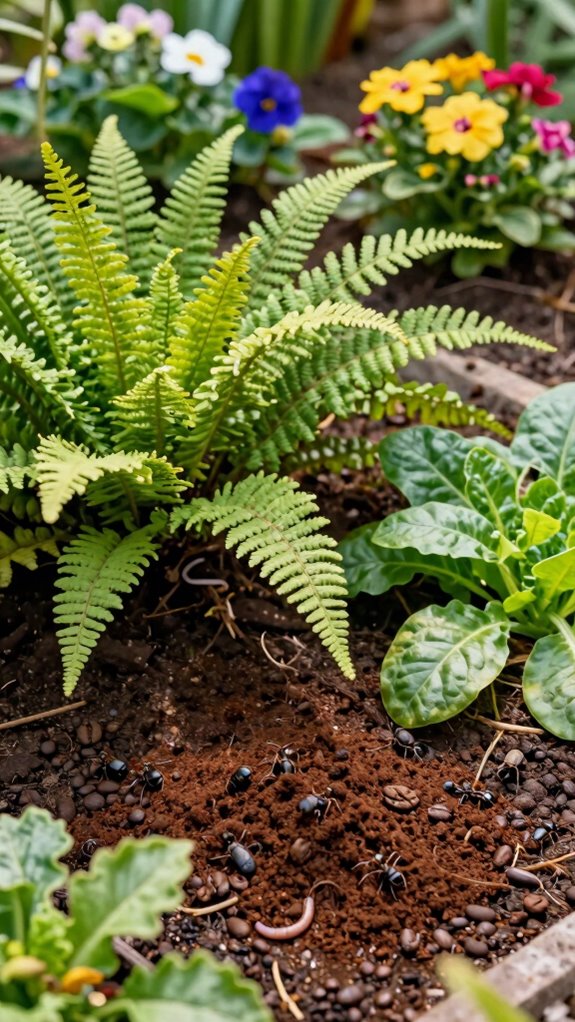
Coffee grounds can impact various plants and garden pests in surprising ways, offering both potential benefits and risks for your green spaces.
Grounds contain a good amount of nutrients that can benefit your garden when used strategically:
- Vegetable gardens appreciate grounds as a fertilizer, providing slow-release nitrogen for established plants
- Ornamental plants can thrive when grounds are mixed into soil moderately
- Earthworms often get attracted to composted grounds, improving soil structure
However, be cautious: raw grounds can inhibit seed germination and potentially stunt young seedlings.
While grounds may deter some pests, their effectiveness against slugs and snails remains inconsistent, making them an unreliable pest control method.
Composting coffee grounds, amounts, and frequency
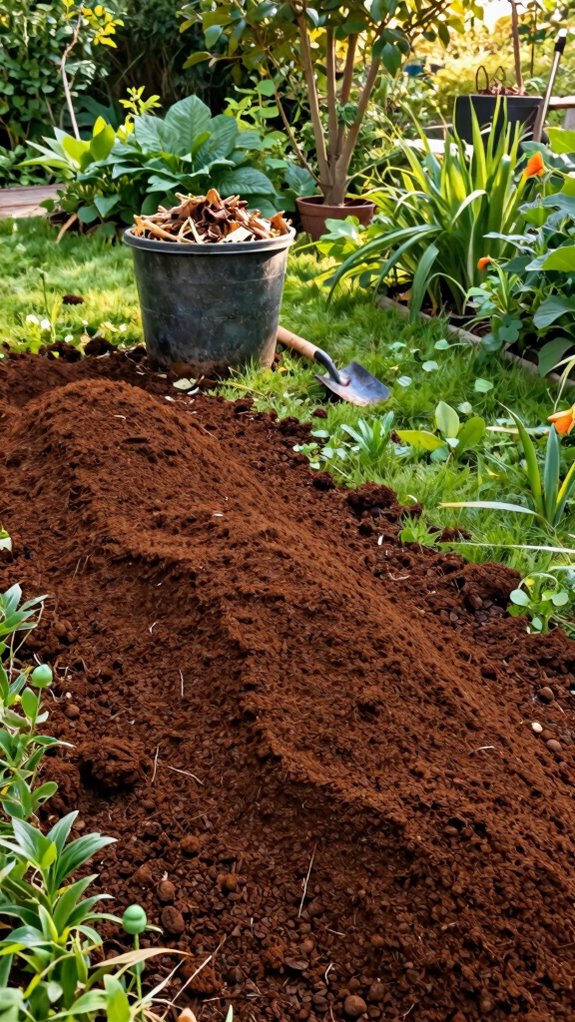
Composting coffee grounds transforms your daily brew waste into black gold for your garden, offering a sustainable way to recycle those used filters and grounds. When adding to your compost, remember the magic ratio: keep grounds to about 10-20% of total volume to prevent moisture issues and maintain healthy decomposition.
| Compost Stage | Coffee Grounds | Recommended Amount |
|---|---|---|
| Initial Mix | Green Nitrogen | 10-20% volume |
| Active Decomposition | Mix Thoroughly | Thin, even layer |
| Finished Compost | Mature Grounds | Fully broken down |
Mix grounds evenly, turn frequently, and watch your compost transform into nutrient-rich garden gold in just 3-6 months.
Frequently Asked Questions
Is There a Downside to Using Coffee Grounds for Plants?
Yes, there are downsides. Coffee grounds can compact, block water, inhibit seed growth, disrupt soil microbes, and potentially harm pets if ingested. I’d recommend using them sparingly and mixing them thoroughly with other organic materials.
What Animals Will Coffee Grounds Keep Away?
I’ve found coffee grounds might slightly deter cats and small rodents, but they’re not a reliable animal repellent. Don’t expect consistent results, and be cautious, as the grounds could potentially harm pets if ingested.
Is It Okay to Spread Coffee Grounds on a Lawn?
I’ve discovered coffee grounds aren’t a lawn miracle cure! While they add some nutrients, thick layers can harm grass. I’ll thinly sprinkle and rake them gently into soil, mixing with leaf litter for a healthy, balanced approach.
What Plants Should Not Have Coffee Grounds?
I wouldn’t use coffee grounds near acid-sensitive plants, young seedlings, shallow-rooted vegetables like lettuce, or newly planted shrubs and trees. They can inhibit growth, block water absorption, and potentially harm root development.
In Conclusion
So, should you spread coffee grounds in your yard? The answer is yes, but with some common sense. Coffee grounds can definitely benefit your garden when used correctly-they add nutrients, improve soil structure, and attract beneficial earthworms. However, moderation is key. Think of them as a supplement to your soil care routine, not a replacement for proper lawn maintenance. Compost them first if possible, apply thin layers, and combine them with other organic materials for best results.
Of course, all those coffee grounds have to come from somewhere! If you’re brewing multiple cups daily and want to maximize your garden’s potential, having a reliable coffee maker is essential. Check out our coffee machine reviews to explore smart, well-reviewed options that’ll keep you caffeinated while providing a steady supply of grounds for your yard. Your lawn and your morning routine will thank you.