
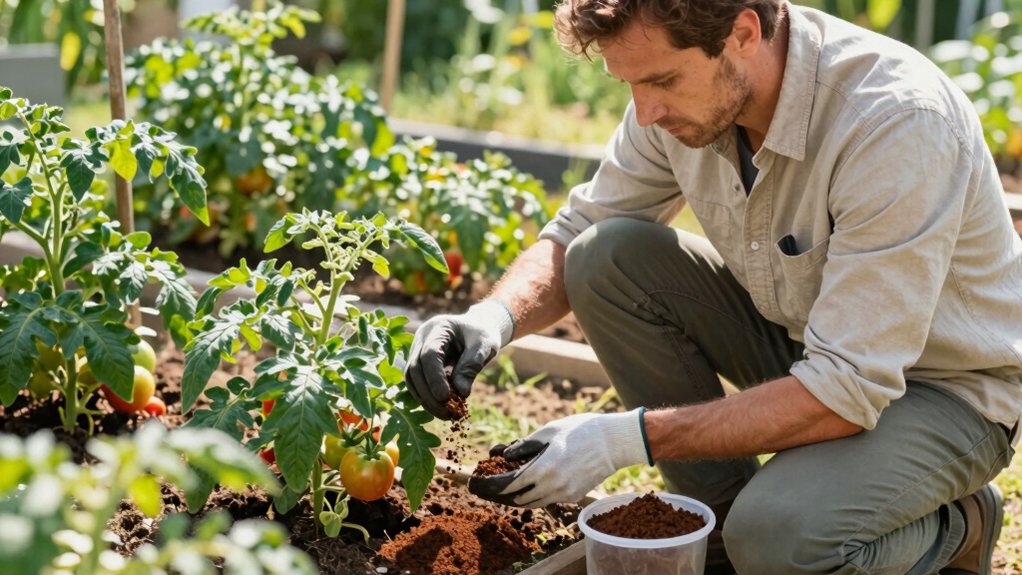
I’d definitely add coffee grounds to my tomato plants, but you must do it right. Fresh grounds can compact and retain too much moisture, so I always use fully composted grounds instead.
I mix them into my compost at no more than 20% of the total volume, which enriches the soil without risking nitrogen depletion for the young plants. This creates a fantastic, crumbly soil structure my tomatoes love.
Let’s look at how to avoid the common pitfalls that can actually harm your harvest.
Table of Contents
Should I add coffee grounds to tomatoes?
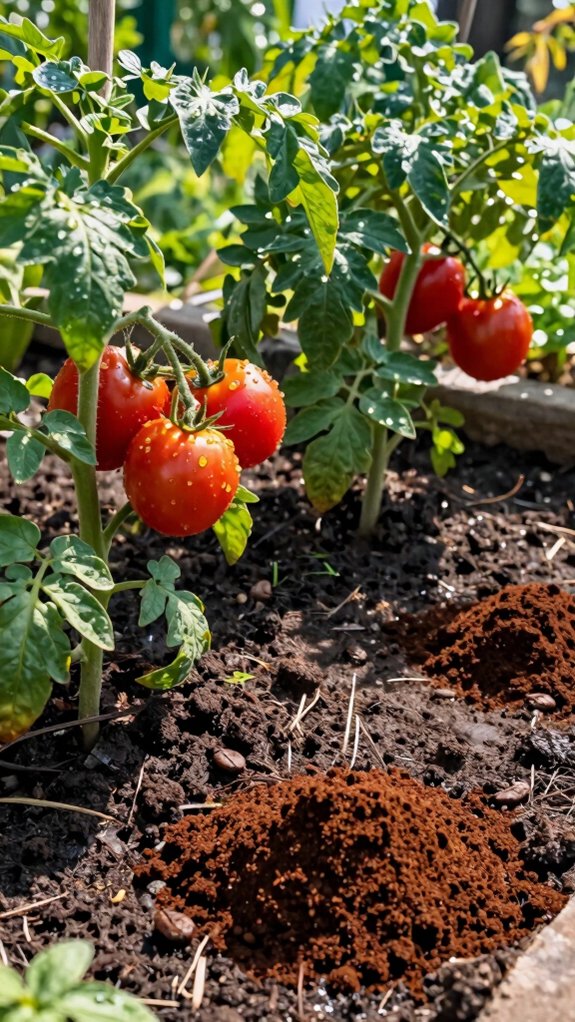
Should you add coffee grounds to tomatoes? Absolutely, but you’ve got to do it right.
Used coffee grounds can benefit your tomato plant growth by adding nitrogen and other essential nutrients to the soil. However, I never use them fresh. Instead, I compost them first, limiting grounds to 20% of my compost volume. This process creates a balanced fertilizer and prevents issues.
You see, fresh grounds can retain too much moisture and encourage fungal diseases if piled on. They’re also mildly acidic, so composting helps stabilize their effect on your soil pH, keeping it in the ideal 6.0-7.0 range for tomatoes.
A light compost mulch can then suppress weeds and regulate moisture beautifully.
Coffee grounds pros and cons for tomatoes
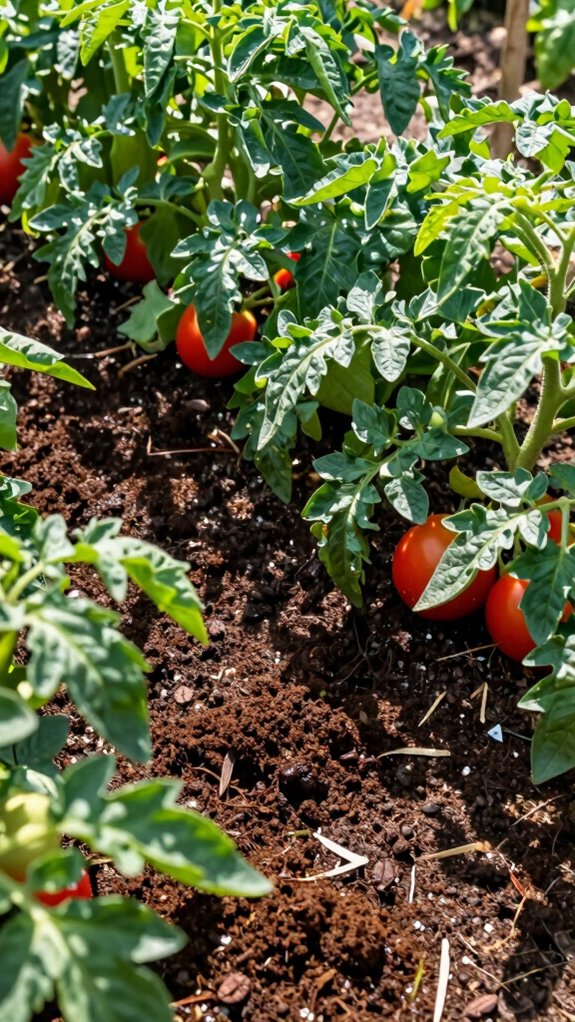
Now that we’ve covered the basics of using them, let’s weigh the specific benefits and drawbacks of applying coffee grounds directly to your tomato plants.
On the pro side, their nutrient content offers a slow-release source of nitrogen, which supports leafy growth. They also improve soil structure by adding organic matter, enhancing drainage. Importantly, their acidity levels are usually neutral, so they’ll not harm your tomatoes.
However, fresh coffee grounds pose cons. They must be composted first, as decomposition by microbes is needed to unlock nutrients.
Applied fresh and thick, they can retain moisture and raise the risk of fungal issues.
The key is using composted grounds moderately to gain benefits while avoiding the pitfalls.
How to use coffee grounds on tomatoes
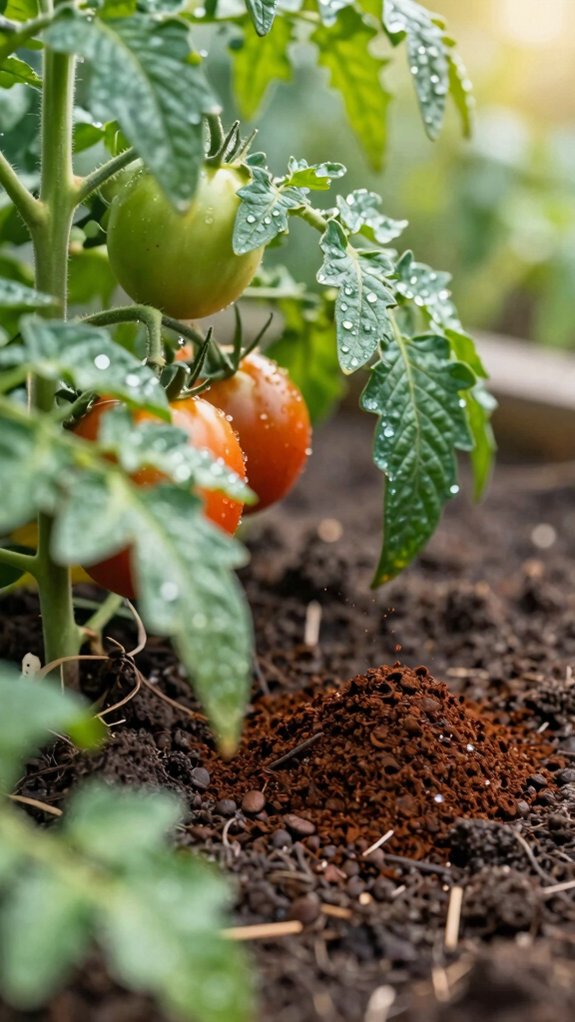
Since you’re ready to put your used coffee grounds to work in the garden, let’s walk through the best practices for using them on your tomato plants.
My top tip is to compost first. Mix grounds into your pile at 10-20% of its volume. This neutralizes any compounds that could inhibit growth and unlocks nitrogen and other nutrients, creating a fantastic soil amendment.
For established plants, a thin mulch application (under half an inch) aids moisture retention and weed suppression. Keep it a few inches from stems.
If you have heavy clay soil, work a thin layer in after harvest to improve texture.
Always use composted grounds, never fresh, and monitor your pH levels to keep your tomatoes thriving.
How much coffee grounds per tomato plant?
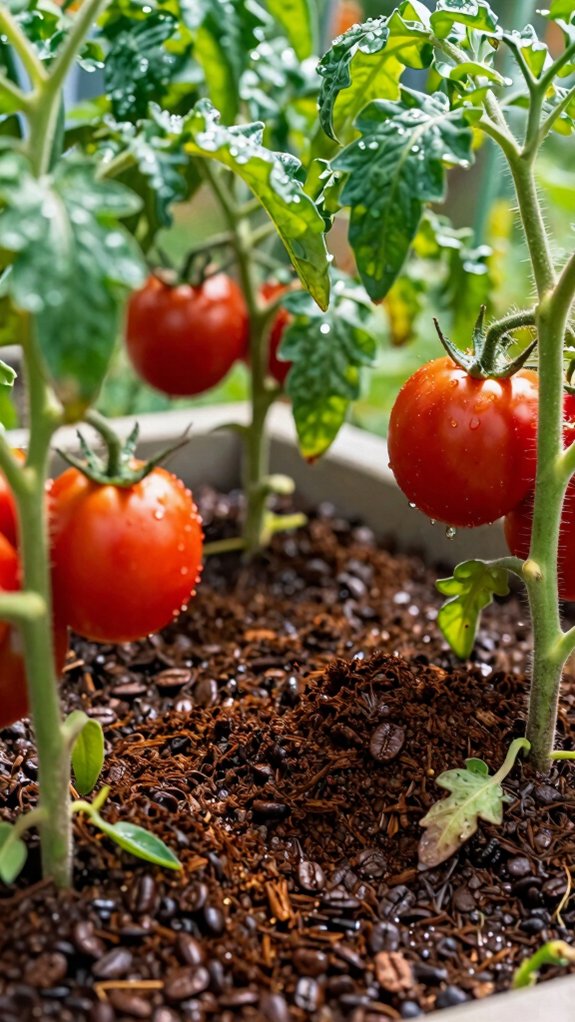
The precise amount of coffee grounds per tomato plant isn’t one-size-fits-all, but I stick to a simple rule: for each mature plant, mix about one cup of fully composted grounds into the soil at planting time.
Here’s my simple guide:
For Compost: Limit fresh coffee grounds to a maximum of 20% of your compost bin’s volume for balanced nutrients.
For Direct Soil: Mix only fully composted grounds into the soil to avoid nitrogen tie-up.
As Mulch: If you apply a thin top layer, keep it under ½ inch to prevent crusting.
Monitor pH: Regularly check your soil pH, as excess grounds can lower it below the ideal 6.0-7.0 range for tomato plants.
Always start small and observe your plant’s response.
Compost or mulch coffee grounds for tomatoes
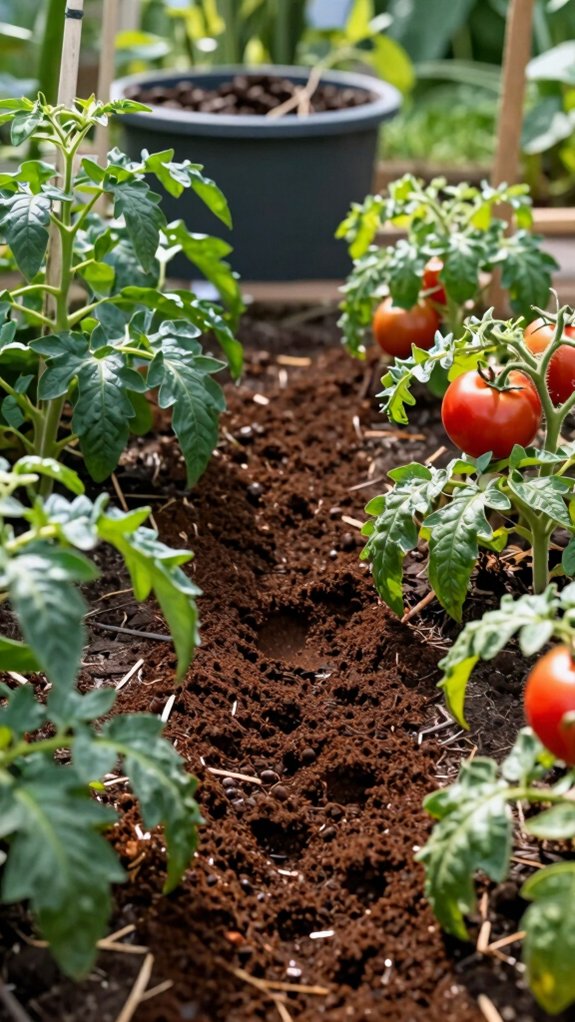
While you can use coffee grounds as mulch, I always recommend composting them first to unlock their full benefits for your tomato plants.
Composting coffee grounds breaks them down, releasing nitrogen and other nutrients in a form your tomatoes can easily use.
Just remember to keep those grounds under 20% of your total compost volume by mixing them with plenty of brown, organic materials like dried leaves.
If you want to apply grounds directly, save it for established plants.
Use only a thin layer, half an inch at most, as a mulch. This helps with moisture retention without risking soil compaction.
Never use fresh grounds directly in the planting hole.
Do coffee grounds repel pests and slugs?
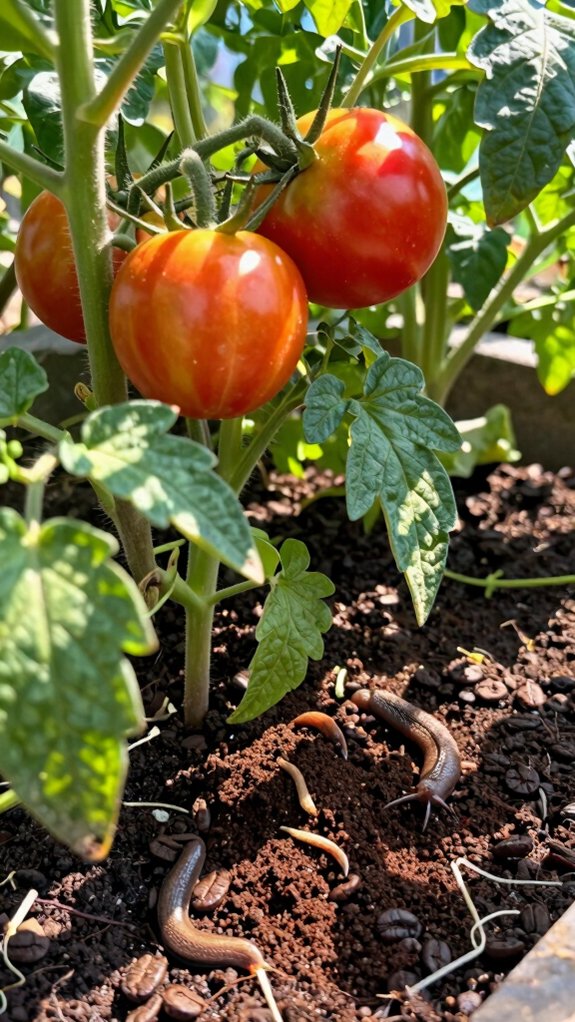
- Apply lightly around the base of your tomato plants to form a protective ring.
- Understand that while they can repel pests like slugs, they’re just one part of a full pest management strategy.
- Practice application moderation; a thick layer can cause excessive moisture retention and lead to fungal diseases.
- Always combine with other methods, like proper spacing and hand-picking, for the healthiest plants.
Common myths, risks, and better alternatives
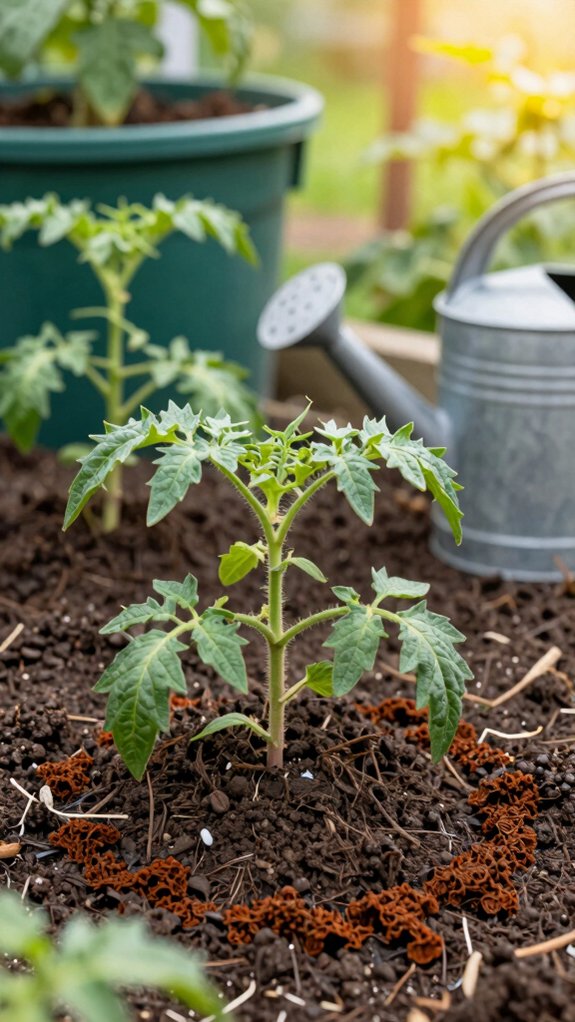
You might’ve heard coffee grounds can transform your tomato plants, but let’s separate fact from fiction before you sprinkle.
Common myths suggest they’re a powerful fertilizer or acidify soil, but fresh coffee grounds have a low nutrient profile and won’t significantly change pH for your tomato plants.
The real risks of excessive use include moisture-related fungal disease and growth-inhibiting compounds that can stunt seeds.
For safe use, always opt for composted coffee grounds in moderation (under 20% of your pile).
For true soil quality, better alternatives like finished compost or aged manure provide a balanced, complete feed for robust growth.
Frequently Asked Questions
How Often Should I Add Coffee Grounds to My Tomato Plants?
I only add compost containing coffee grounds once a year in my garden. I avoid direct application and always ensure my soil pH stays balanced for my tomato plants’ health.
Why Do Tomatoes Not Like Coffee Grounds?
Tomatoes don’t like coffee grounds because the caffeine can stunt my plants, and they can make the soil too acidic while blocking water.
I also find they don’t provide balanced nutrients.
In Conclusion
Yes, you can add coffee grounds to your tomato plants, but treat them like a strong espresso shot, a little goes a long way.
I’ve found that composting them first avoids shocking your soil’s pH, much like properly tempering milk prevents a sour latte.
When used wisely, those grounds can help build your soil structure, giving your tomatoes a richer, more balanced foundation to thrive.