


I’ve found the ideal coffee puck should be slightly moist, not soggy or dry, for optimal extraction. A soupy puck often signals issues like channeling or under-extraction, which I can help you fix fast by adjusting your dose and grind.
But the real secret to perfect espresso lies beyond just puck texture, there are a few machine tweaks and tools that completely transformed my results.
Table of Contents
Should coffee puck be wet or dry?
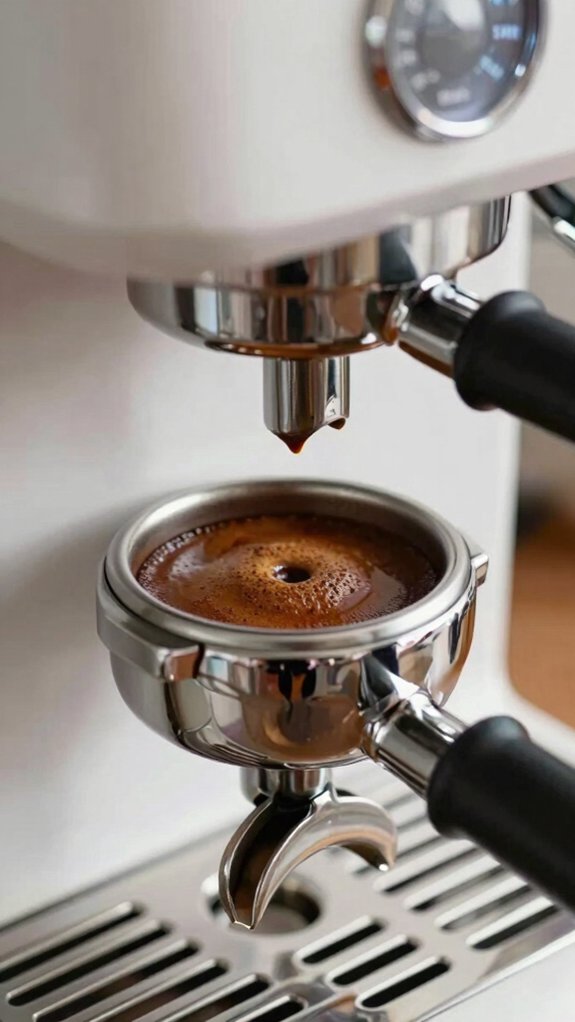
Should your coffee puck be wet or dry? Ideally, it should be slightly moist but not soggy.
A wet puck that’s soupy often signals channeling or under-extraction, meaning water rushed through without properly brewing your coffee.
Conversely, a bone-dry puck usually means the grounds didn’t fully contact the shower screen, leading to uneven extraction.
The key is puck preparation. Start with fresh beans, then dial in your grind size-too fine can cause a wet mess, too coarse creates a dry one.
With proper tamping, you’ll achieve that perfect, firm consistency for a balanced, delicious shot every time.
Why is my espresso puck wet?
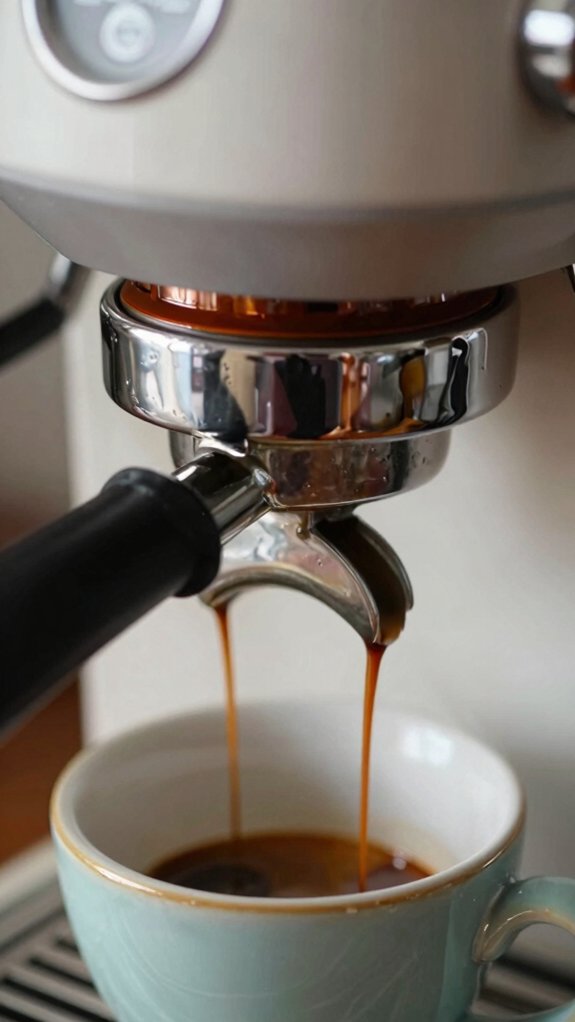
Now that we’ve looked at the ideal puck texture, let’s figure out why yours might be coming out too wet and soupy.
A wet espresso puck is a clear sign that your extraction was off, usually pointing to issues with the coffee grounds, water flow, or tamping.
The main culprit is often an insufficient dose of coffee, creating too much space above the puck so water rushes through without proper resistance. This leads to fast water flow and under-extraction.
Here is what to check:
Your dose is too low, leaving a soupy mess.
Your grind is too coarse, speeding up the shot.
Your beans are stale, lacking structure.
Your tamp was uneven, causing channeling.
Is a dry puck actually better?
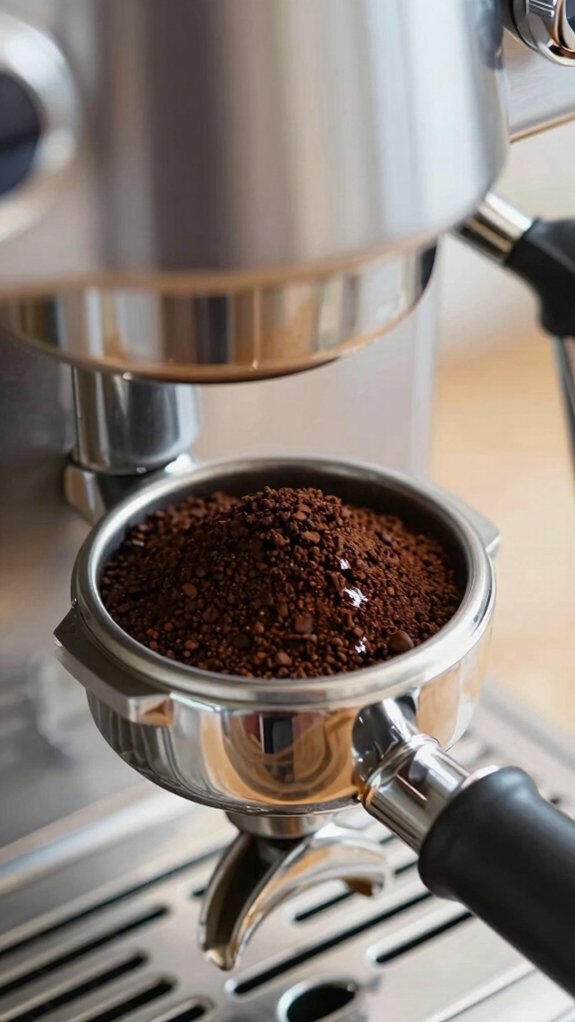
Does a dry espresso puck actually mean you’ve pulled a better shot? Not necessarily.
While a dry Coffee Puck can feel satisfying, it doesn’t guarantee a great espresso. I prioritize the taste of the espresso over puck appearance every time.
A dry puck might hint at issues like an under-dosed basket, which can lead to a weak, fast shot. Conversely, a slightly moist puck can still produce a balanced, delicious coffee.
Consistency in your puck’s texture is the real goal, not absolute dryness. Focus on your dose, tamp, and grind for flavor.
If the shot tastes perfect, don’t stress a wet puck. The proof is always in the cup, not the portafilter.
Fix soupy pucks: dose, grind, headspace
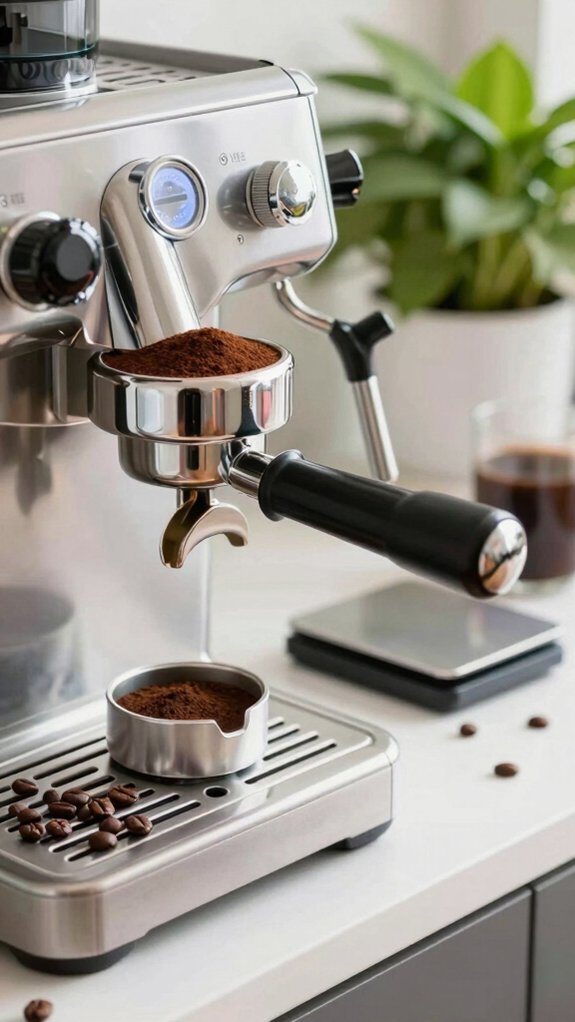
Because a soupy puck often signals that your extraction needs attention, let’s fix it by dialing in your dose, grind size, and headspace.
Start by weighing your coffee. I aim for 16-18 grams for a double shot; too little leaves excess space, causing water to pool.
Next, adjust your grind size finer. This increases resistance, slowing the flow for a firmer puck. Ensure your tamped coffee sits about 2mm below the shower screen-this proper headspace prevents fast bypass.
Finally, use WDT (Weiss Distribution) before tamping. This simple tool breaks clumps for even grounds, which is crucial for a solid, dry puck.
Here’s your action plan:
Weigh your dose precisely, it’s the foundation of everything.
Grind finer to build necessary resistance.
Mind the gap for correct headspace.
Stir with a WDT tool for perfect distribution.
Master these, and soupy pucks become history.
Machine factors: solenoid valves, baskets, screens
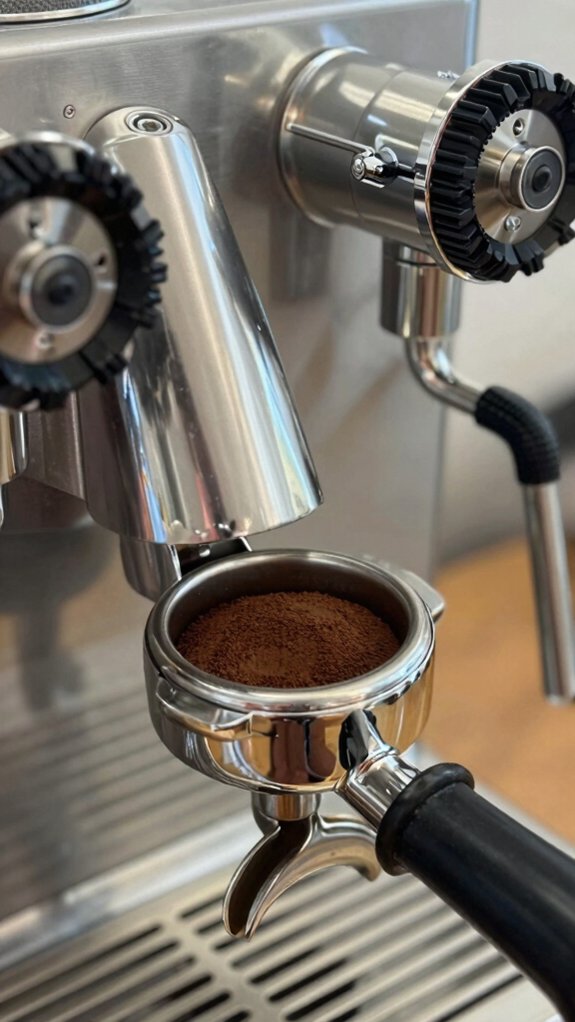
While your dose and grind are dialed in, consistently wet pucks can point to your machine itself, where factors like solenoid valves, baskets, and screens play a crucial role.
A faulty solenoid valve can leak, flooding your grounds.
Next, inspect your filter basket; a damaged or ill-fitting one causes poor water distribution, leading to uneven extraction and a soupy mess.
Finally, a clogged or worn dispersion screen disrupts flow, soaking the puck.
I make backflushing and screen cleaning part of my weekly routine; it’s a game-changer.
Remember, one survey found nearly 30% of home machine issues stem from neglected maintenance.
Keep these parts clean and functional for a perfect, dry puck every time.
Puck screens, paper filters, pre-infusion tweaks
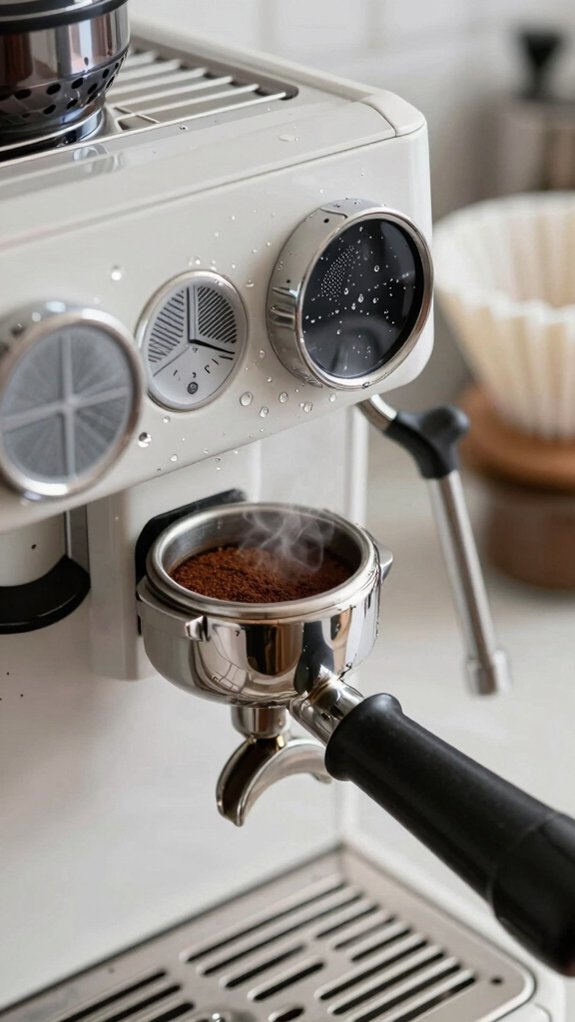
Here’s how each element works in harmony for a better puck structure:
Puck Screens: Place one atop your grounds to diffuse water evenly, preventing channeling and creating a more cohesive puck bed.
Paper Filters: Adding one below or above the grounds filters out fine sediment, which helps lock in a drier, cleaner puck post-brew.
Pre-Infusion Tweaks: A gentle 4-8 second pre-bloom saturates the coffee evenly, preventing the rapid water surge that causes a soupy mess.
The Combined Effect: Using these together builds a stable foundation, leading to balanced extraction and that perfect, tap-out-ready puck.
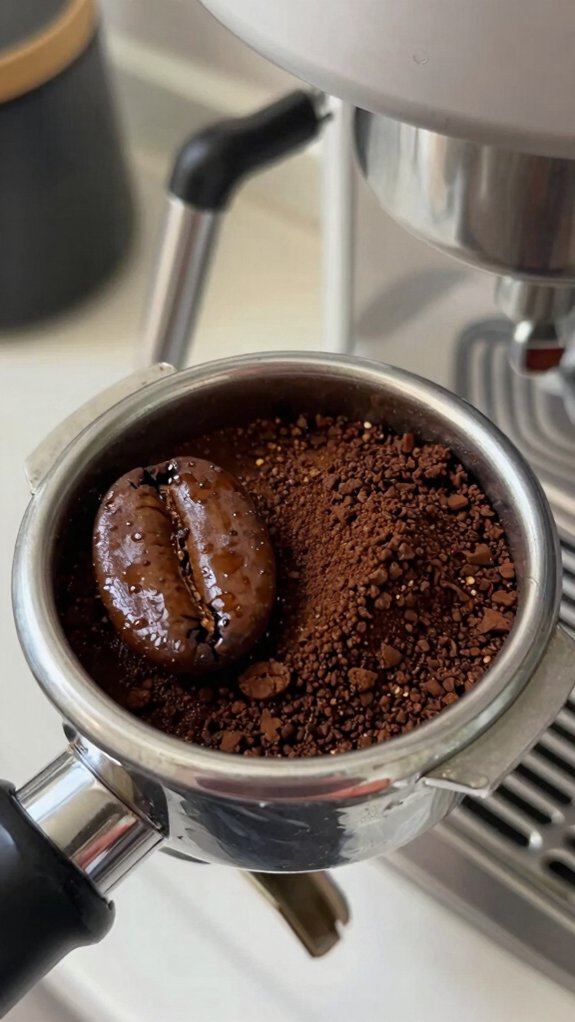
Does puck appearance affect espresso taste?
| Puck Looks… | But Taste Can Be… |
|---|---|
| Wet and Soupy | Sweet & Balanced |
| Dry and Crumbly | Over-Extracted & Bitter |
| Perfectly Flat | Under-Extracted & Sour |
| Cracked | Rich & Full-Bodied |
| Uneven | Excellent Anyway |
Frequently Asked Questions
Should My Coffee Puck Be Wet or Dry?
I prefer a slightly moist puck, as a very dry one can indicate poor extraction. A soupy, wet puck means my grind is likely too coarse or my dose is too low, so I’ll adjust those.
What Does It Mean if the Puck Is Wet?
A wet puck means I’ve likely under-dosed my coffee, ground too coarsely, or tamped unevenly.
It suggests fast channeling water, not proper extraction. I’ll check my dose, grind, and technique to fix it.
How Should My Coffee Puck Look?
Your puck should look slightly moist, even, and compact. I want no major cracks or screw imprints.
While a perfect puck often means great flavor, remember a messy one can still taste delicious.
What Is the Difference Between Wet and Dry Coffee Foam?
I’d say a “dry foam” is a contradiction only my puck could invent, it’s just dry, sandy grounds.
A proper wet foam is crema, that luscious, creamy layer crowning a perfect shot.
Aim for that golden mean.
In Conclusion
Aim for a moist, solid puck, it’s your roadmap to balanced flavor. Think of it like a well-baked cake: a perfect, slightly damp texture means even extraction.
If it’s soupy, tweak your dose and grind, and always keep your machine clean. Remember, a great puck is the foundation of your espresso, so give it the care it deserves.
Happy brewing.