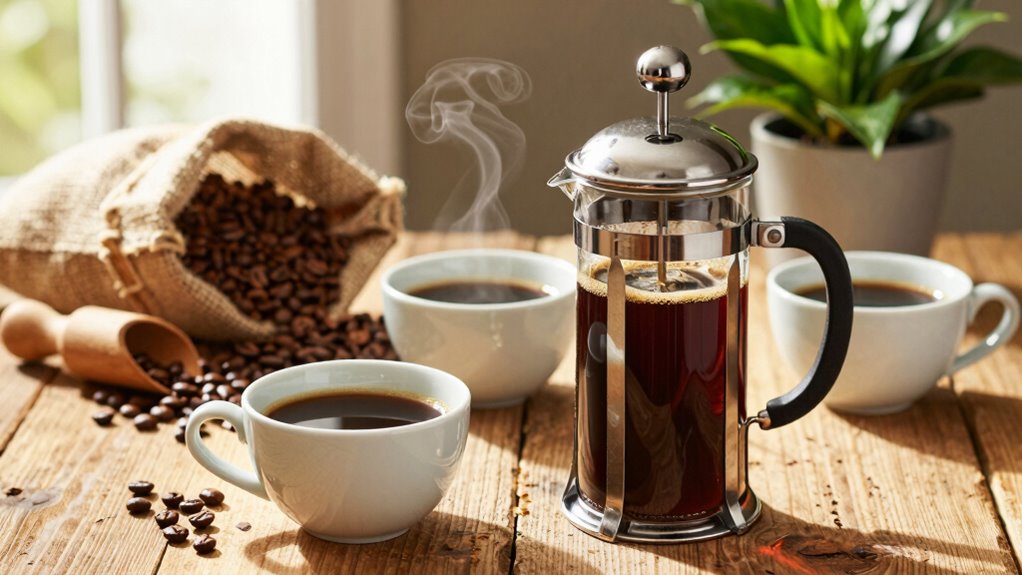

According to the Specialty Coffee Association, peaberry beans account for only 5-10% of any coffee harvest, making them one of the rarest naturally occurring mutations in coffee production. Despite their scarcity, many coffee enthusiasts claim these single, round beans produce a more concentrated and flavorful cup than standard flat beans-but is the premium price worth it?
If you’ve been wondering whether peaberry coffee lives up to the hype or questioning why it costs significantly more than regular beans, you’re not alone. In this guide, we’ll explore the origins of peaberry coffee, break down its distinctive flavor profile, examine whether the higher cost is justified, and share the best brewing methods to extract maximum flavor from these unique beans.
Table of Contents
What is peaberry coffee, and why?
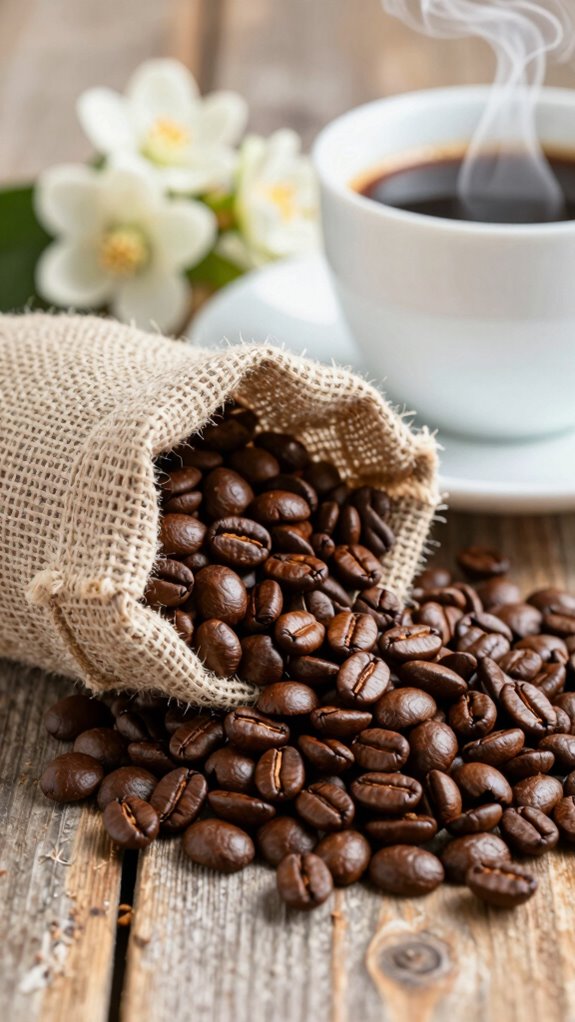
Coffee lovers, meet the intriguing peaberry: a unique coffee bean that stands out from its standard counterparts. Unlike typical coffee cherries with two flat-sided seeds, peaberries develop as a single, round bean when only one seed fertilizes inside the fruit. They represent about 5% of all coffee harvests, making them a rare find. Roasting characteristics suggest that these beans roll differently during the roasting process, potentially creating unique flavor profiles.
Imagine a bean that gets all the nutrients without sharing – that’s the peaberry. Its distinctive oval shape comes from growing solo in the coffee cherry, creating a denser, more concentrated bean that roasters and coffee enthusiasts find fascinating.
Peaberry vs regular beans taste differences
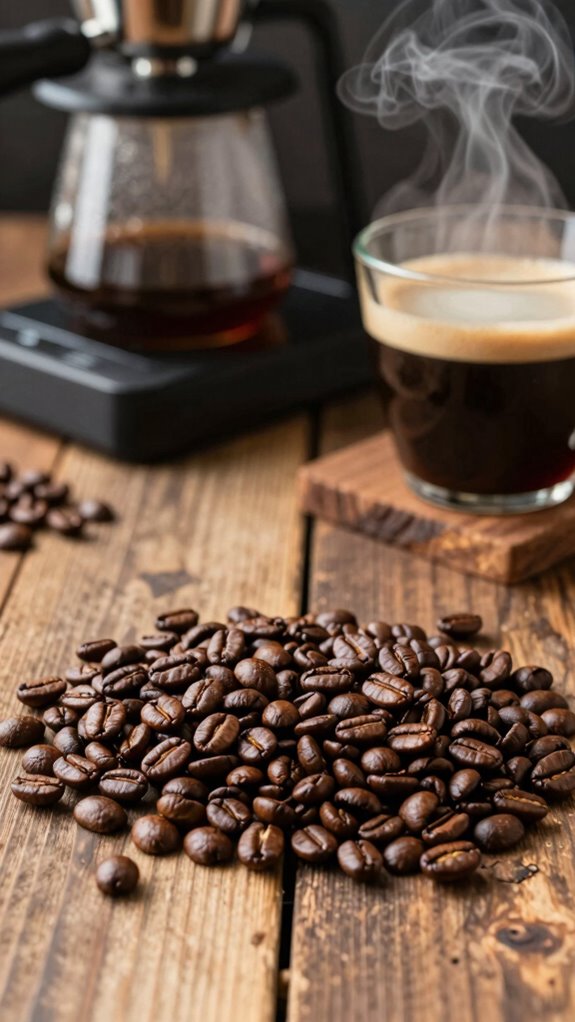
Coffee enthusiasts often perk up when they hear about the taste differences between peaberry and regular coffee beans, and for good reason. Tanzanian high-altitude regions contribute to the unique characteristics of these specialty beans, producing exceptionally nuanced coffee profiles.
Peaberries typically offer a more intense, brighter flavor profile with exceptional clarity.
Their unique round shape allows for more even roasting, resulting in a cleaner, more focused cup.
Key taste distinctions include:
- More pronounced flavor notes
- Enhanced sweetness
- Brighter, livelier acidity
- Fuller, smoother body
- Greater complexity
While not universally superior, peaberries often represent a premium coffee experience that can delight discerning palates seeking a more concentrated and nuanced brew.
Where does peaberry coffee come from
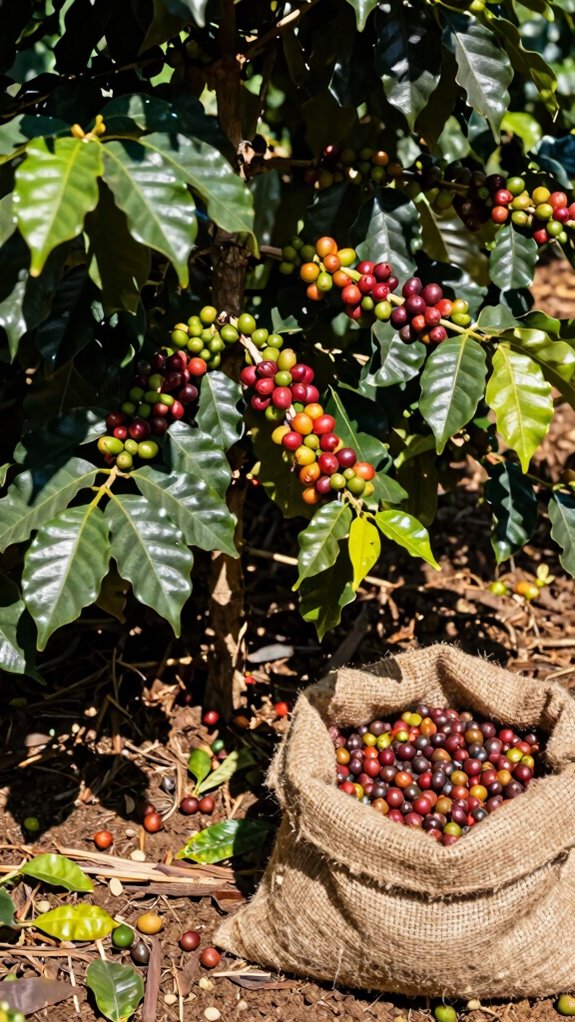
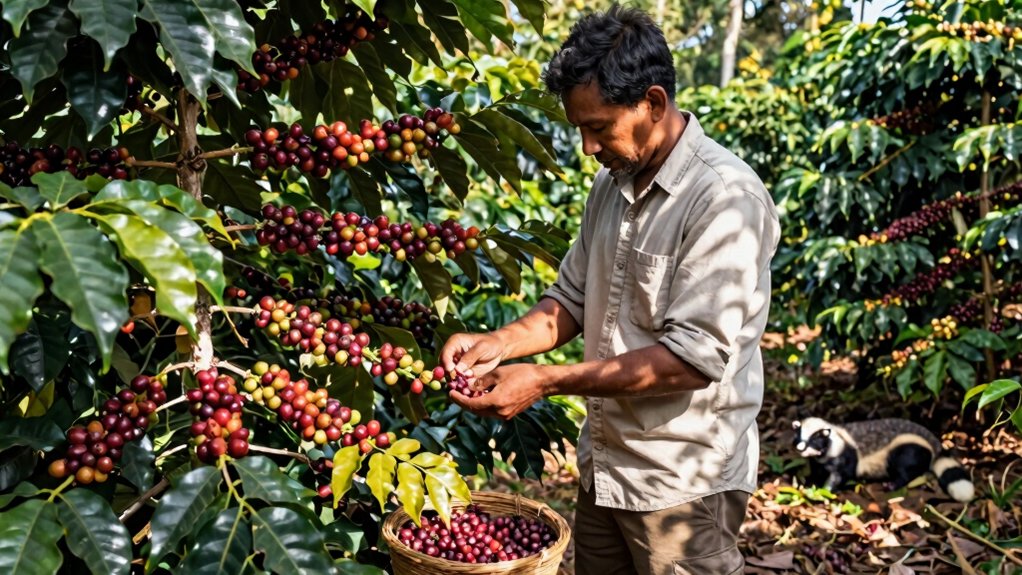
Around the globe, peaberry coffee emerges as a unique bean mutation found in nearly every coffee-producing region, from the volcanic highlands of Tanzania to the sprawling estates of Brazil. These rare, round beans occur in about 5-10% of coffee harvests worldwide. High-altitude volcanic soils contribute to the exceptional flavor and density of these distinctive coffee beans.
| Origin | Notable Regions | Elevation |
|---|---|---|
| Tanzania | Kilimanjaro | 4,500-6,000 ft |
| Kenya | Highland Areas | 4,000-6,500 ft |
| Hawaii | Kona | 1,000-2,500 ft |
Peaberries develop when a single seed grows inside the coffee cherry, instead of the typical two. While found in both Arabica and Robusta crops, specialty markets predominantly feature Arabica peaberry lots from regions like Tanzania, Kenya, and Hawaii, each offering distinct flavor profiles shaped by their unique terroir.
Why is peaberry coffee more expensive
Because peaberry coffee commands a higher price tag, it’s essential to understand the unique factors driving its premium cost. These rare beans develop when only one seed grows inside the coffee cherry, occurring in just 5-10% of crops. The scarcity alone increases value, but labor-intensive sorting amplifies expenses.
Skilled workers meticulously hand-select these small, rounded beans from regular crops. Processing requires multiple precision checks, especially in challenging terrains like Hawaii’s Kona belt. Limited supply from specific regions like Tanzania and Kenya further pushes prices upward, with pure peaberry often costing $15 more per pound than standard coffee.
How to brew peaberry coffee at home
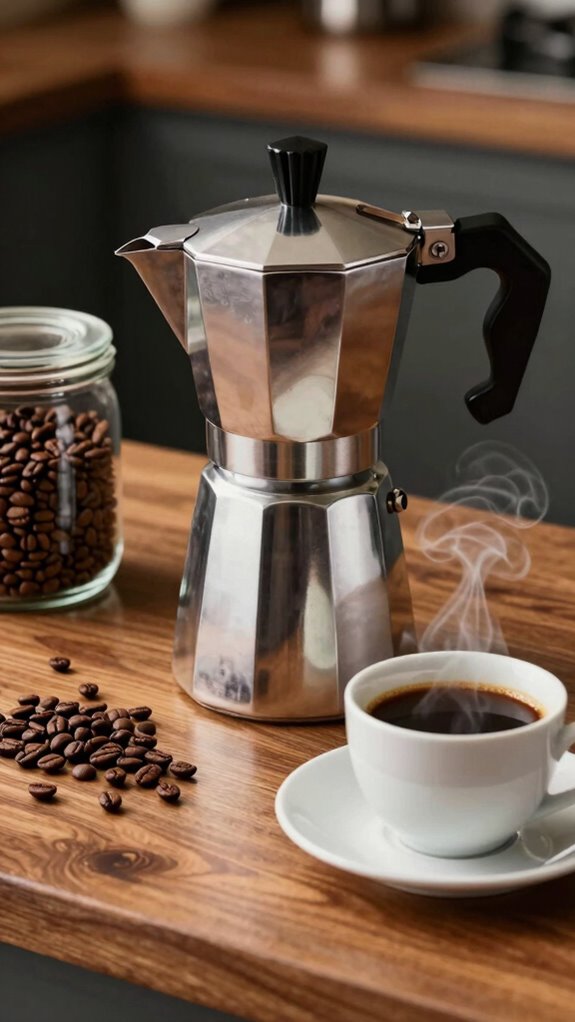
Brewing peaberry coffee at home requires selecting the right ingredients, having specific equipment on hand, and following precise brewing techniques that highlight this unique coffee’s distinctive flavor profile.
I’ll walk you through the essential components you’ll need, from choosing high-quality peaberry beans to selecting the perfect brewing method that maximizes their exceptional taste characteristics.
Whether you’re using a pour-over, French press, or AeroPress, grasping the nuanced approach to brewing peaberry coffee will help you extract the most vibrant and complex flavors from these special, rounded coffee beans.
Ingredients
When you’re ready to elevate your home coffee experience, mastering peaberry coffee ingredients is your gateway to an exceptional brew.
Start with freshly roasted beans no older than two weeks. You’ll need:
- 1 tablespoon (about 20g) medium-ground peaberry coffee
- 6 ounces hot water (195–205°F)
- Optional: 6 ounces steamed milk for a latte
- Additional ingredients for variations like frappuccino: cold water, ice, milk, sugar, vanilla
The key is precision. Measure your ingredients carefully, and you’ll transform simple components into a remarkable coffee experience.
Equipment
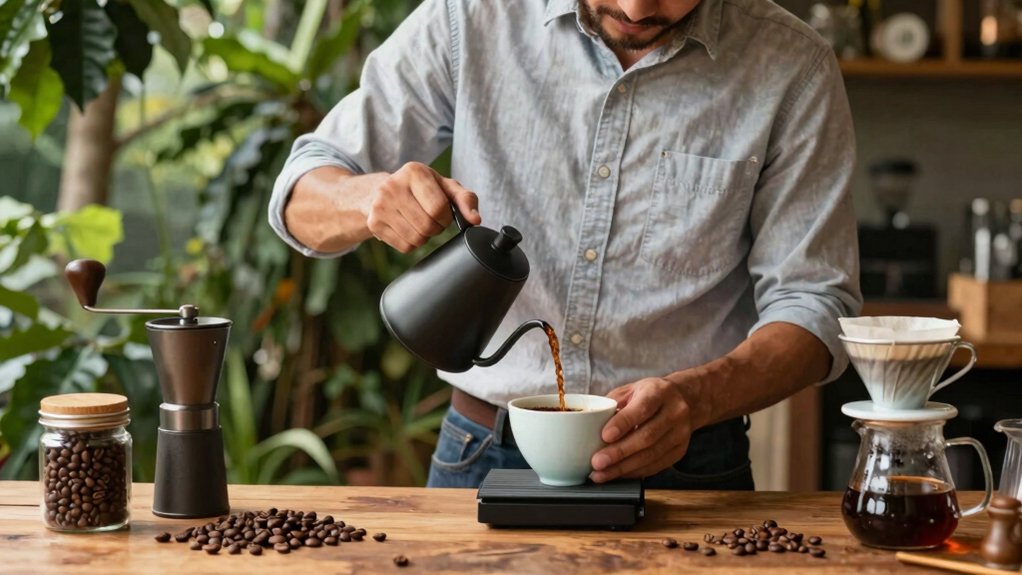
After selecting your premium peaberry beans, choosing the right equipment becomes your next strategic move in crafting an extraordinary coffee experience. Your brewing arsenal should include a quality burr grinder for consistent particle size, a variable-temperature kettle for precise heat control, and brewers that match your preferred style.
| Equipment | Ideal For |
|---|---|
| Burr Grinder | Consistent grind size |
| Gooseneck Kettle | Precision pouring |
| Pour-Over Dripper | Bright, clean flavors |
| AeroPress | Quick, versatile brewing |
| Digital Scale | Precise brew ratios |
Different brewing methods unlock unique peaberry characteristics, so experiment to find your perfect cup.
Instructions
If you’re passionate about unlocking the unique flavors of peaberry coffee, mastering home brewing techniques will transform your daily cup into a sensory adventure.
Choose your brewing method wisely: pour-over highlights delicate notes, French press delivers full-bodied richness, cold brew mellows acidity, and espresso concentrates bold flavors.
Key variables include water temperature (195-205°F), grind size (medium for drip, coarse for French press), and brewing time.
Always use freshly roasted beans, measure precisely, and experiment to find your perfect extraction.
Best roast and grind for peaberry
The secret to unlocking peaberry coffee‘s exceptional flavor lies in selecting the right roast level and grind size, which can transform these unique, round beans into a truly remarkable cup.
Medium roast offers the most balanced complexity, highlighting stone fruit and chocolate notes while preserving the bean’s natural sweetness. For brewing, match your grind to your method: medium for drip or French press, fine for espresso, and coarse for pour-over.
The key is grasping how roast and grind work together to extract the best possible flavor from these prized, single-bean cherries.
Buying tips and worth the hype
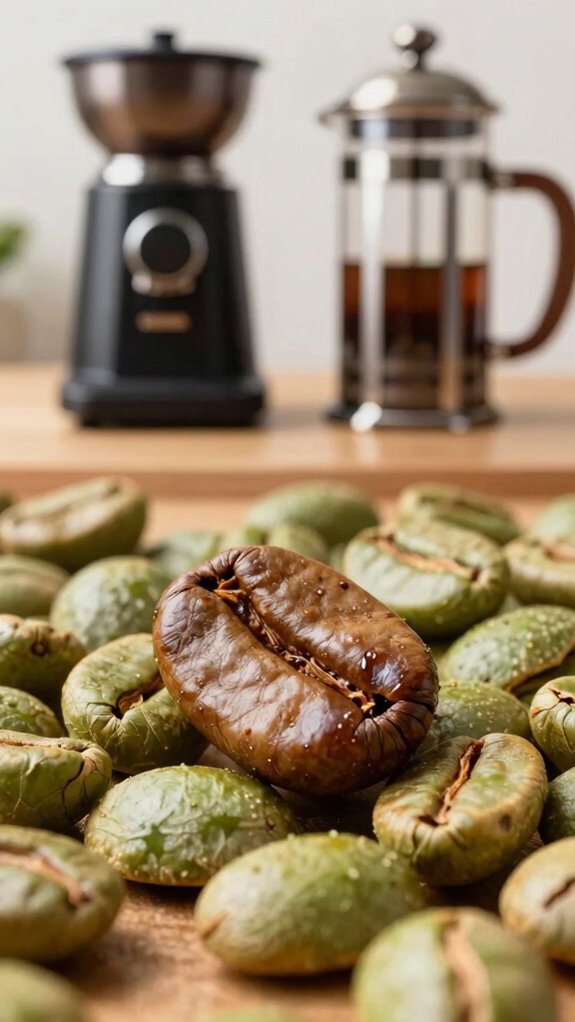
When evaluating whether peaberry coffee is worth the hype, you’ll quickly discover these rare, single-bean cherries aren’t just a trendy coffee curiosity-they’re a genuinely exceptional brewing experience.
| Pro | Con |
|---|---|
| Unique flavor profile | Higher price |
| Limited production | Complex sorting |
| Superior roasting potential | Requires careful selection |
| Intense taste complexity | Small batch availability |
Direct farm purchases and specialty roasters like Buddha’s Cup ensure quality control. Sampling small batches lets you explore peaberry’s nuanced characteristics without major investment. While 10-15% pricier than standard beans, the concentrated flavor and uniform roasting make peaberries a worthwhile indulgence for serious coffee enthusiasts seeking a refined, distinctive brewing experience.
Frequently Asked Questions
Can Peaberry Coffee Be Used in Espresso Machines?
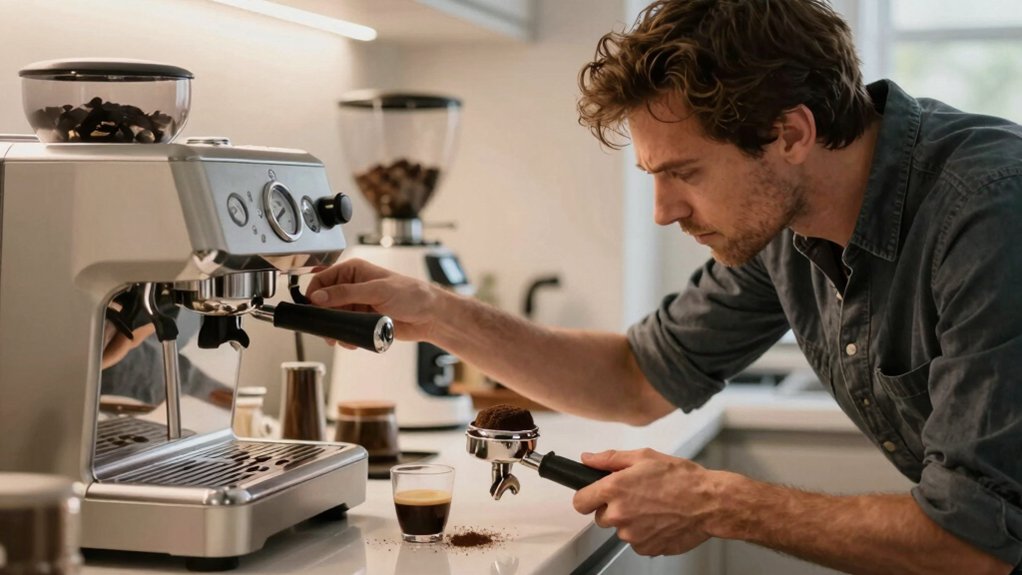
Yes, I can confidently use peaberry coffee in espresso machines! With a fine grind and dark roast, it’ll produce a concentrated, bold shot that highlights the bean’s unique sweetness and complex flavor profile.
Do Peaberry Beans Have More Caffeine Than Regular Coffee?
Like a subtle spark in a coffee symphony, I’ve found peaberry beans do contain slightly more caffeine by weight. However, in your actual cup, the difference is minimal and won’t dramatically change your morning brew’s kick.
Are Peaberry Beans Organic and Sustainably Sourced?
Peaberry beans aren’t inherently organic, but many are sustainably sourced. I’ve found certified organic peaberries from regions like Tanzania and Kona. Their organic status depends on specific farming practices and third-party verification, not just bean shape.
How Long Do Peaberry Coffee Beans Stay Fresh?
I’ll track freshness, savor flavor, and preserve quality. Unopened peaberry beans stay fresh 2-6 months, while opened beans maintain peak taste for 1-3 weeks at room temperature, depending on storage conditions and packaging.
Can Peaberry Coffee Be Good for Cold Brew?
Yes, peaberry coffee is excellent for cold brew! I’ve found Tanzanian and Hawaiian varieties particularly delightful, offering smooth, sweet profiles with reduced acidity. Using a coarse grind and steeping 12-24 hours creates a refreshing, flavorful cold brew experience.
In Conclusion
If you’re wondering what makes peaberry coffee special, the answer lies in its unique single-bean structure that concentrates flavor into every cup. Like a hidden gem in the coffee world, these rare beans offer a flavor journey that’ll transform your morning ritual with their distinctive sweetness and complex profile. Whether you’re a casual sipper or a serious enthusiast, peaberry’s concentrated character is worth exploring.
To get the most from these exceptional beans, remember that small batches, fresh roast, and the right brewing method are essential. And if you’re ready to elevate your peaberry experience, check out our coffee machine reviews to find the perfect brewer that’ll unlock this extraordinary coffee’s full potential-because beans this special deserve equipment that does them justice.