According to the American Chemical Society, coffee typically registers between 4.85 to 5.10 on the pH scale, making it roughly as acidic as a banana. Yet despite millions of people drinking coffee daily, many struggle with acid reflux, heartburn, or stomach discomfort after their morning cup-leading them to wonder if they need to give up their beloved brew altogether.
The good news? You don’t have to choose between flavor and comfort. This post will walk you through the science of coffee acidity, reveal which beans and brewing methods naturally produce less acidic coffee, and show you practical ways to enjoy a smoother, gentler cup without sacrificing taste.
Table of Contents
Is coffee acidic or not really
Yes, coffee is indeed acidic, but not in the way you might think. With a pH ranging from 4.85 to 5.10, coffee sits firmly in the mildly acidic category. It’s packed with 22 different acids, including citric, acetic, and chlorogenic acids that contribute to its unique flavor profile. Different roasting processes can significantly alter the acid composition, with light roasts preserving more organic acids and creating a brighter, more acidic taste profile.
These acids aren’t harmful – they’re actually part of what makes your morning brew so delicious. Your body easily handles this acidity through natural buffering systems, maintaining a stable blood pH between 7.35 and 7.45. So while coffee’s acidic, it won’t throw your internal chemistry out of whack.
Coffee pH, acids, and flavor basics
Although coffee’s acidity might seem like a complex chemistry lesson, it’s actually a fascinating journey into flavor science that every coffee lover should understand. Roasting techniques like slow roasting can strategically reduce coffee’s inherent acidity while preserving its complex flavor profile.
Coffee typically measures between pH 4.5 and 4.9, making it slightly acidic. This acidity isn’t just a number-it directly impacts taste, creating that bright, tangy sensation we love or hate.
Key pH insights:
- Logarithmic scale means small changes significantly alter flavor
- Lower pH equals higher perceived sourness
- pH around 5 delivers balanced, complex taste profiles
Understanding coffee’s pH helps you choose beans that match your palate perfectly.
Does coffee cause heartburn or reflux
Coffee can trigger heartburn and reflux for many people, primarily due to its acidic nature and caffeine content. The mechanism isn’t complicated: coffee stimulates gastric acid secretion and relaxes the lower esophageal sphincter, making acid escape more likely.
Not everyone’s affected equally. About 68% of people with daily heartburn experience symptoms after coffee, while others remain symptom-free. Factors like genetics, metabolic differences, and pre-existing conditions like GERD influence individual sensitivity.
If you’re prone to reflux, consider switching to low-acid beans or cold brew, which can reduce digestive irritation. The CYP1A2 genetic variation plays a crucial role in determining an individual’s caffeine metabolism and potential for reflux symptoms.
Ways to reduce coffee acidity daily
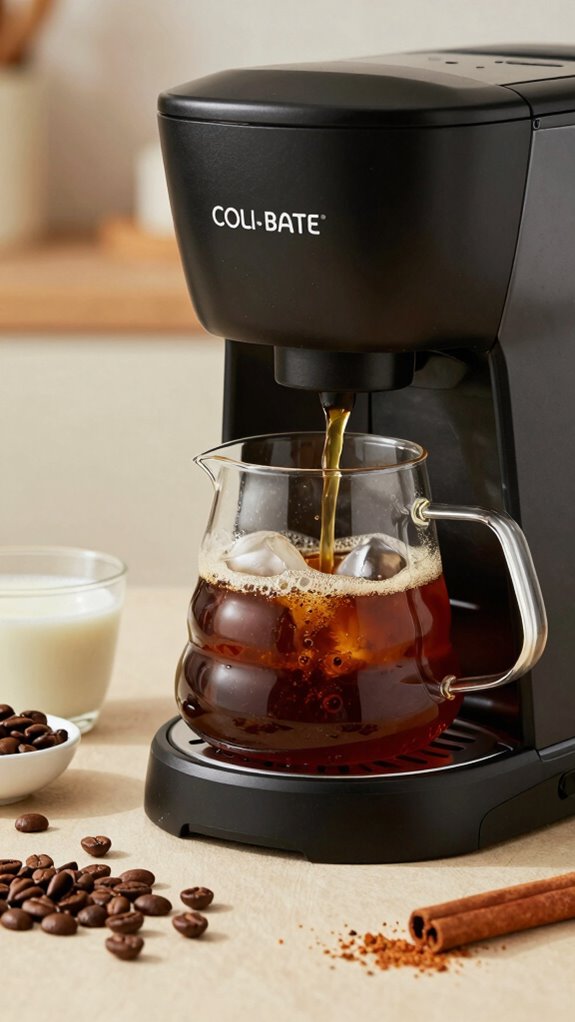
If heartburn’s got you rethinking your daily coffee ritual, you’re not alone-and there are multiple strategies to reduce coffee’s acidity without sacrificing flavor.
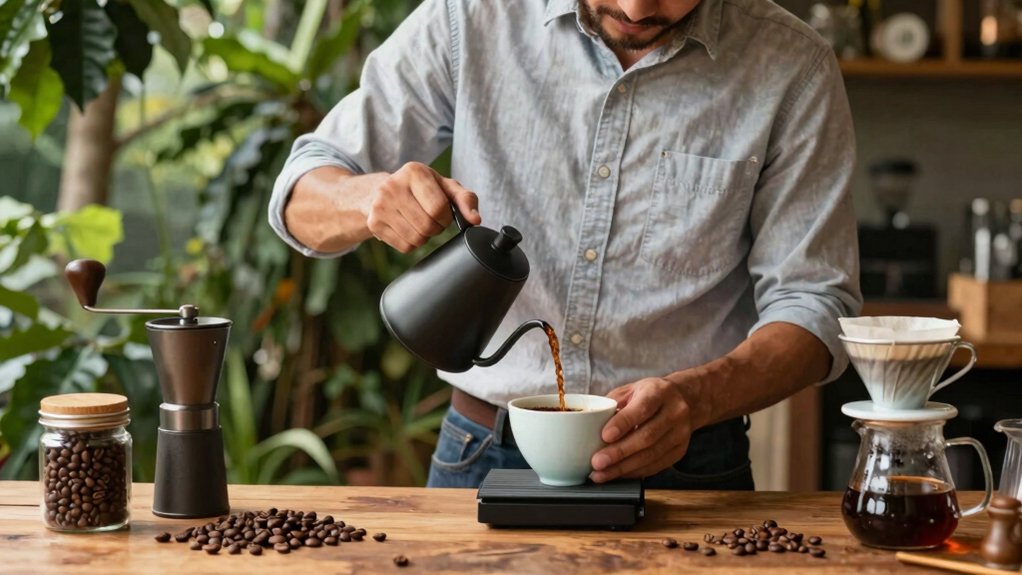
Try switching to darker roasts or Robusta blends, which naturally contain lower acid levels. Brew methods matter too: opt for pour-over with paper filters and slightly cooler water around 90°C.
Consider adding a splash of milk, which buffers acids, or experiment with a tiny pinch of baking soda. Low-altitude beans, longer brewing times, and gentler extraction techniques can also help minimize that stomach-churning sharpness while keeping your morning cup delicious.
How to make low-acid cold brew
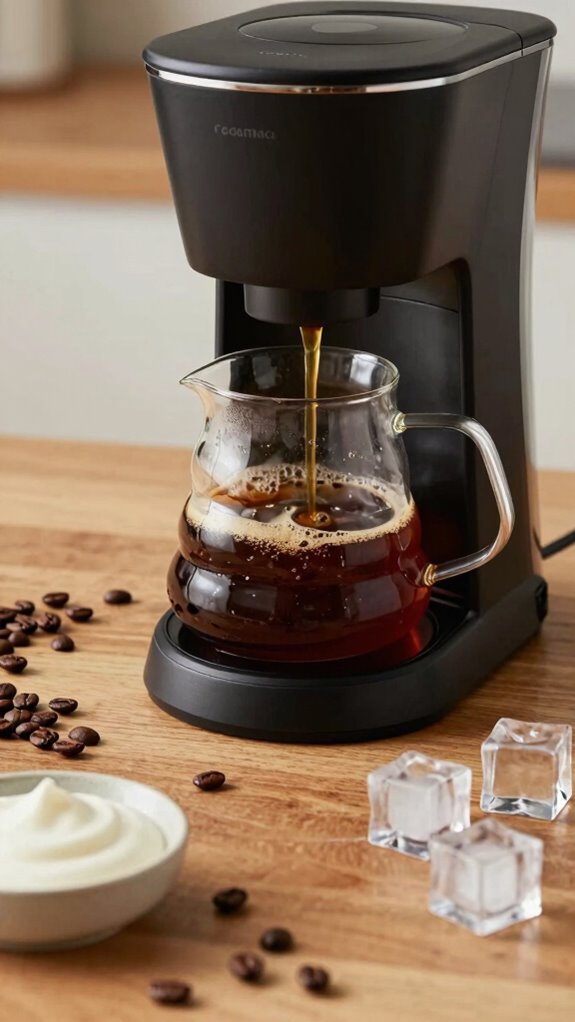
Low-acid cold brew is a game-changer for coffee lovers with sensitive stomachs, offering a smooth, less acidic alternative to traditional hot brewing methods.
By carefully selecting low-acid beans, using a coarse grind, and employing a precise cold steeping technique, you can create a gentle, flavorful coffee concentrate that’s easier on your digestive system.
I’ll walk you through the essential ingredients, equipment, and step-by-step instructions to craft the perfect low-acid cold brew right in your own kitchen.
Ingredients
Brew a silky-smooth, low-acid cold coffee by strategically selecting ingredients that minimize harsh flavors and digestive irritation. Your coffee journey starts with smart choices that transform your brewing experience.
Key ingredients for a low-acid cold brew:
- Low-acid beans: Choose Brazilian or Sumatran beans, preferably medium-dark roasted
- Coarse ground coffee: Ensures minimal acid extraction during brewing
- Filtered water: Removes chlorine and supports balanced flavor profile
- Optional neutralizers: Pinch of baking soda or salt to further reduce acidity
Careful ingredient selection creates a gentler, more enjoyable cold brew that won’t upset your stomach.
Equipment
Cold-brew coffee equipment transforms your kitchen into a flavor laboratory, turning ordinary ingredients into a silky, low-acid elixir.
Simple tools like mason jars, French presses, and dedicated cold-brew makers can dramatically reduce coffee’s natural acidity. Coarse grounds steeped in nonreactive glass containers with tight-sealing lids create a smooth, less tangy brew.
Mesh or paper filters help remove bitter particles, while refrigerator-safe storage prevents unwanted flavor contamination.
From home setups to commercial systems, the right equipment ensures consistent, gentle extraction that minimizes harsh acidic notes, giving you a mellow, refreshing coffee experience every time.
Instructions
After mastering your cold-brew setup, you’ll want to craft a smooth, less acidic coffee that transforms your morning routine.
- Grind coarse coffee beans for optimal extraction, ensuring a medium-coarse consistency that prevents bitterness
- Saturate grounds fully with filtered water, using a 1:3 to 1:6 coffee-to-water ratio
- Steep 12-24 hours at room temperature or in the refrigerator, covering to prevent aroma absorption
- Strain slowly through a fine mesh sieve or cheesecloth, maximizing liquid yield
The result? A deliciously low-acid cold brew concentrate that’ll revolutionize your caffeine experience, delivering rich flavor without the harsh bite.
Which beans and roasts are gentler
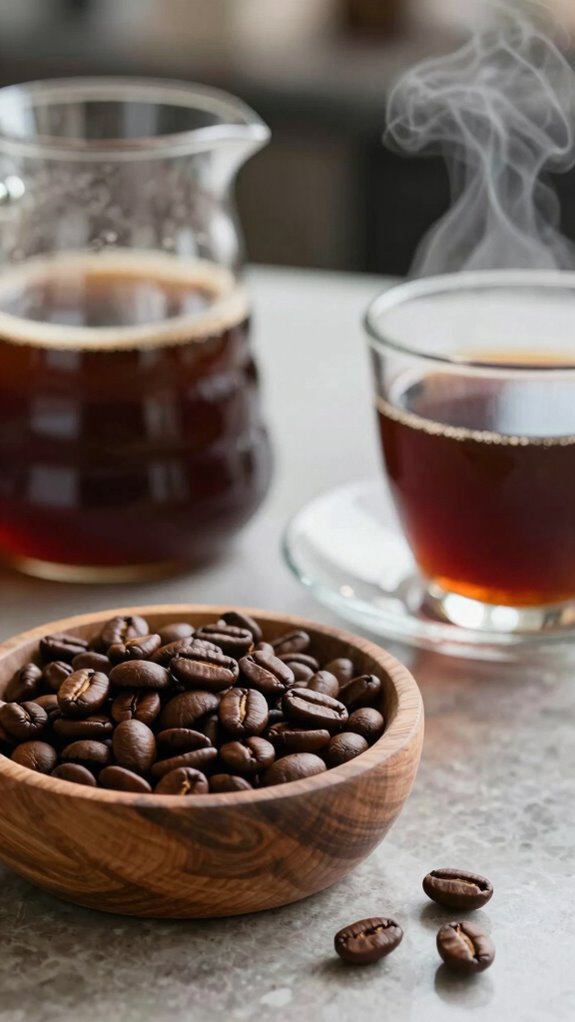
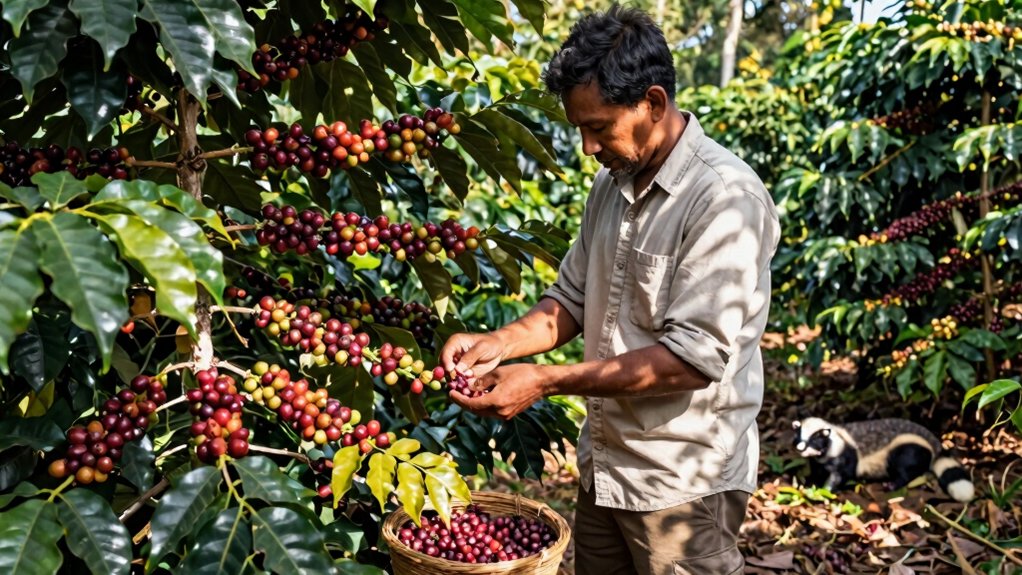
Coffee lovers, rejoice! Low-acid beans are your ticket to a gentler brew. Brazilian Mogiana and Laos Nhot Ou offer clean, balanced cups with medium body and reduced acidity.
Arabica varieties like Caturra and Bourbon naturally contain less acid than other types. Medium roasts strike the perfect balance, cutting chlorogenic acids while preserving sweetness.
Indonesian Bali beans, especially when naturally processed, provide a fruity, low-acid experience. Dark roasts with pH levels around 5.10-5.30 deliver bold flavors without harsh acidity.
Choose wisely, and your stomach will thank you!
Compare coffee acidity versus tea, espresso
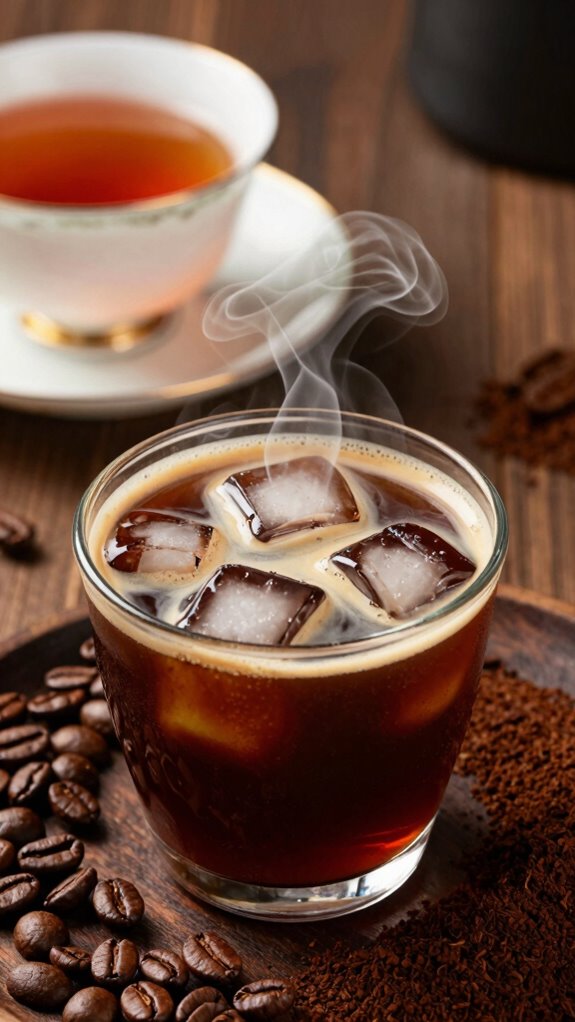
While tea and coffee might seem similar as hot beverages, their acidity levels tell a different story. Coffee consistently ranks more acidic than tea, with pH levels revealing key differences:
- Drip coffee averages 5.0-5.3 pH, significantly more acidic than green tea’s 7-10 pH range
- Black tea sits at 5.38-6.37 pH, milder than coffee’s 4.85-5.4 pH spectrum
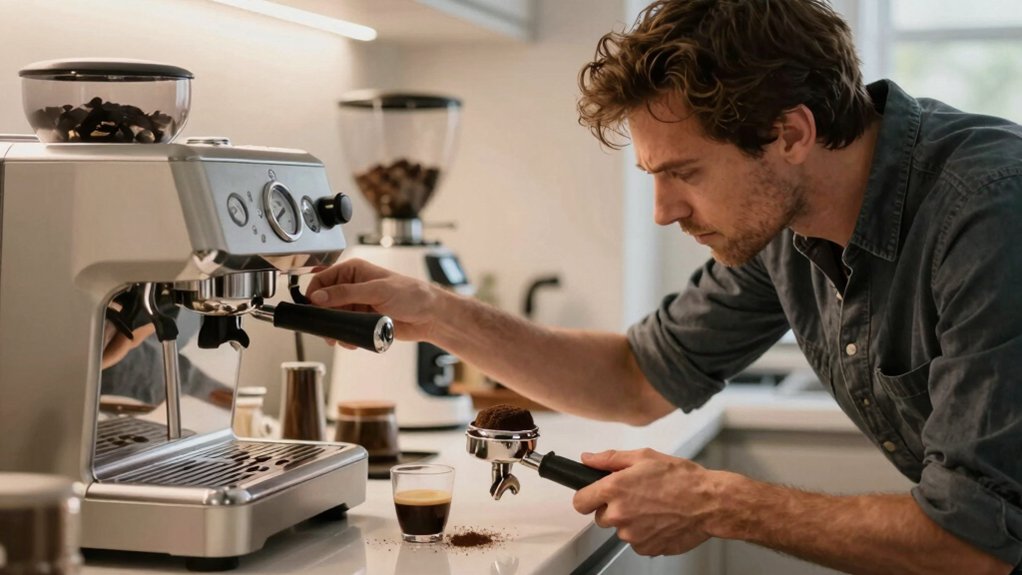
- Espresso offers slightly lower acidity (5.0-5.5 pH) compared to traditional drip methods
- Cold brew provides a gentler option, reducing overall acid content
For those sensitive to acidic drinks, comprehension of these nuanced differences can help choose a more stomach-friendly beverage.
Frequently Asked Questions
Can Drinking Coffee Lead to Long-Term Stomach Problems?
While moderate coffee consumption won’t likely cause long-term stomach problems, high intake might trigger digestive issues like GERD or IBS symptoms. I’d recommend listening to your body and limiting intake if you experience discomfort.
How Does Altitude Affect Coffee Bean Acidity Levels?
I’ve found that higher altitudes significantly boost coffee’s acidity, with beans grown between 1,200-1,800 meters developing brighter, more complex acidic profiles that enhance fruity and floral notes compared to lower elevation coffees.
Are Decaf Coffees Naturally Less Acidic Than Regular Coffee?
Based on the background data, decaf coffees are naturally less acidic than regular coffee. Their pH ranges higher (5.14-5.80), and they typically demonstrate reduced acidity through decaffeination processes, making them gentler on sensitive stomachs.
Do Milk or Cream Actually Neutralize Coffee’s Acidic Properties?
No, milk or cream don’t truly neutralize coffee’s acidity. They slightly buffer and dilute acids, reducing perceived sourness, but won’t transform coffee to a neutral pH. They can make coffee taste smoother and feel less harsh on your stomach.
Which Countries Produce Naturally Low-Acid Coffee Beans Worldwide?
I’ll help coffee lovers find low-acid beans worldwide! Sumatra, Brazil, Nicaragua, Mexico, and parts of Indonesia are top producers. Their lower-elevation farms naturally create smoother, less acidic coffees with rich, full-bodied flavor profiles.
In Conclusion
So, is coffee acidic or not really? The answer is yes-coffee naturally contains acids that give it character and brightness. But here’s the good news: you’re not stuck with that sharp, stomach-churning bite if it doesn’t suit you. Low-acid beans, cold brew methods, and darker roasts all offer paths to a smoother, gentler cup without sacrificing flavor.
Ready to craft that perfect brew at home? Check out our coffee machine reviews to find equipment that’ll help you extract those mellow, balanced flavors you’re after. Whether you’re chasing cold brew perfection or exploring low-acid roasts, the right machine makes all the difference between mediocre mornings and coffee magic in your mug.