Did you know 67% of home baristas report inconsistent brews without a scale? I’ve found that using one is the single fastest way to improve your coffee, because it brings precision to your routine.
You start by taring your brewer, measuring your grounds, and then watching the weight as you pour to nail the perfect water ratio. This simple control over variables unlocks flavors you might be missing.
Table of Contents
How to use a coffee scale
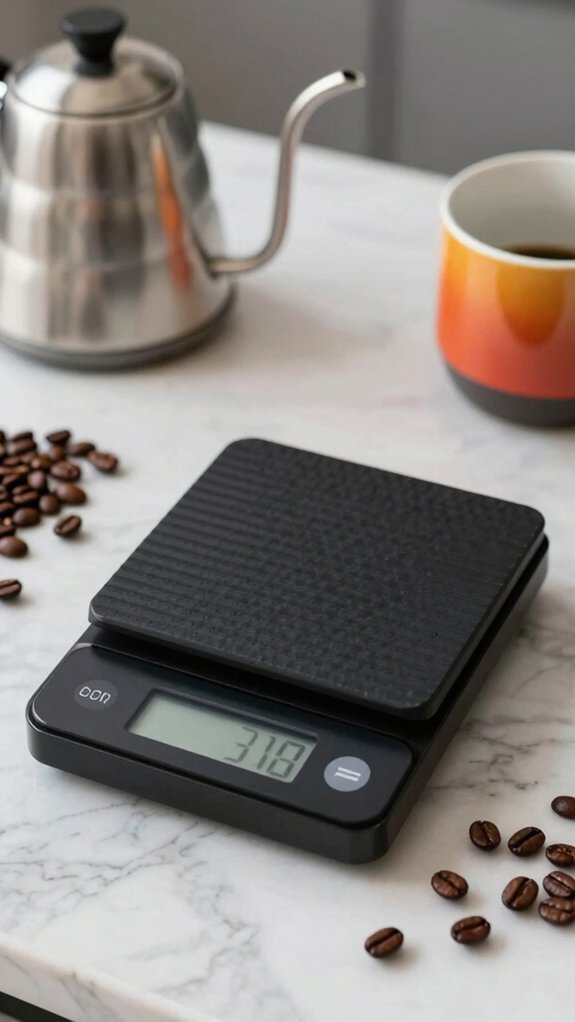
Using a coffee scale is the single most effective way to consistently brew a better cup, because precision is everything when it comes to extraction.
Start by placing your brewer on the scale and zeroing it out. Add your coffee dose-I typically use 18-20 grams. Zero the scale again, then pour your water.
This is where the magic happens: weighing in real time lets you nail your brew ratio. I aim for a 1:16 ratio, so for 18g of coffee, I’ll stop at 288g of water.
This accuracy prevents over or under-extraction, turning guesswork into a reliably delicious routine every single morning.
Why should I use a coffee scale
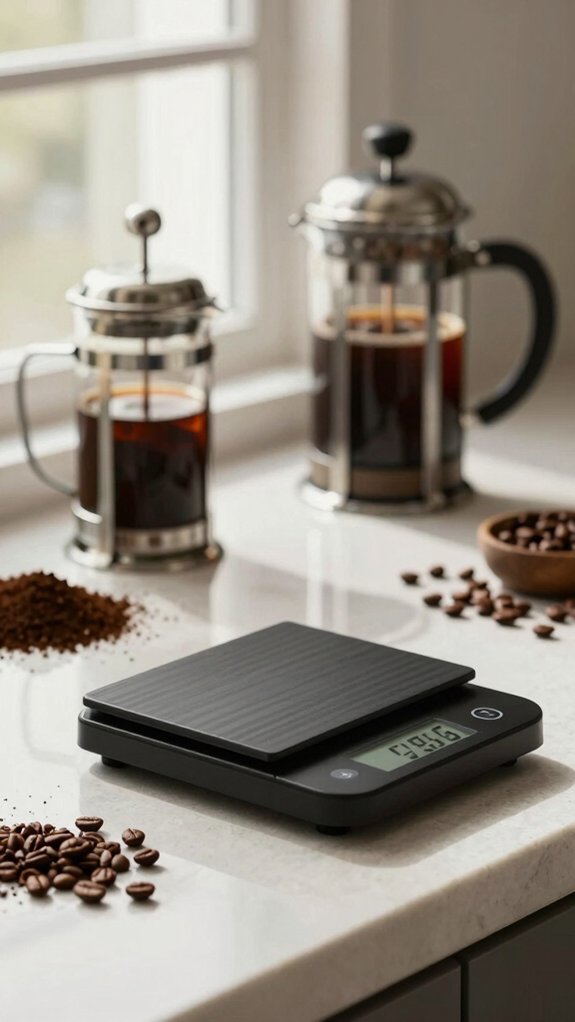
Ever wondered why your morning cup tastes incredible one day and just okay the next? The secret is consistency, which starts with a precise coffee-to-water ratio.
Using a scale eliminates guesswork, letting you accurately measure your coffee and water every single time. This precision is the foundation for all great brewing methods, from pour-over to French press.
I rely on my scale’s 0.1g accuracy to lock in the perfect 1:16 ratio, ensuring each brew extracts optimal flavor. It turns random results into repeatable perfection, letting you tweak strength to your taste.
Simply put, a scale is your fastest path to better, more reliable coffee every morning.
Coffee scale features that matter most
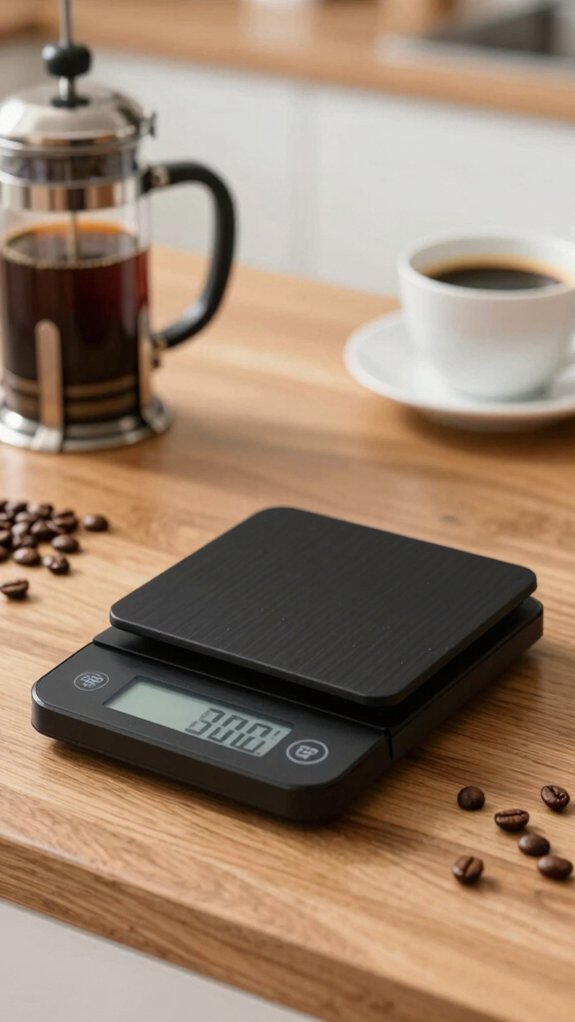
I also prioritize a built-in timer. Tracking brew time is non-negotiable for methods like pour-over, where seconds impact flavor.
A scale that handles at least 2 kg means I can brew directly into my carafe without worry.
These features work together to transform guesswork into consistent, cafe-quality results right at home.
How to brew pour-over using scale
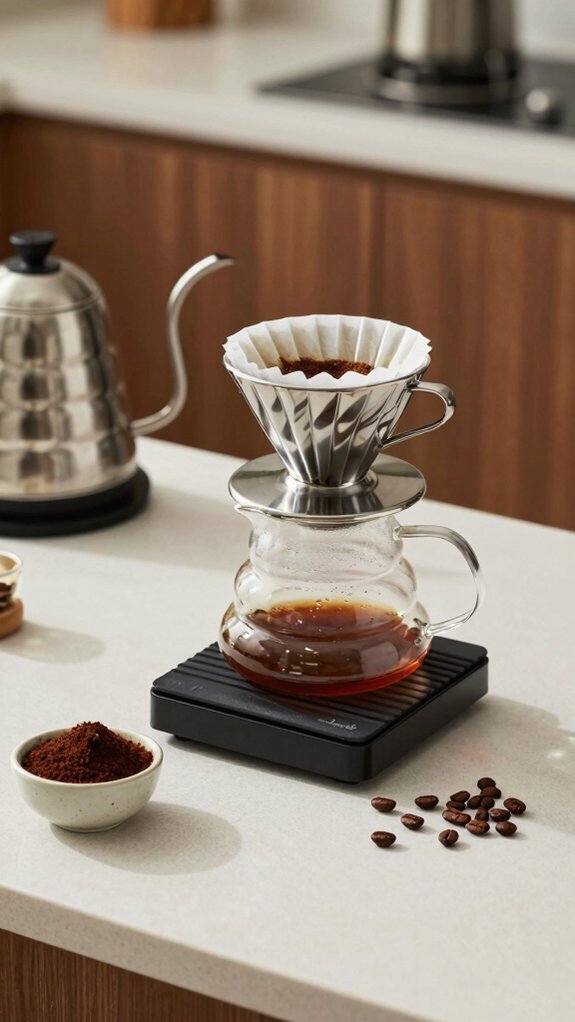
To brew a great pour-over with your scale, you’ll need just a few key ingredients and pieces of equipment.
I always start by gathering my fresh coffee beans and filtered water, plus my pour-over dripper and a gooseneck kettle for control.
Let me walk you through the simple instructions, where the scale becomes your guide to a consistently delicious cup.
Ingredients
Accurate measurement of your ingredients is the single most important step in brewing a consistently excellent pour-over.
I always start by placing my cup and dripper on the scale, then I tare it to zero. I weigh 18 grams of whole coffee beans-this precision is key.
After grinding, I return the portafilter to the scale and tare again for the water. For a balanced 1:15 ratio, I’ll need 270 grams of water.
I even measure the 36-54 grams for the bloom phase.
This meticulous approach ensures my brewing is repeatable and delicious every single time, turning scattered guesses into a perfect, reliable recipe.
Equipment
| Equipment | Purpose | Helpful Hint |
|---|---|---|
| Digital Scale | Measure water & coffee beans | Use 0.1g precision |
| Pour-Over Brewer | Holds grounds for extraction | Pre-rinse to heat it |
| Gooseneck Kettle | Controls pour speed | Aim for a steady, thin stream |
| Timer | Tracks bloom & brew | Sync with your scales display |
This organized approach turns scattered steps into a seamless, repeatable ritual.
Instructions
- Weigh & Grind: I start by weighing 18g of coffee beans, aiming for that 1:16 ratio (like 18g coffee to 288g water).
- Bloom: After heating water to 200°F, I pour 2-3x the coffee weight (36-54g) to bloom for 30 seconds, ensuring even extraction.
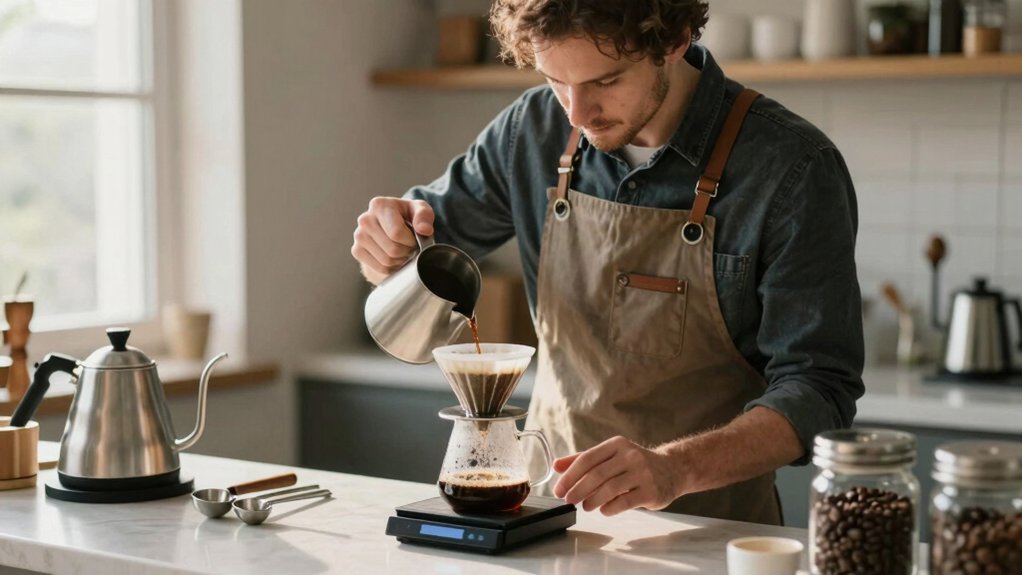
- Pour Steadily: I then pour slowly in circles, watching the scale to hit my total water weight, which directly controls my brew time.
- Analyze & Adjust: I stop my timer at 3:00, taste, and log the details.
A consistent brew time between 2:30-3:30 is my sweet spot for a balanced cup.
How to dial espresso with a scale
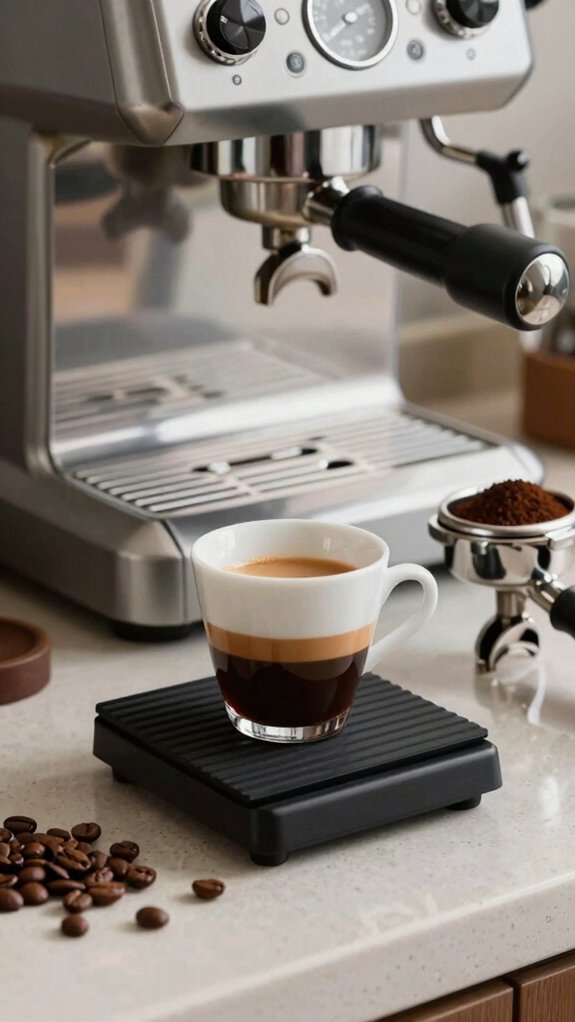
To dial in espresso with a scale, you’ll need a few key ingredients and pieces of equipment before following specific instructions.
I start by weighing my coffee beans to the exact gram, as research shows even a 1-gram variance can significantly alter extraction.
Then, I use the scale to measure my output, which lets me adjust my grind and dose based on taste for a perfect shot.
Ingredients
Weigh your beans: Start with 18-20g for consistency.
Set your target yield: Aim for a 1:2 brew ratio, for example, 18g in, 36g out.
Time the shot: Your scale helps track a 25-30 second extraction.
Log the results: Note dose, yield, and time to perfect your next cup.
Equipment
Your trusty coffee scale is the secret weapon for dialing in your perfect espresso shot, turning guesswork into precision.
I always start by weighing my ground coffee dose directly into the portafilter. My scale, with its crucial 0.1-gram resolution, ensures I hit my target, usually 18 grams.
I then place my entire brewing device (portafilter and all) on the scale to weigh the output, stopping the shot right at 36 grams for that ideal 1:2 ratio.
Timing this with the scale’s built-in timer, I aim for 25-30 seconds. If it’s too fast or slow, I adjust the grind.
This methodical approach, using the scale for both input and output, guarantees a balanced, delicious espresso every time.
Instructions
Now that we’ve our scale ready, let’s walk through how to actually use it to dial in a great espresso shot.
I start by placing my cup and portafilter on the scale, then tare it. I weigh my coffee dose, aiming for 18 to 20 grams.
My process follows these four key steps:
Weigh your dose: A consistent dose is the foundation for a great brew.
Target your output: I use a 1:2 ratio, so for 18g of coffee, I stop the shot at 36g in my cup.
Time the extraction: I aim for that output to happen in 25 to 30 seconds by adjusting my grind.
Taste and log: I note the results and tweak one variable at a time until the flavor is perfect.
Common mistakes when using coffee scales
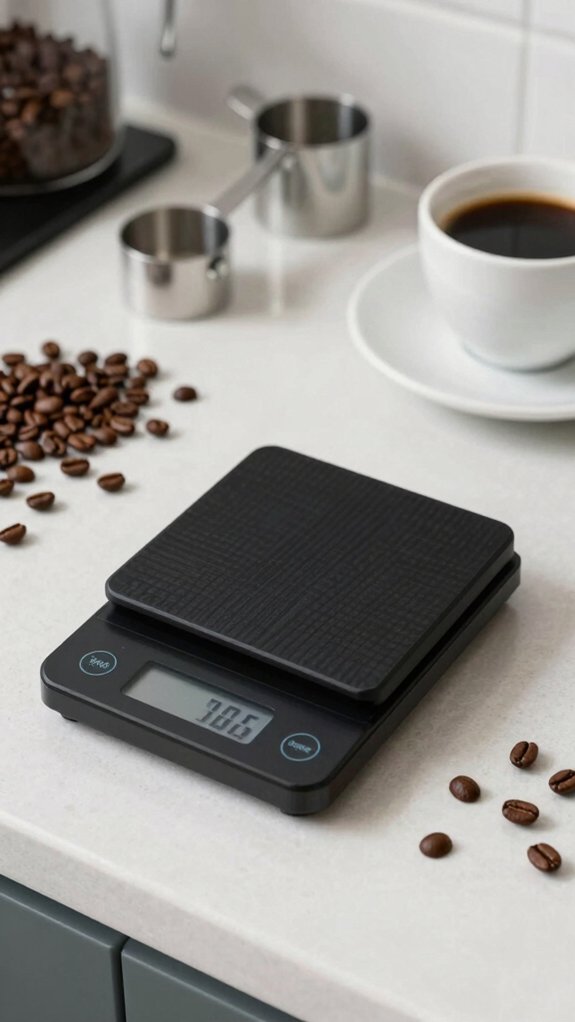
While you might think using a coffee scale is straightforward, a few common mistakes can easily throw off your perfect cup if you’re not careful.
First, forgetting to tare your scale with the vessel onboard leads to inaccurate measurements right from the start. This directly sabotages your coffee-to-water ratio.
Next, over-pouring is common. Without watching the scale in real-time, you’ll miss your target water weight, skewing that crucial ratio.
Also, an inconsistent pouring speed causes uneven extraction. A steady pace is key for an even brew.
Finally, don’t rush the 30-45 second bloom; it’s essential for gas release and flavor.
And always log your successful recipes! Skipping this prevents you from replicating your best cups.
Calibrate, care, and troubleshoot coffee scales
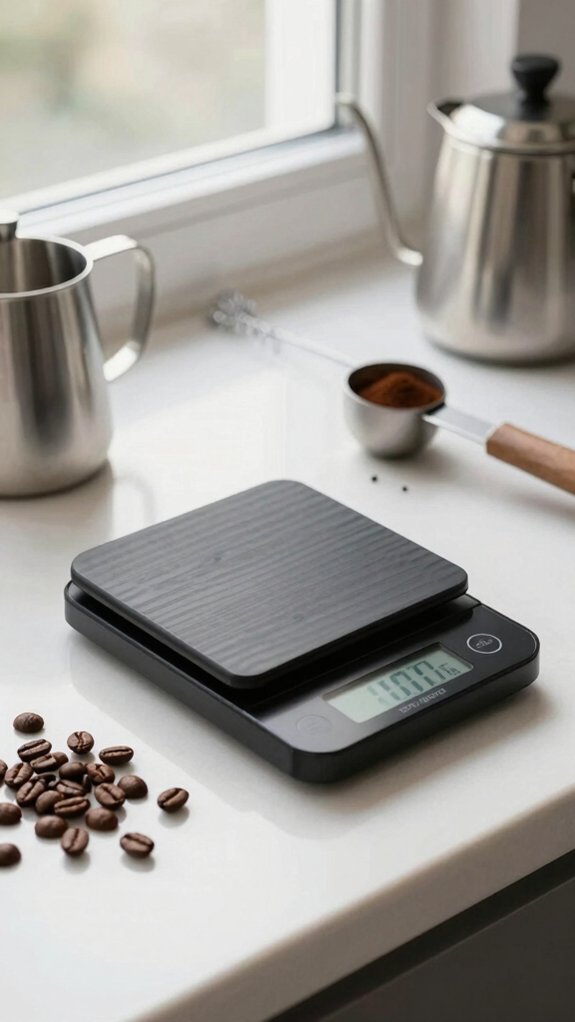
Here’s my essential maintenance list:
Calibrate monthly using a known weight to ensure precision.
Care for it by cleaning after each use and keeping it on a level surface.
Troubleshoot readings by checking and replacing low batteries.
Always tare properly before weighing to reset to zero.
This simple routine guarantees perfect measurements every time.
Frequently Asked Questions
How to Use a Coffee Scale?
I place my cup on the scale, tare it, then add my coffee beans to weigh them precisely.
I tare again and pour my water, watching the weight in real time to nail my perfect brew ratio.
Does Descaling Improve Coffee Flavor?
Yes, I find descaling regularly improves my coffee’s flavor. It removes mineral buildup, ensuring optimal water flow and temperature for better extraction.
This gives me a more balanced and aromatic cup.
What Is the 80 20 Rule for Coffee?
The 80/20 rule for coffee is like a flavor treasure map, where I focus my effort on the vital 20% of variables, such as my grind size and brew time, to unlock 80% of my drink’s best possible taste.
How to Make a Coffee Shot Run Faster?
I ensure my grind is slightly coarser and use a higher water temperature.
I also increase my pour speed slightly while keeping the dose constant to shorten the brew time without sacrificing flavor.
In Conclusion
So, using a scale truly is your secret weapon for café-quality coffee at home. Think of it as your reliable co-pilot, guiding each pour and grind with precision.
You’ll taste the vibrant difference in every consistent, balanced cup. Stick with it, and you’ll not only brew better coffee fast, you’ll enjoy the journey, one perfectly measured scoop at a time.