
Yes, you can drink coffee while breastfeeding, good news for us caffeine lovers. I stick to 1–2 cups a day, keeping my intake under 200 mg of caffeine, which most experts agree is safe. It’s not just about quantity, though.
Caffeine peaks in breast milk about an hour after I sip, and newborns take much longer to process it, up to 80 hours in preemies, according to La Leche League. That’s why timing and baby’s age matter more than we think. Wondering how your morning ritual might affect your little one’s mood or sleep? Let’s break it down.
Table of Contents
Can you drink coffee while breastfeeding?
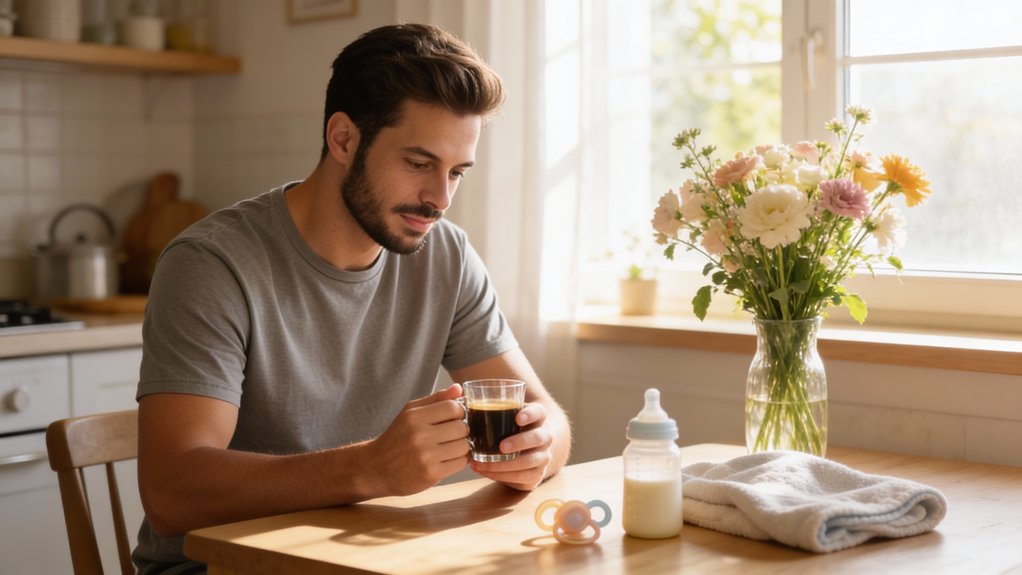
Yes, you can absolutely enjoy coffee while breastfeeding, most experts agree it’s safe in moderation. I’m a mom and coffee lover too, so I get it, sometimes you need that morning brew. Just keep your caffeine intake under 200–300 mg of caffeine daily (about 2–3 cups).
Caffeine passes into breast milk quickly, peaking within an hour, but only about 5–10% reaches your baby. Still, newborn infants metabolize it slowly, so go easy if your little one’s young or preterm. Skip energy drinks, they often pack way more caffeine and sugar.
If your baby seems fussy or jittery, try cutting back. You’ll likely see improvement in 24–72 hours.
How much caffeine is safe while breastfeeding?
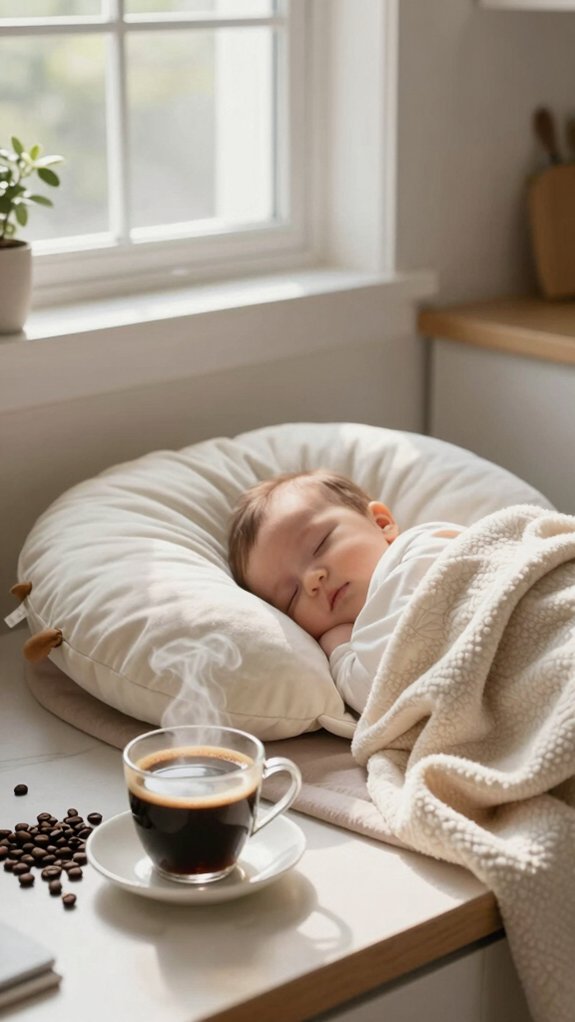
You can safely enjoy about 200–300 mg of caffeine a day while breastfeeding, roughly the amount in 2 to 3 standard 8‑ounce cups of coffee, without worrying about your baby. This moderate amount keeps your caffeine intake in a safe zone for most breastfeeding mothers. Peak caffeine levels in breast milk occur about 1 hour after drinking, but babies typically receive only 5–10 % of your weight‑adjusted dose.
| Factor | Detail |
|---|---|
| Peak caffeine levels in milk | 1–1.6 mg/L at 30–60 min |
| Infant intake (high maternal use) | 0.5–0.8 mg/kg/day |
| Half-life of caffeine in newborn infants | Several days |
Newborn infants, especially preemies, clear caffeine slowly, so watch for fussiness or sleep issues.
Caffeine in breast milk: timing and supply

While caffeine does pass into your breast milk, it shows up quickly and peaks about an hour after you drink your coffee, so timing your cup strategically can make a real difference for your baby’s comfort.
Timing & Levels Matter
Peak milk concentrations reach 1–1.6 mg/L after a ~150 mg maternal dose. Timing after ingestion is key: wait 1–2 hours before nursing to lower infant exposure.
Protecting Little Ones
Newborns and preterm infants have slow infant clearance, half‑life can be days! Milk caffeine levels may accumulate early on.
By 3–5 months, babies process caffeine like adults.
Keep doses moderate and time wisely, your little one will thank you.
Should you pump and dump with caffeine?
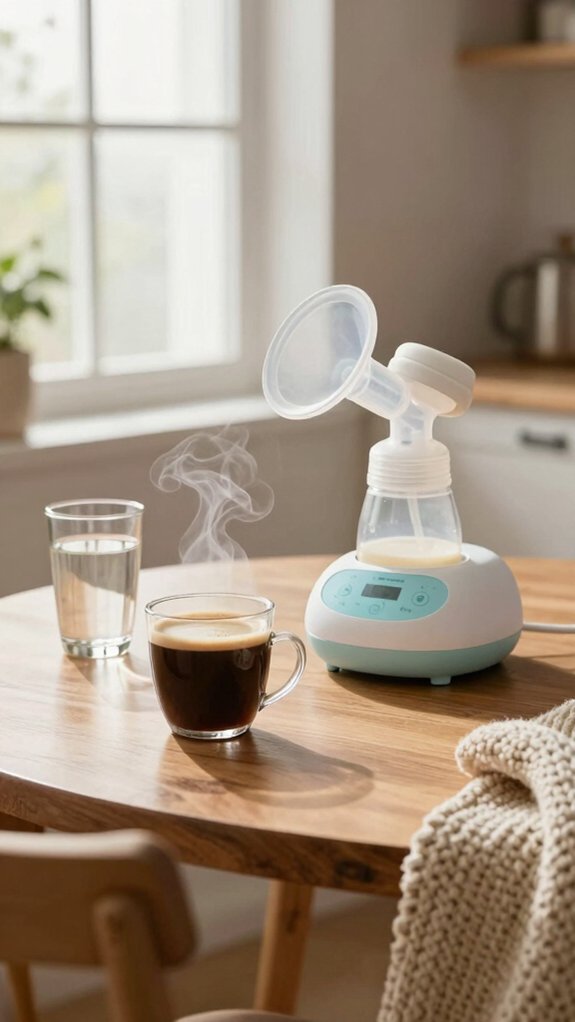
Pumping and dumping isn’t necessary after your morning cup of coffee, caffeine doesn’t get trapped in your milk like something that needs to be flushed out. When breastfeeding, caffeine passes into milk, but levels peak about an hour after you drink and gradually decline.
Milk concentrations stay low, around 1–2 mg/L after 100 mg of caffeine, so your baby gets only about 5–10% of your weight‑adjusted dose. Pumping and dump won’t speed up how fast your body clears caffeine, which depends on timing and metabolism. Skip the hassle unless you’ve had several hundred milligrams or your preterm infant is sensitive, then talk to your clinician.
Signs your baby is caffeine sensitive

If your little one seems unusually jittery or just can’t settle after your morning latte, caffeine sensitivity might be worth considering, especially since newborns process caffeine much more slowly than adults.
Signs Your Infant Is Caffeine-Sensitive
Young newborns, especially preemies, are most at risk. Excessive maternal caffeine (like 10+ cups daily) may lead to fussiness/restlessness, trembling, or even brief convulsive-like episodes.
Sleep disturbances, trouble falling asleep or frequent night wakings, are common; one study linked >300 mg/day to more awakenings by 3 months.
If your baby’s irritable or sleepless, try to reduce maternal caffeine to <200–300 mg/day, or pause for 48–72 hours. Watch for improvements. You know your baby best.
Decaf, cold brew, and brew strength
| Drink Type | Avg. Caffeine Content |
|---|---|
| Decaf (8 oz) | 2–3 mg |
| Cold brew (8 oz) | 100–200 mg |
| Espresso shot | 60–120 mg |
Cold brew packs more punch due to steep time and ratios. And those espresso shots in lattes? They concentrate caffeine content fast, so always check your drink’s real strength.
How to make a low-caffeine latte

I’ll show you how to make a low‑caffeine latte that’s creamy and satisfying without the jolt, perfect for nursing moms who still want their coffee fix. You’ll need just a few simple ingredients and basic tools, and I’ll walk you through the steps to keep caffeine around 30–80 mg per drink.
It’s all about smart swaps and ratios that protect flavor while cutting caffeine.
Ingredients
While you’re savoring your morning latte, you don’t have to give up that rich espresso flavor, even when you’re aiming to keep caffeine intake low for breastfeeding.
To stay under the safe daily amount of 200–300 mg recommended for nursing moms, try these smart swaps:
- Mix regular and decaffeinated espresso shots to cut caffeine by 50%.
- Brew a single-shot latte using ristretto (30–45 mg) for lighter lift.
- Use half‑caff beans, equal parts regular and decaf, for balanced flavor.
- Boost milk volume (8–12 oz) to dilute concentration.
These tweaks help protect breastfed infants while keeping your ritual satisfying.
Equipment
Whipping up a low-caffeine latte at home doesn’t require fancy gear, just a few smart choices to keep your caffeine intake in check while still enjoying that creamy, espresso‑kissed comfort.
Your Simple Setup:
- Use an espresso machine with a milk steamer for authentic texture.
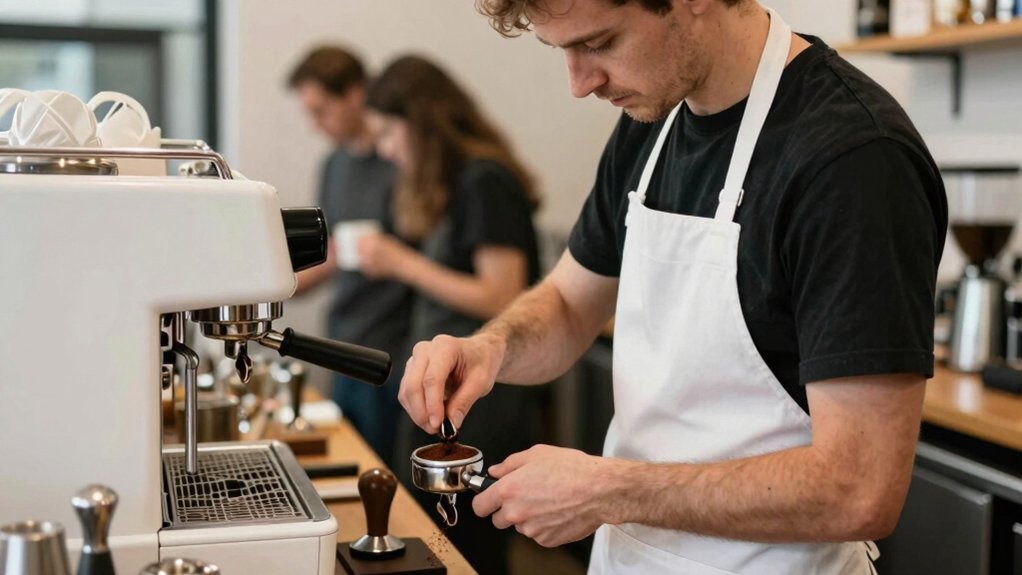
- Grind decaf or half‑caff beans fresh with a coffee grinder for best flavor.
- Tamp evenly with a tamper to ensure balanced extraction.
- Measure your shot (≈60–100 mg caffeine) and milk (8–12 fl oz) using a measuring cup or scale.
- Heat milk to 140–150°F with a thermometer, creamy, not scalded.
One decaf shot (2–5 mg caffeine) makes a safe, satisfying latte while breastfeeding.
Instructions
Let’s make your low-caffeine latte step by step, safe for breastfeeding and still full of rich, creamy flavor.
Start with decaffeinated espresso (2–5 mg caffeine) or a single shot regular espresso (60–100 mg) to keep caffeine consumption under 100 mg per serving. This supports safe daily intake, especially for preterm and younger newborn infants of mothers.
Steam 6–8 fl oz milk to 60–65°C and pour over espresso (1:3 to 1:4 ratio).
Add vanilla or cinnamon, flavor without extra caffeine.
Enjoy right away; foam lasts much longer when fresh. Limit caffeine to 200–300 mg/day to minimize exposure in breastfeeding infants.
Frequently Asked Questions
How Much Coffee Is Safe When Breastfeeding?
I keep my coffee to 2–3 cups daily, about 200–300 mg of caffeine, so my baby stays calm and sleeps well. I time it so levels in my milk drop before nursing, and I watch for fussiness or restlessness.
How Long Until Coffee Is Out of Your Breast Milk?
Funny you asked, just finished my coffee an hour ago. Caffeine peaks in breast milk around 1–2 hours, then gradually drops; most of it clears within 6–8 hours, though traces linger. I usually wait about 3 hours before nursing to be safe.
In Conclusion
Yes, you can enjoy coffee while breastfeeding, just keep it balanced. Think of your cup as a warm companion, not a crutch. Stick to 200–300 mg of caffeine daily (about two 8-oz cups), and time your sip so it peaks before nursing.
Watch your little one like a barista watches a perfect pour, if they’re fussy or wide-eyed at bedtime, dial it back. Decaf blends? Your secret weapon. You’ve got this, smooth, mindful sips all the way.