

Yes, coffee can trigger seizures in some people, especially if you have epilepsy or are sensitive to caffeine. I’ve seen how a morning brew might spark alertness for most, but for others, high doses, like more than 400 mg (roughly four cups of coffee), can raise risks. Even sudden withdrawal or energy drinks might play a role.
Your brain’s response varies, and that’s where personal limits matter. Let’s break down what’s safe, and what to watch for, based on your health and habits.
Table of Contents
Can coffee trigger seizures for me?
Sometimes, coffee can trigger seizures, especially if you’re sensitive to caffeine or drink it in very high amounts.
For people with epilepsy, caffeine might act as a seizure trigger, particularly with more than 400 mg daily (about 4 cups). Some studies link very high doses (>1,200 mg) to increased risk.
Even withdrawal from caffeine, like skipping your usual morning cup, can spark headaches or drowsiness, and in rare cases, seizures.
Caffeine also disrupts sleep and hydration, indirect triggers many feel.
The key? Know your limit. Track your amount of caffeine and how you feel. Talk to your neurologist.
Everyone’s different, your perfect brew might be someone else’s seizure trigger.
How much caffeine is too much?
While your morning brew can be a comforting ritual, it’s important to know that when it comes to caffeine, more isn’t always better, especially if you’re managing seizure risks.
- Up to 400 mg of caffeine per day, about four cups of coffee, is generally safe, but seizures can be triggered by large amounts of caffeine, like >1,200 mg quickly.
- Some people find that high caffeine consumption increases seizure frequency, while low‑to‑moderate intake may not pose risks.
- Sudden drops in caffeine intake can also provoke seizures, so taper slowly.
- Individual factors matter, talk to your neurologist to set your personal mg of caffeine limit.
Does caffeine interact with seizure meds?
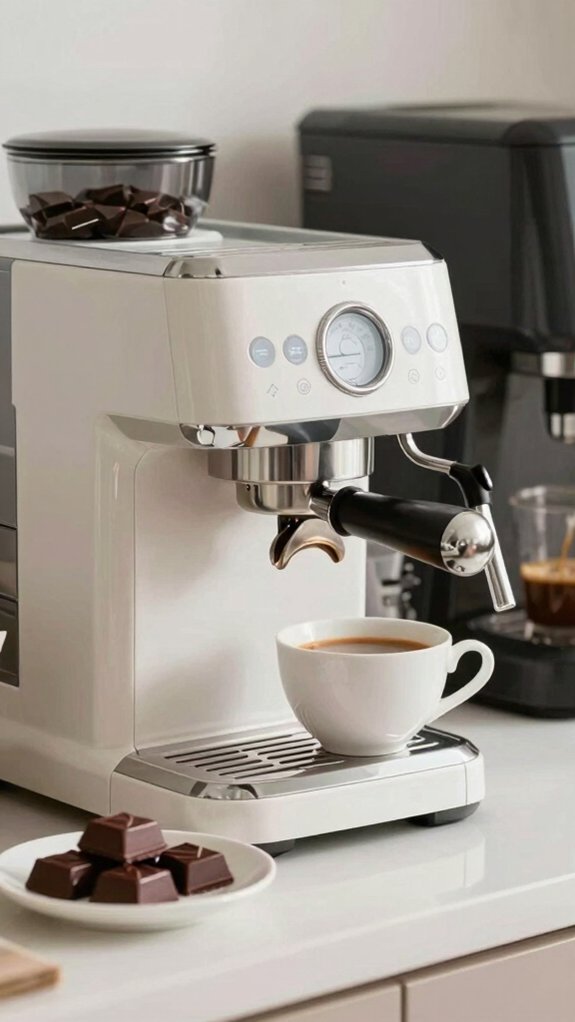
At typical doses, up to 400 mg/day, caffeine usually doesn’t cause major drug interactions.
But since it affects liver enzymes and brain receptors, subtle shifts in medication levels are possible.
And don’t forget: sudden caffeine withdrawal can trigger symptoms, even rare seizures.
Keep your neurologist in the loop about your coffee, tea, or energy drinks, they’ll help you sip smart and stay safe.
Decaf, energy drinks, and withdrawal effects
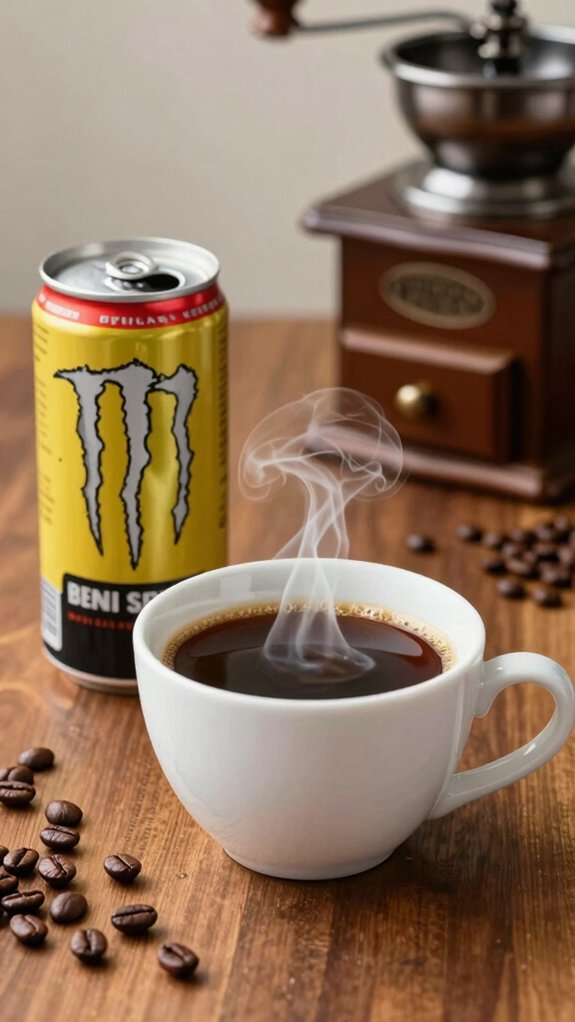
You’ll often find decaf coffee to be a smart choice if you’re watching your caffeine intake, especially when managing seizure concerns, since it typically contains just 2–5 mg of caffeine per cup, a fraction of the ~95 mg in a regular brew.
- Decaffeinated coffee isn’t 100% caffeine-free, but 2–5 milligrams (mg) is generally safe for most.
- Watch out for energy drinks, some pack 80–300+ mg of caffeine, plus hidden stimulants like guarana.
- Sudden caffeine withdrawal can trigger headaches or even seizures in sensitive individuals.
- Always taper down gradually and talk to your clinician about supplements or high‑caffeine products.
How to brew low-caffeine coffee at home
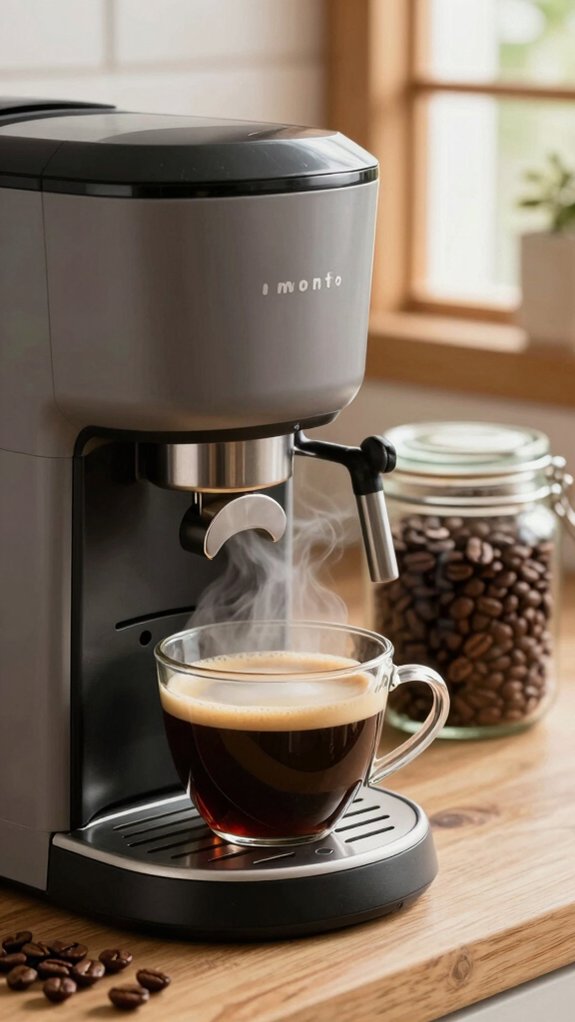
If you’re looking to enjoy coffee with less caffeine, whether for health reasons or sensitivity, I’ve got simple, effective ways to brew a flavorful cup at home without the jolt. You’ll just need decaf beans, basic brewing gear, and a few smart tweaks to your method.
Let’s walk through the ingredients, tools, and steps that make low‑caffeine coffee easy and delicious.
Ingredients
While you might think cutting caffeine means sacrificing flavor, I’ve found that with the right ingredients and a few smart tweaks, you can brew a satisfying cup at home that stays under 10 mg of caffeine per serving, perfect for those sensitive to stimulants or managing conditions like seizures.
To keep caffeine low without losing richness:
- Use decaffeinated coffee (97% caffeine removed) as your base
- Mix beans into a bean blend, like 50/50 decaf and regular, for balanced flavor
- Adjust your brew method, shorter steep times reduce extraction
- Control serving size; opt for 4–6 oz cups to limit total caffeine intake
Equipment
Brewing low-caffeine coffee at home starts with choosing the right equipment, because how you brew matters just as much as what beans you use.
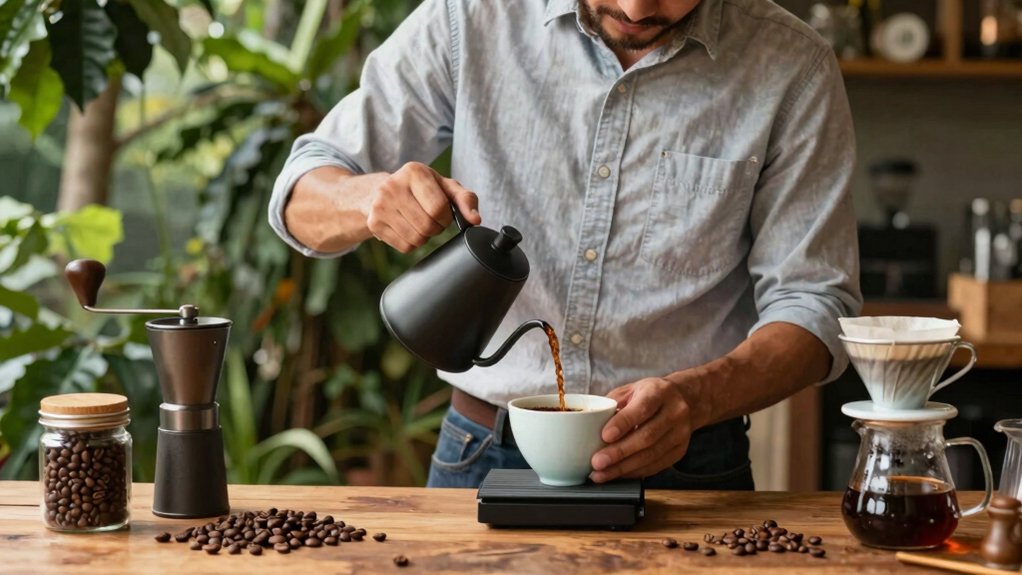
For low‑caffeine brewing, your gear caffeine dose. Try pour-over or drip with decaf coffee, paper filters trap oils and reduce caffeine to just 2–5 mg per cup.
Prefer French press? Use a coarser grind and steep only 2–3 minutes to limit extraction.
Make cold brew? Aim for a 1:20 coffee-to-water ratio and steep 6–8 hours.
Or mix it up: go half-caff to cut caffeine by ~50% while keeping rich flavor. Your favorite method can still fit your health goals, smart tweaks make all the difference.
Instructions
Since cutting back on caffeine doesn’t mean giving up great flavor, I’ll walk you through how to brew satisfying, low‑caffeine coffee right at home, without complicated gear or guesswork. For those sensitive to a caffeine trigger, these simple tweaks help lower doses of caffeine while still enjoying your favorite foods and drinks.
- Use decaf beans (≤5 mg per 8‑oz cup) or blend half decaf, half regular to cut caffeine without cutting flavor
- Cold brew for 12–18 hours, then dilute 1:1, this reduces strength and lowers risk of trigger seizures
- Shorten brew time to 2–3 minutes with a coarser grind to limit extraction
- Choose light roasts and measure servings carefully, staying under 200–400 mg/day keeps low doses of caffeine safe
Low-caffeine beans, origins, and taste notes
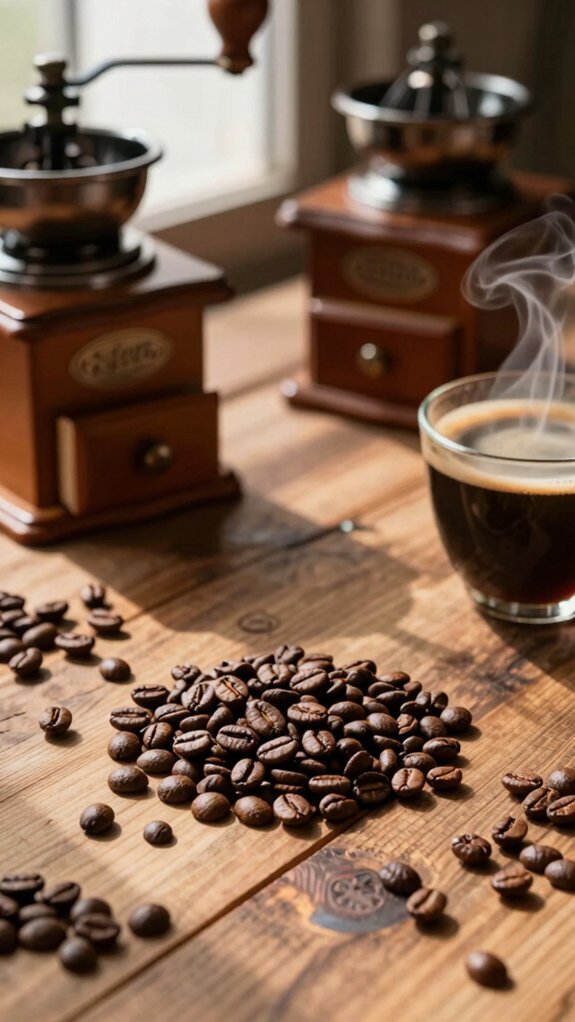
One great way to enjoy coffee with less caffeine starts with choosing the right beans, you’ve got more flavorful options than ever.
Pick Low-Caffeine Beans & Origins
Opt for 100% Arabica beans, which naturally contain 0.8–1.4% caffeine, much lower than Robusta’s 1.7–2.4%.
Beans from high‑altitude origins like Ethiopian Yirgacheffe or Kenyan AA offer bright, tea‑like flavors and respond well to lighter brews, reducing caffeine per cup.
Try specialty low‑caffeine varietals or wild species like Coffea charrieriana (near‑zero caffeine).
Light roasts keep slightly more caffeine by volume, so use a coarser grind or smaller dose to cut intake.
You’ll savor floral, citrusy notes, without the jitters.
Which coffee gear reduces caffeine most?
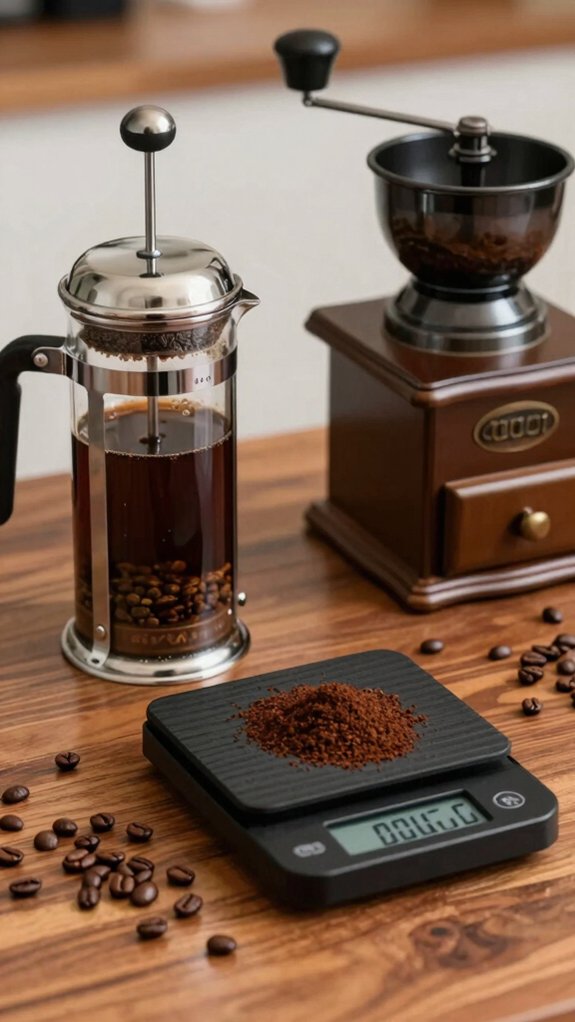
If you’re looking to slash caffeine without giving up your daily ritual, your gear choices can make a real difference, starting with decaf beans, which knock caffeine down to just 2–5 mg per 8‑oz cup, a 95% drop from regular coffee’s ~95 mg.
To cut caffeine further:
- Choose decaffeinated coffee as your base, it’s the single biggest win
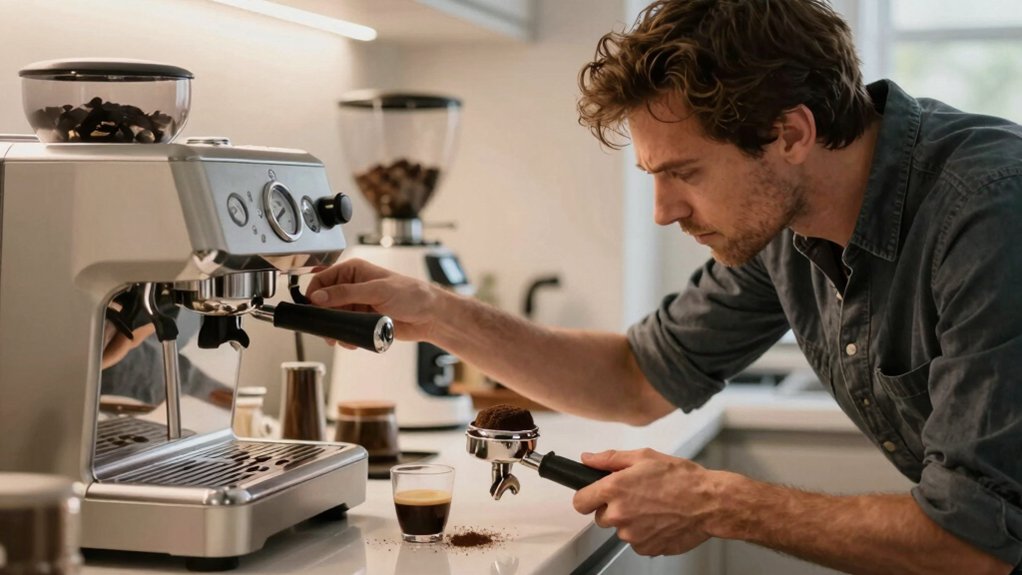
- Use shorter extraction methods like espresso or quick pour‑over
- Stick to a lower coffee‑to‑water ratio and measure servings precisely to control dose
- Opt for paper filters, which trap some caffeine‑laden oils vs. metal filters
Small tweaks, big results, especially when every milligram counts.
Frequently Asked Questions
Is It Okay to Drink Coffee if You Have Seizures?
Yes, I can drink coffee if I have seizures, but I stick to moderate amounts, avoid high-dose caffeine, and taper slowly if cutting back. I always check with my doctor, stay hydrated, sleep well, and watch for how it affects my meds and seizure control.
What Is the Number One Trigger for Seizures?
Yeah, I know caffeine gets blamed a lot, but the number one trigger? Skipping meds, even one dose. I’ve seen it happen.
Does Caffeine Lower the Seizure Threshold?
Yes, caffeine can lower your seizure threshold, but only at high doses. I usually keep my intake moderate, under 400 mg daily, and avoid sudden changes, since big doses or withdrawal might trigger seizures, especially if I’m sensitive or sleep‑deprived.
In Conclusion
Yes, coffee can trigger seizures in some people, especially with too much caffeine or sudden withdrawal. I keep mine under 400 mg daily, well below the 600 mg that spikes risk, per Epilepsy Foundation guidelines. I’m old-school: I taper slowly, choose decaf blends, and skip energy drinks like a Victorian avoiding scandal.
Hydration and sleep? Non‑negotiable. Talk to your neurologist, track your intake, and brew smart, your brain will thank you.