
Yeah, coffee really can raise your cortisol, especially that first strong cup right after waking. I’ve seen it in studies: caffeine jolts your HPA axis, often spiking cortisol by 20–50%, more if you’re not a regular drinker.
That sharp espresso hit? Bigger surge. But here’s the twist: timing and how you sip it changes everything. Wait a bit, and your body’s natural cortisol rhythm might just keep things steadier.
Table of Contents
Can coffee really raise cortisol levels?
Yes, coffee really can raise your cortisol, and it’s not just in your head.
That morning cup of coffee? The caffeine in it can spike your cortisol by 20% to 50%, especially with strong brews (80–120 mg per cup). I’ve seen it myself, stronger jolts hit harder if you’re not a daily drinker.
Timing matters: cortisol naturally peaks 30–45 minutes after waking, so sipping coffee then can push levels even higher. Wait 1–2 hours to reduce the overlap.
Even the drink plays a role: tea’s L-theanine softens the punch, while black coffee delivers a sharper cortisol kick.
How caffeine triggers cortisol in body

Feel that jittery buzz about 15 minutes after your first sip? That’s caffeine and cortisol teaming up.
When I drink coffee in the morning, caffeine blocks adenosine receptors, tricking my brain into feeling alert, while also revving up my HPA axis. This kicks off a cortisol surge, often spiking levels 20–50% higher within an hour, especially if I’m not a daily drinker.
- First cup magic (or mayhem): Peak circadian cortisol + caffeine = bigger spike
- Tolerance matters: Regular sippers see smaller cortisol jumps
- It’s not just coffee: Tea’s L-theanine softens the hit; energy drinks amplify it
Timing and dose shape how much cortisol levels rise, so sip wisely.
Does timing of coffee change cortisol?

While your body’s already hitting its natural cortisol peak within the first hour after waking, pouring that first cup too early can push your stress hormone levels even higher, sometimes up to 50% more with a standard 8-oz coffee.
Coffee and cortisol? Timing matters.
Skip coffee first thing and wait 1–2 hours instead. By then, your cortisol’s dropping, so caffeine adds less stress surge.
Stronger caffeine content (like in coffee) spikes cortisol more than tea or decaf. And sipping with breakfast? That also helps blunt the rise.
If you’re not a daily drinker, these effects are even clearer, your body hasn’t built up tolerance yet.
Smart timing = smoother energy.
Does caffeine tolerance blunt cortisol response?
If you’ve been drinking coffee daily, your body’s likely adapted in a way that softens the cortisol spike you’d get from caffeine, so yes, tolerance does blunt the response.
Regular caffeine affect? Over days to weeks, your HPA axis adjusts, so caffeine affects cortisol less dramatically. Even though it still increases cortisol, the spike drops from ~50% in new users to just 10–20% in regulars.
- Tolerance builds faster with higher doses
- Skipping your usual cup? Withdrawal can temporarily reset sensitivity, making cortisol jump more
- Genetics, timing, and stress levels affect how much tolerance blunts your response
Morning cortisol rhythms may shift long-term too, something to sip on.
Do brew strength, dose, decaf matter?
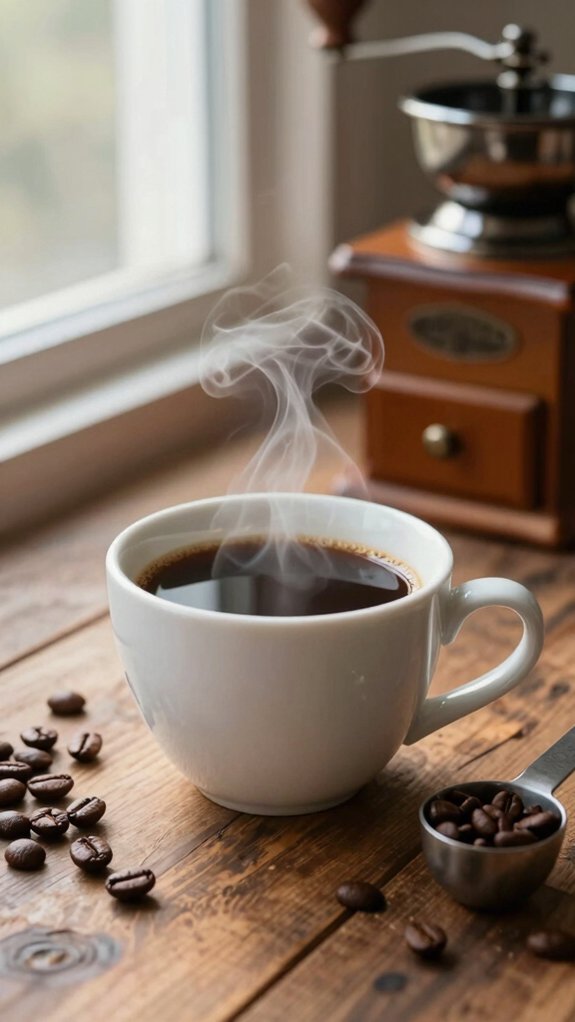
Your morning cup’s strength, dose, and caffeine level absolutely affect your cortisol response, so yes, brew choices matter.
Brew strength & dose: Stronger brews like espresso or cold brew pack 80–120 mg caffeine per 8 oz, spiking cortisol up to 50% above baseline.
The higher the dose, the bigger the rise, coffee > tea (20–60 mg, ~20% increase).
Decaf difference: Decaffeinated coffee removes most caffeine, so it barely nudges the HPA axis.
Habitual consumers? You’re lucky, your body adapts, blunting the cortisol punch over time.
Still, sip strong coffee on an empty stomach, and even you might feel the jolt.
Tips to reduce coffee cortisol spikes

Since morning cortisol naturally peaks within the first hour of waking, I’ve found it’s smart to hold off on that first sip of coffee for 60 to 120 minutes, giving your body time to wake up without piling on extra stress hormone.
To avoid an unnecessary increase in cortisol throughout the day, I’ve learned a few simple tweaks that let me still drink coffee without the jitters or crashes:
- Wait a bit: Delay your first cup to reduce additive cortisol spikes
- Pair it smart: Have coffee with protein to slow caffeine absorption
- Choose wisely: Switch to tea or decaf, studies show up to 50% less cortisol response
These habits help me enjoy my brew while keeping stress hormone levels steady.
Can coffee cortisol affect my sleep?

When I sip coffee too late in the day, I’ve noticed it doesn’t just keep me wired, it actually messes with my sleep by spiking cortisol at the wrong time. Caffeine’s effects of caffeine can linger, especially if I ignore timing.
| Timing | Cortisol Rise |
|---|---|
| Morning (1–2h after waking) | ~20–30% |
| After 3 p.m. | Up to 50% |
| With food | Reduced spike |
| On empty stomach | Higher, faster absorption |
Drinking a cup of coffee first thing on an empty stomach boosts stomach acid and speeds caffeine absorption, worsening cortisol surges. I now wait, and sleep better.
Frequently Asked Questions
Will Quitting Coffee Lower Cortisol?
Yes, quitting coffee can lower my cortisol. I’ll likely see fewer caffeine‑triggered spikes, and over time, my body’s stress response may balance out, especially if I used to drink it daily or in the morning.
Does Drinking Coffee Increase Cortisol?
Yes, drinking coffee increases cortisol, especially if I’m not used to it or have a high dose. It spikes more if I drink it right after waking, but regular intake and waiting an hour help reduce the effect.
In Conclusion
Yes, coffee can raise cortisol, especially if you chug a double espresso right at dawn like it’s the 1800s and you’re running a telegraph office. Strong brews and morning caffeine jolts spike cortisol by 20–50%, but waiting 60–120 minutes after waking helps.
Tolerance softens the hit, and tea or decaf cuts it further. Sip mindfully, pair with protein, and skip late doses, your sleep (and stress levels) will thank you.