


I’ve pulled an all-nighter after a coffee, yes, really. Caffeine’s sneaky, and if you’re sipping after 2 p.m., it might be why you’re staring at the ceiling at midnight. It blocks adenosine, the brain chemical that makes you drowsy, and studies show it can cut your deep sleep by up to 20% (Journal of Clinical Sleep Medicine).
But what if your evening routine includes a warm cup, could the right choice actually wind you down? Let’s talk timing, tweaks, and tricks that turn your last sip into a lullaby.
Table of Contents
Can coffee help you sleep tonight?
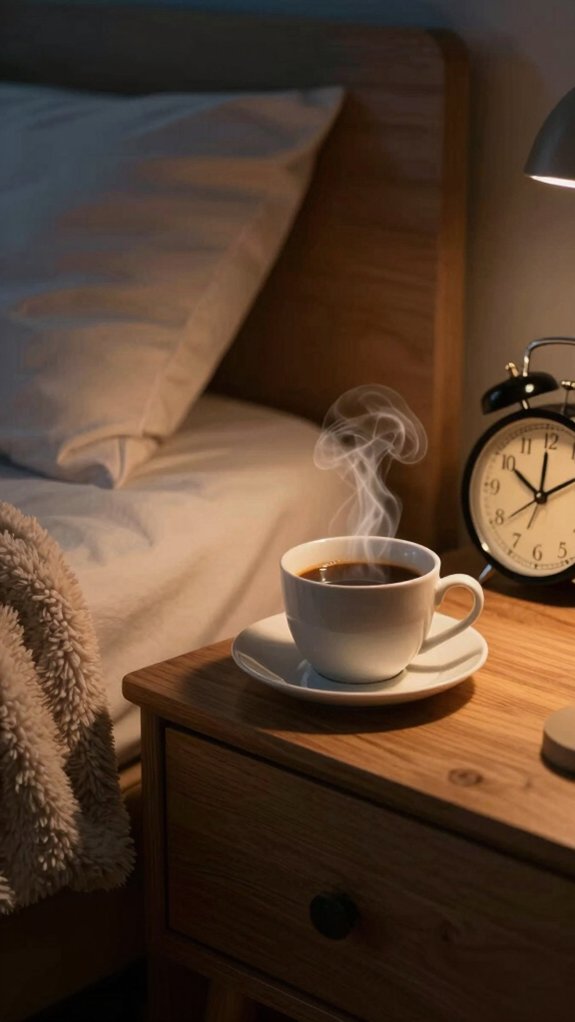
While that afternoon espresso might feel like a productivity savior, no, coffee won’t help you sleep tonight. Caffeine blocks adenosine, the chemical that makes you feel sleepy, so your brain stays alert.
With a half-life of 4–6 hours, that 3 p.m. latte still has 50% buzzing in your system by 9 p.m. Even 200 mg of caffeine, just one strong cup, can delay sleep onset and reduce deep sleep, especially if you’re sensitive.
That’s why I always suggest a firm cutoff time: stop caffeine at least 6 hours before bed. For most, that means wrapping up by 2–3 p.m.
If you’ve overdone it, cool your room and try slow breathing, it won’t erase caffeine, but it helps.
When should I stop drinking coffee?

Most days, I wrap up my coffee by mid‑afternoon, and I’ve learned this the hard way after one too many 3 p.m. espressos ruined my sleep.
To protect your rest, consider these key points:
- Caffeine half-life: Half lingers in your system for 4–6 hours, so that 4 p.m. latte still packs a punch at bedtime.
- Stop drinking by six hours before bedtime: Studies show even caffeine taken this early can reduce sleep quality and total sleep time.
- Mind caffeine sensitivity and total daily caffeine: Sensitive? Cut off by 2 p.m. Keep under 300–400 mg daily, about 3–4 cups, to sleep soundly.
Why does coffee make me sleepy?
If you’ve ever taken a sip of coffee hoping for a boost, only to feel drowsier an hour later, you’re not alone, coffee can sometimes make you feel sleepy because it doesn’t erase fatigue, it just delays it. Caffeine blocks adenosine, the chemical that makes you tired, but once it wears off, sleep inertia hits hard.
Poor sleep quality from late caffeine or dehydration worsens this. Individual caffeine metabolism (half-life: 4–6 hours) affects how you respond.
| Cause | Effect |
|---|---|
| Adenosine rebound | Sleepiness after caffeine fades |
| Poor sleep quality | Next-day fatigue |
| Caffeine metabolism | Varies by person, alters energy response |
Which beans and roasts have less caffeine?

Ever wonder why your morning cup might pack a bigger jolt than you bargained for? Your beans and roast level make a big difference in caffeine content. For less caffeine, choose Arabica beans, they’ve got about half the caffeine of Robusta.
Light roasts retain slightly more caffeine than dark roasts (up to 10% difference), but the real game‑changer is brewing method. Here’s how to cut back:
- Pick Arabica beans, naturally lower in caffeine
- Opt for decaffeinated, removes 97% of caffeine
- Adjust roast level & brewing method, lighter roasts + smaller servings reduce intake
Your perfect low‑caffeine cup starts here.
Decaf options, alternatives, and bedtime sips

You’ll often find that switching to decaf is one of the easiest ways to enjoy coffee in the evening without sabotaging your sleep, most 8‑ounce cups contain just 2–5 mg of caffeine, a tiny fraction of the 95–200 mg in a regular brew.
Smart Swaps for Evening Sips
- Decaffeinated coffee still has trace caffeine, so if you’re ultra‑sensitive, avoid it within 4 hours of bed.
- Try low‑caffeine alternatives like half‑caf or a single espresso shot (≈63 mg).
- For a warm, cozy end to your day, I love herbal tea, chamomile or valerian, or golden milk with turmeric.
They’re caffeine‑free and gently sedative.
Evening brew methods and cozy rituals

Savoring a warm cup in the evening doesn’t have to mean tossing and turning later, not when you know how to tweak your brew method and routine for sleep-friendly sipping.
For cozy, low‑stimulation evenings, I recommend these tweaks:
- Choose decaffeinated beans (97% less caffeine) or Swiss water processed decaf to avoid sleep interference.
- Skip strong cold brew, it can pack 1.5–2× more caffeine per ounce than drip.
- Stick to a small serving size (4–6 oz) and pair it with a calming wind‑down ritual, dim lights, quiet music, no sugar.
A mindful sip beats a jolt.
Your body, and sleep, will thank you.
How to make a sleepy latte

I’ll show you how to make a sleepy latte that gently lifts your energy without messing with your sleep, perfect for those afternoon slumps.
You’ll need just a few simple ingredients and tools you likely already have at home.
Let’s walk through what goes into it, what you’ll use, and how to put it all together smoothly.
Ingredients
Whip up a cozy bedtime ritual with a sleepy latte made from simple, soothing ingredients designed to signal to your body that it’s time to wind down.
Start with decaffeinated coffee or calming herbal tea, both avoid sleep-disrupting caffeine. Warm milk or oat milk adds creaminess and boosts tryptophan, which helps your brain make melatonin (the sleep hormone).
For extra calm, stir in:
- A pinch of cinnamon or nutmeg + magnesium-rich cocoa (under 12mg caffeine per tsp, safe for bedtime)
- 1/4 tsp lavender extract or chamomile powder, studies show lavender can improve sleep quality by up to 45% (Journal of Alternative Medicine, 2018)
- A drizzle of honey for comfort, not buzz
Equipment
Getting your hands on the right tools makes crafting a sleepy latte easier, and way more enjoyable.
Essential Gear for Pre-Bedtime Sipping
I use a small espresso machine with temperature control to pull a smooth decaffeinated espresso shot, under 5 mg caffeine, so it won’t disrupt sleep.
For steamed milk, I heat 150–200 ml to 60–65 °C with a milk frother; this brings out creamy, comforting notes without scalding.
I whisk in calming ingredients like cinnamon or chamomile for flavor and relaxation.
A thermometer ensures precision.
Finally, I pour into a cozy mug for slow, mindful sipping 30–60 minutes before bed, proven to improve wind-down routines (National Sleep Foundation, 2022).
Instructions
While you’re winding down, a well-made sleepy latte can gently ease you into rest, so let’s walk through how to make one that’s both delicious and sleep‑friendly.
To craft your perfect drink before bed, follow these steps:
- Brew 1 cup of decaffeinated coffee (only 2–5 mg caffeine!) as your base.
- Warm 150–200 ml of milk to 60–65 °C, froth lightly for a creamy finish.
- Stir in honey or vanilla, plus a pinch of cinnamon or chamomile for calming flavors.
Sip your sleepy latte 30–60 minutes before bed.
The timing before bedtime matters, this ritual supports relaxation without disrupting sleep.
Frequently Asked Questions
Can Coffee Help Fix a Sleep Schedule?
No, I can’t rely on coffee to fix my sleep schedule, it messes with my ability to fall asleep early and lowers my sleep quality, so I skip it to reset my rhythm the healthier way.
Can Coffee Help You Sleep at Night?
No, coffee can’t help me sleep at night, its jittery buzz clashes with bedtime calm. I skip afternoon cups because caffeine lingers, teasing my brain when I should be drifting off. Timing matters; I’d rather wake up fully than stay wired wide-eyed.
What Drink Is Good for Bedtime Sleep?
I find chamomile tea works best before bed, no caffeine, just calm. If I skip coffee hours earlier, I sleep better. For me, warm milk or tart cherry juice also helps, but nothing beats cutting caffeine to truly unwind.
When Should I Drink Coffee Before Sleep?
I’d dodge coffee like a thunderstorm before sleep, cut it off by 5 p.m. if I’m hitting the sack at 11. Too close, and it’ll hijack my shut‑eye, leaving me tossing like laundry in a dryer.
In Conclusion
No, coffee won’t help you sleep, caffeine’s like a bouncer blocking adenosine, keeping your brain wired. I stop sipping by 2 p.m., especially since 400 mg (about 4 cups) is the daily sweet spot, per Mayo Clinic. If I need warmth at night, I reach for decaf, Swiss‑water processed, or a honey‑kissed chamomile.
Lower lights, slow sips, no sugar: my ritual’s a cozy blanket for the mind. Sleep wins when coffee steps out.