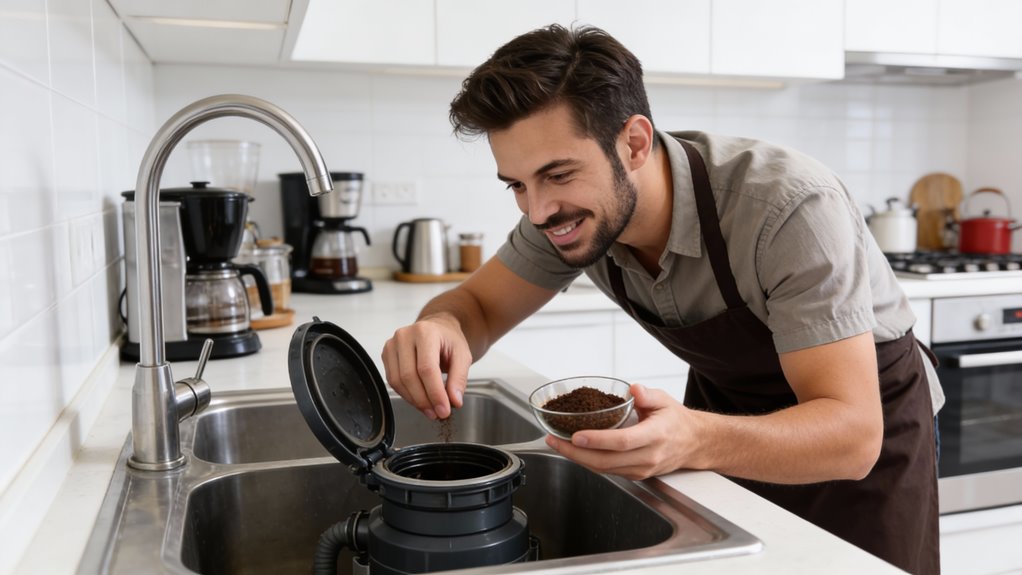
According to the National Association of Plumbing-Heating-Cooling Contractors, coffee grounds rank among the top five items that cause residential drain blockages, contributing to thousands of emergency plumber calls each year. If you’ve been wondering whether it’s safe to rinse those morning coffee grounds down your garbage disposal, you’re not alone-it’s one of the most frequently asked questions homeowners have about kitchen drain maintenance.
The short answer is no, and in this post, you’ll discover exactly why coffee grounds wreak havoc on your plumbing system, what happens when they accumulate in your pipes, and the simple disposal alternatives that will save you from expensive repairs and frustrating clogs.
Table of Contents
Can coffee grounds go in garbage disposal?
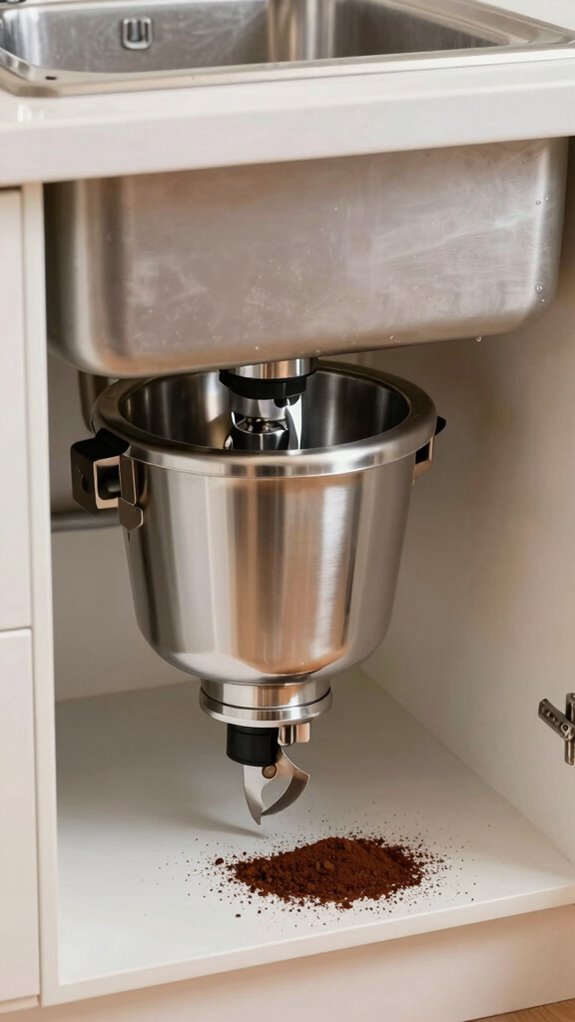
Dumping coffee grounds down your garbage disposal is a bad idea that can lead to serious plumbing problems.
These grounds transform into a dense, sand-like sludge that clogs pipes and creates stubborn blockages.
When ground in the disposal, they produce even finer particles that settle in horizontal pipe sections, binding with grease and soap scum into cement-like masses.
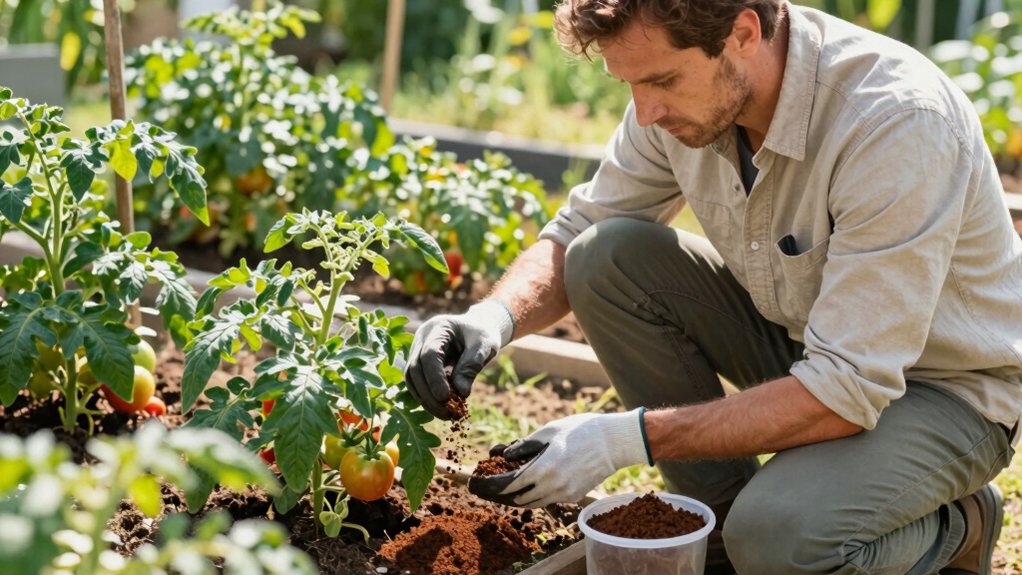
Instead of risking expensive plumber visits, toss used coffee grounds in the trash, add them to compost for nitrogen boost, or sprinkle directly in your garden for acid-loving plants.
Your pipes will thank you.
Why plumbers say no to coffee grounds
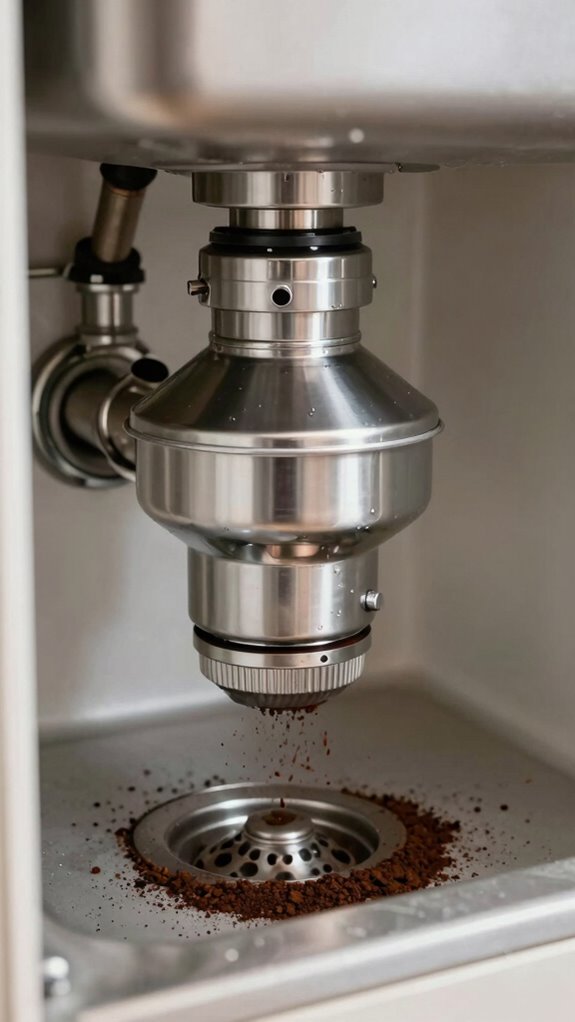
Plumbers unanimously warn against disposing of coffee grounds in garbage disposals due to their unique, problematic physical properties that can wreak havoc on your home’s plumbing system.
These tiny particles create a dense, paste-like sediment that doesn’t dissolve, instead settling in pipe bends and accumulating deeper in drain lines.
When coffee grounds mix with grease and soap scum, they form a concrete-like sludge that leads to clogged drains and slow water flow.
Instead of risking expensive plumbing repairs or hydrojetting, smart coffee lovers should toss used grounds into the compost or trash can.
Do coffee grounds deodorize garbage disposals?
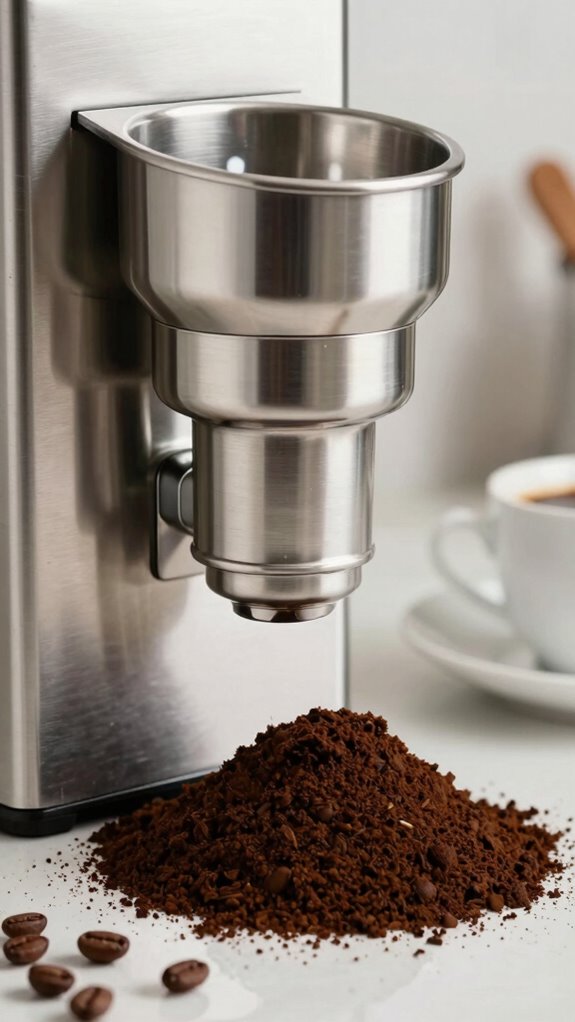
Despite the common kitchen hack suggestion, coffee grounds won’t actually deodorize your garbage disposal effectively-and they might even make odor problems worse.
Those fine particles clump with water, trapping odors in pipes instead of neutralizing them, creating a muddy sludge that mixes with grease and soap scum.
Want real disposal freshness? Opt for proven alternatives like grinding citrus peels or using baking soda and vinegar. These methods truly eliminate odors without risking clogs.
If you’re looking to handle used coffee grounds responsibly, compost them or toss them in the trash-your plumbing will thank you.
What to do if you already did?
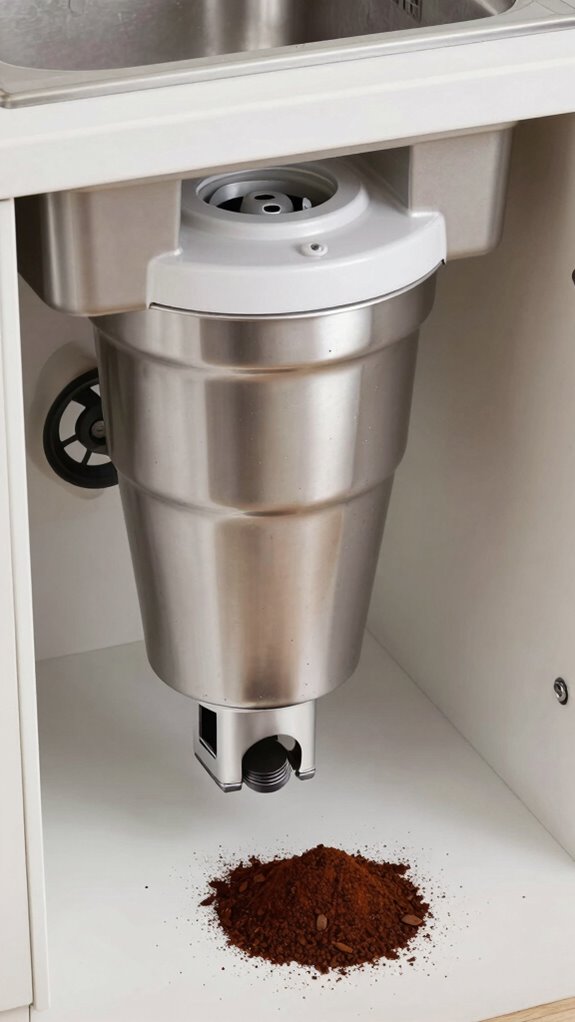
If you’ve accidentally dumped coffee grounds down your garbage disposal, don’t panic-there are immediate steps you can take to minimize potential plumbing damage.
| Immediate Action | Quick Fix | Long-Term Prevention |
|---|---|---|
| Stop Disposal | Scoop Grounds | Use Compost Bin |
| Run Cold Water | Flush Briefly | Install Drain Strainer |
| Avoid Chemicals | Plunge if Needed | Professional Check |
Quick intervention prevents serious clogs. Swiftly scoop wet coffee grounds into a trash bag, avoiding further drain entry. Briefly run cold water through the disposal to flush remaining particles. If drainage slows, use a plunger or plumber’s snake-never chemical cleaners. For persistent issues, call a professional plumber who can hydro-jet or mechanically clean the pipes. Next time, scrape coffee grounds directly into compost or trash to protect your plumbing.
Best ways to dispose coffee grounds
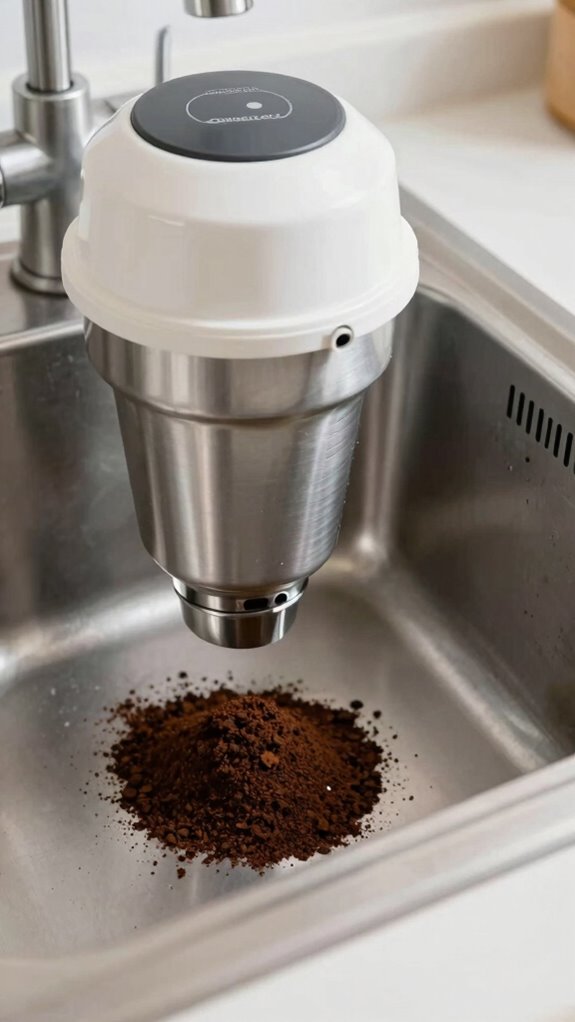
Disposing of used coffee grounds wisely can transform waste into an eco-friendly resource, offering multiple sustainable options beyond simply tossing them in the trash. Skip the garbage disposal-those grounds will create nasty clogs in your drain.
Instead, add them to your compost bin, mixing with brown materials like leaves at a 1:3 ratio. Alternatively, sprinkle thin layers around acid-loving garden plants or use them as a natural deodorizer in your refrigerator.
When in doubt, toss coffee grounds directly into the trash to prevent plumbing nightmares and keep your pipes clear and flowing smoothly.
What is safe for garbage disposal?
Safely using your garbage disposal means knowing exactly what food scraps can go down without causing damage or clogs.
Small, soft food items like citrus peels, vegetable trimmings, and cooked vegetables are ideal.
Always run cold water before, during, and after grinding to flush particles through pipes.
Avoid hard items like bones, nutshells, and seafood shells that can damage impellers.
Steer clear of fibrous foods like celery and banana peels, which can tangle and cause stubborn clogs.
Non-food materials and congealing liquids are absolute no-nos for drain cleaning and maintaining a healthy garbage disposal.
Best sink deodorizing alternatives without coffee grounds
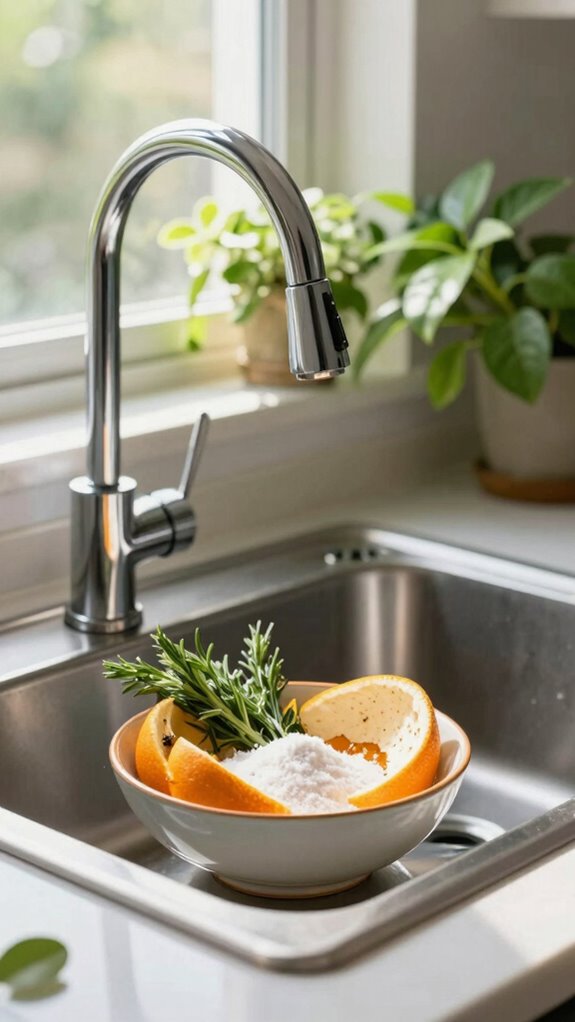
Beyond coffee grounds, savvy kitchen enthusiasts have multiple powerful techniques for neutralizing sink odors and keeping their disposal fresh and clean.
Baking soda and white vinegar offer an excellent combo for eliminating odors in your garbage disposal. Sprinkle 2–3 tablespoons of baking soda, then pour ½ cup of white vinegar down the drain. Let the mixture sit for 15–30 minutes before flushing with boiling water.
For continuous freshness, place a small bowl of baking soda in the sink or freeze white vinegar into ice cubes for monthly deodorizing.
These natural methods ensure a clean, fragrant kitchen without risking disposal clogs.
Frequently Asked Questions
Do Coffee Grounds Clog the Garbage Disposal?
Yes, coffee grounds definitely clog your garbage disposal. They create a dense, paste-like sludge that sticks to pipes and accumulates over time. I recommend tossing them in the trash or compost instead of rinsing them down the drain.
What Should I Never Put in a Garbage Disposal?
Imagine a kitchen drain clogged like a traffic jam. I’d never put grease, coffee grounds, fibrous foods, hard items, or non-food materials in my garbage disposal, as they’ll quickly cause a plumbing nightmare.
How to Prevent Coffee Grounds Clogging Drain?
I prevent coffee grounds clogging drains by scraping them into the trash, using a sink strainer, and running cold water if small amounts accidentally enter. I never pour grounds directly down the disposal to avoid pipe buildup.
What Is the Best Way to Dispose of Used Coffee Grounds?
Like a morning ritual of renewal, I toss my used coffee grounds into the compost bin, mixing them with dry leaves. If composting isn’t an option, I’ll let them dry and trash them, keeping my drains clear.
In Conclusion
So, can coffee grounds go in the garbage disposal? The answer is a definite no-despite what you might have heard, coffee grounds are one of the worst things you can put down your disposal. They accumulate like wet sand in your pipes, eventually creating stubborn clogs that require expensive professional help to fix. Instead, dispose of your used grounds in the trash or add them to your compost pile where they’ll actually do some good for your garden.
Now that you know the right way to handle your coffee waste, why not make sure you’re getting the most out of your morning brew? Check out our comprehensive coffee machine reviews to find models that make cleanup easy and brewing even easier. We’ve tested dozens of options across every price range to help you discover the perfect machine that fits your lifestyle-no plumbing disasters required.