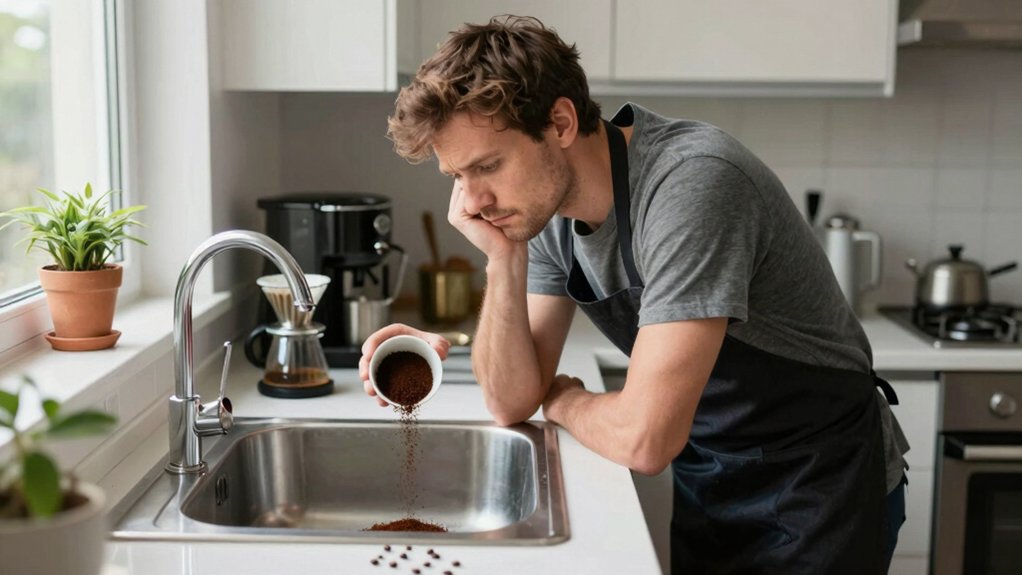


No, you should never put coffee grounds down your sink, they’re a major cause of kitchen clogs.
I’ve seen how they clump into a thick, sludge-like paste that traps grease and gunks up pipes, which is why plumbing professionals consistently rank them as a top culprit for drain blockages.
But don’t worry, I’ll share a couple of brilliant and simple ways to reuse them instead that might just surprise you.
Table of Contents
Can coffee grounds go down the sink?

No, you should never pour coffee grounds down your sink drain. I know it seems convenient, but those grounds don’t dissolve; they clump together and create stubborn clogs in your plumbing.
Over time, they mix with grease, forming a thick sludge that severely obstructs water flow.
Even if you use a garbage disposal, fine particles can slip through and settle in your pipes, leading to costly emergencies.
The safest disposal methods are composting or tossing them in the trash.
This simple switch protects your home’s plumbing system. Trust me, taking this extra step saves you from the hassle and expense of calling a plumber later.
Your sink will thank you!
Will coffee grounds clog kitchen drains?

Absolutely, coffee grounds will clog your kitchen drain, and here’s why that happens so reliably. They don’t dissolve. Instead, they clump together in your drain lines, creating a sludgy mass that sticks to pipe walls and traps grease.
Over time, this accumulation causes slow drains and eventual blockages. I’ve seen it happen too often! Coarser grounds are especially problematic, catching in bends and reducing water flow to a trickle.
To avoid this headache, never dispose of coffee grounds down the sink. Toss them in your compost or trash instead.
Trust me, your pipes will thank you, and you’ll save yourself from calling a plumber for preventable clogs.
Do coffee grounds harm septic systems?
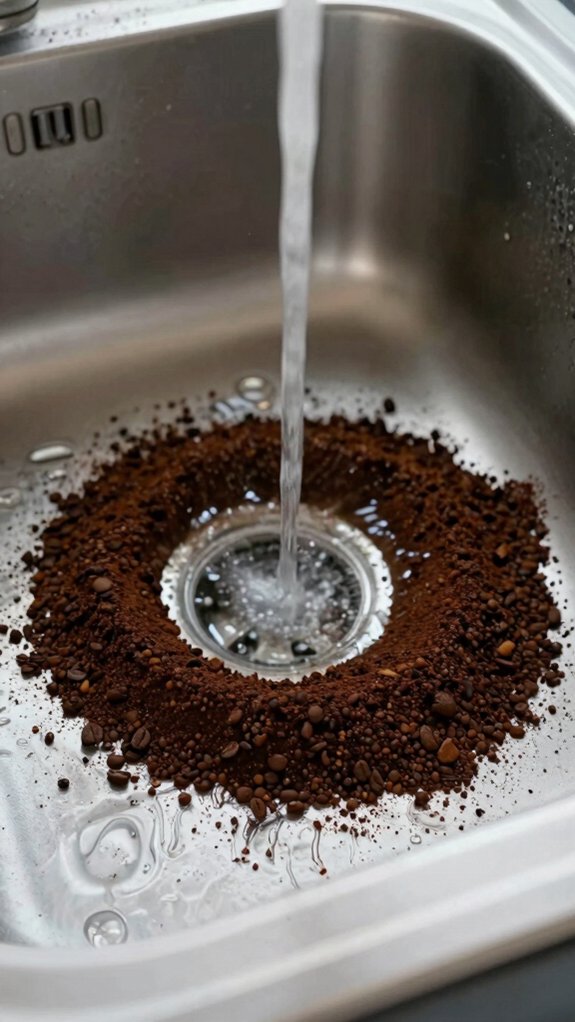
- Sludge Formation: Coffee grounds combine with oils and solids, creating a layer that hinders the natural bacterial breakdown process.
- Pipe Blockages: They can accumulate in pipes before even reaching the tank, causing backups.
- System Overload: They take up space needed for treating actual waste, potentially leading to failure.
The solution is simple: always use proper disposal like composting or the trash, never the sink.
Do coffee grounds deodorize or sharpen disposals?

While you might’ve heard coffee grounds can freshen or sharpen your garbage disposal, they’re unfortunately more likely to cause a clog than a clean scent.
As a coffee expert, I wish they worked as a magical deodorizer, but their grit is a real problem. The grounds don’t sharpen disposal blades; instead, their fine particles slip past and accumulate.
They bind with soap scum and grease, forming a sludgy mass in your pipes. This is a leading cause of household clogs.
For a truly fresh disposal, grind a citrus peel instead. Save those precious coffee grounds for your compost bin, where they belong, and keep your pipes flowing freely.
Smart alternatives for used coffee grounds

- Enrich your garden: Easily composted, they add nitrogen to soil, boosting plant health.
- Freshen your home: As a natural deodorizer, a bowl in the fridge absorbs odors.
- Personal care and pest control: Mix into an exfoliating skin scrub or sprinkle as a pest repellent to deter slugs.
See? With a little creativity, your daily brew keeps giving back.
Easy steps to fix coffee grounds clogs

Even if you’ve been putting coffee grounds down the drain, you can still fix a clogged sink yourself with a few household items.
First, try a plunger, using firm pressure to suction those grounds loose.
For a deeper clean, pour a cup of baking soda and vinegar down the drain. This fizzy reaction can break up the clogs.
If that doesn’t work, a plumber’s snake can physically grab the blockage.
Prevention is key, so I regularly flush my sink with warm, soapy water.
However, if these DIY steps fail, call a plumbing professional. They’ve powerful tools like hydro-jetting, and a 2023 survey found 82% of plumbers list coffee grounds as a top cause of kitchen sink clogs.
Simple tools that keep sinks clear
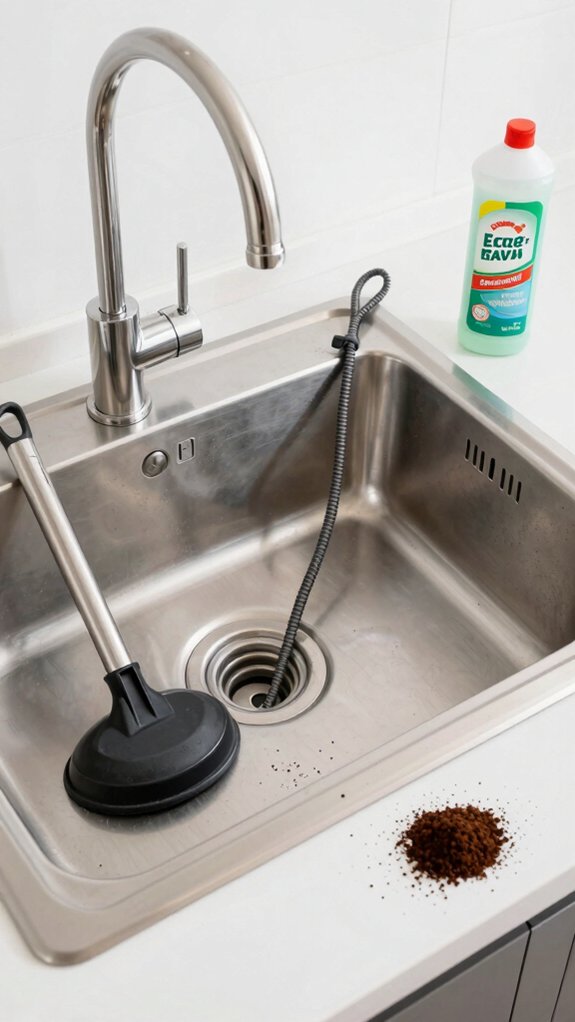
A reliable sink strainer to catch stray grounds and food bits.
A dedicated knock box to dispose of portafilter pucks cleanly.
A drain snake for regular maintenance, as even with care, some buildup in the P-trap is inevitable.
For new kitchens, larger diameter drains are a wise, long-term upgrade for better flow.
Frequently Asked Questions
Is It Okay to Wash Coffee Grounds Down the Drain?
No, I never wash coffee grounds down my drain because they don’t dissolve. They clump up inside my pipes and can easily create a stubborn clog that I’d rather avoid dealing with later.
How Do You Dispose of Coffee Grounds?
I’ve read that 20% of plumbing calls involve coffee grounds! I always compost mine for garden fertilizer, but you can also use municipal food bins or simply trash them to protect your pipes.
Is It Good to Throw Coffee in the Sink?
I strongly advise against throwing coffee grounds down your sink. They clump, don’t dissolve, and will eventually clog your pipes.
I always compost mine or use the food waste bin to avoid plumbing headaches.
How to Break up Coffee Grounds in a Drain?
I pour a mix of baking soda and vinegar down my drain, then flush it with hot, soapy water. If the clog persists, I’ll use a drain snake to physically break up the grounds.
In Conclusion
No, you shouldn’t pour coffee grounds down the sink, unless you dream of hosting a stubborn, sludgy clog in your pipes.
I’ve seen more drains defeated by this gritty paste than by any fancy coffee machine mishap. So, save your plumbing the caffeinated chaos and just compost or trash those grounds.
Trust me, your sink will thank you with swift, clear flows for many mornings to come.