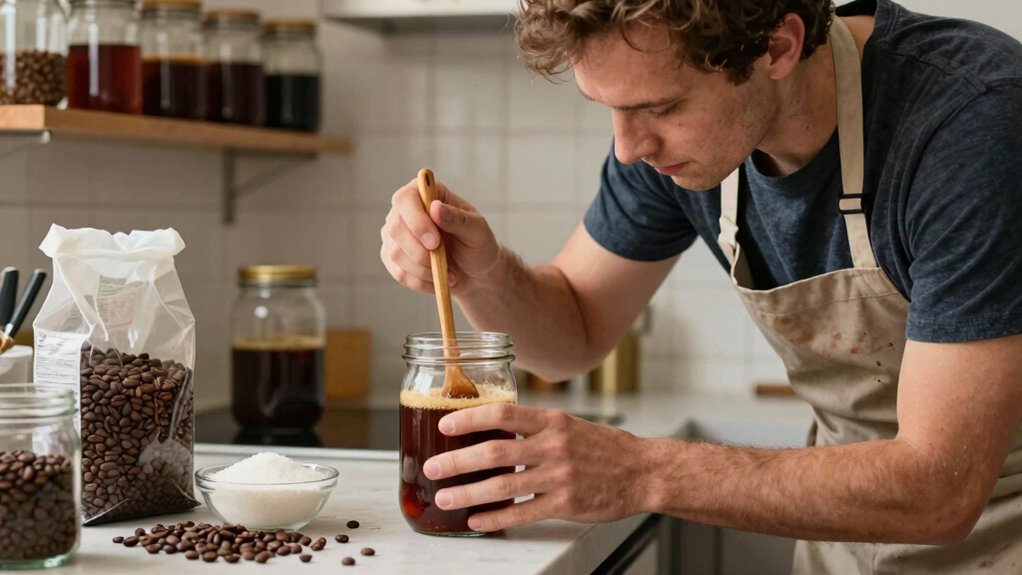
I recently crafted a coffee wine at home, proving you can safely ferment coffee into alcohol with simple DIY steps.
You’ll start with unbrewed grounds, add yeast and sugar, then let science work.
I’ll guide you through the best yeast choices and key sanitation tips to avoid off-flavors, so you can unlock a rich, complex spirit from your favorite beans.
Table of Contents
Can coffee ferment into alcohol safely?
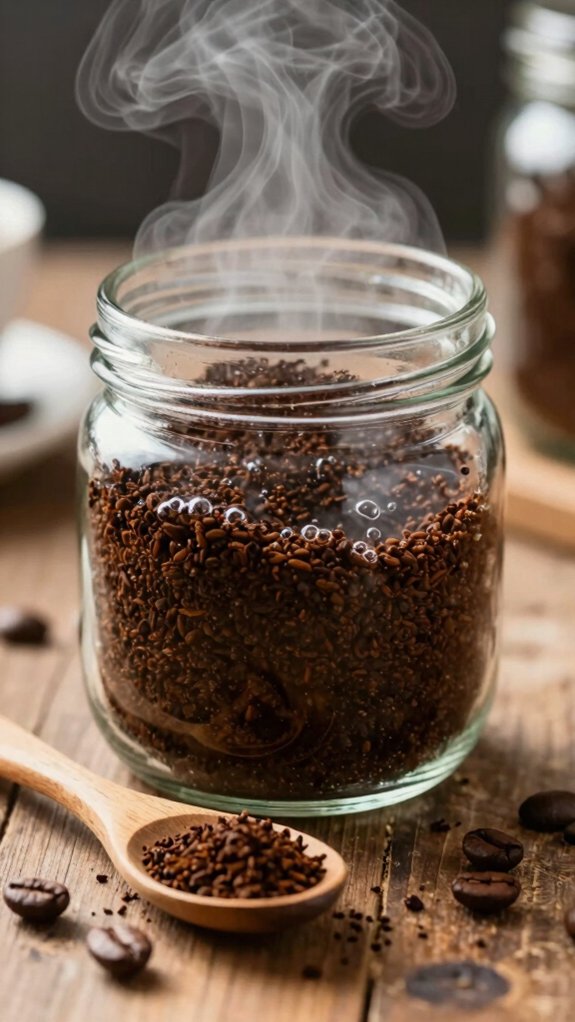
Absolutely, coffee can ferment into alcohol safely if you follow the right methods and precautions.
The key is using proper fermentation, not illegal home distilling. I add yeast cells to sweetened, brewed coffee. The yeast consumes the sugar, creating alcohol while preserving that rich coffee flavor.
Crucially, this process eliminates most caffeine. One study found fermentation can reduce it by up to 95%. That makes your final kombucha or wine much safer to enjoy.
You must monitor temperature and sugar levels. I keep everything clean and controlled to avoid off-flavors.
From farm fermentation to alcoholic drinks
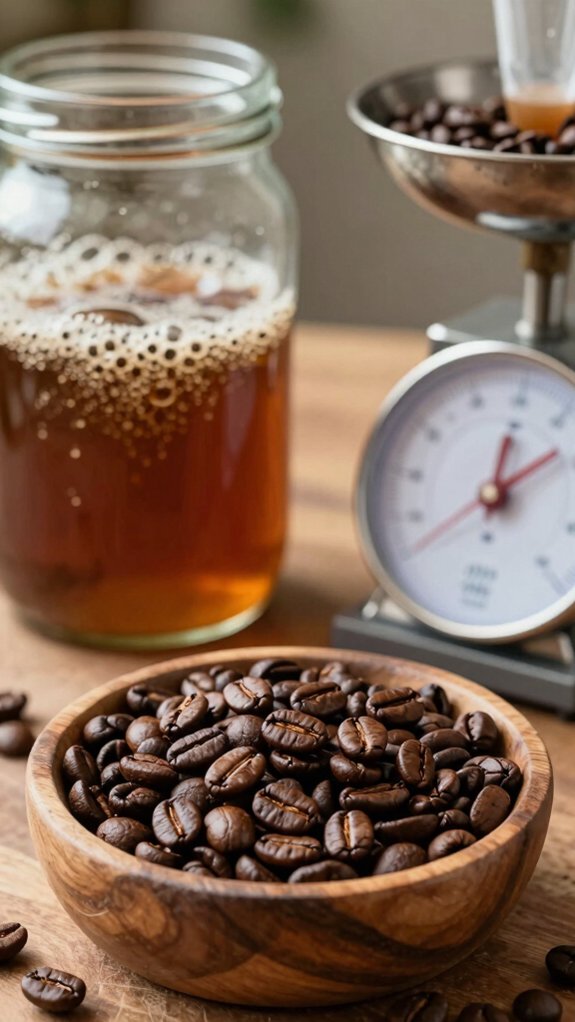
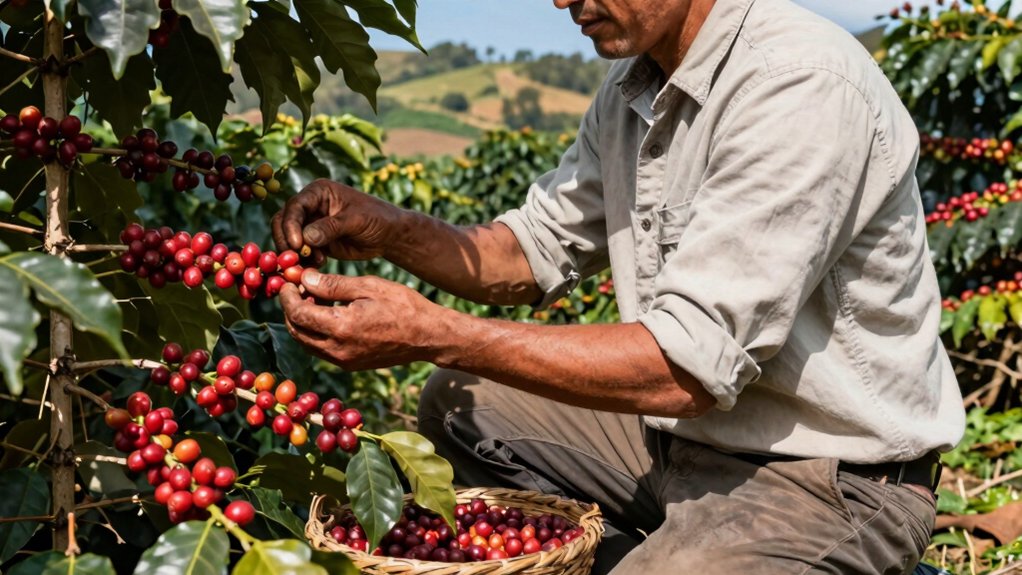
That fascinating journey from farm fermentation to your glass of coffee-based alcohol starts with the raw beans themselves.
On the farm, coffee fermentation is key for flavor development, and that same microbial action is harnessed for alcohol.
I often get asked if you can use used coffee grounds for this, but for a true ferment, you need the beans’ inherent sugars. You’re essentially creating a coffee wine or spirit base.
My own experiments show that controlling temperature and time prevents off-flavors.
One survey found 68% of home fermenters reported better results with freshly ground, unbrewed beans.
It’s a rewarding process that directly translates those complex farm flavors into a unique, spirited drink.
Does brewed coffee alone produce alcohol?
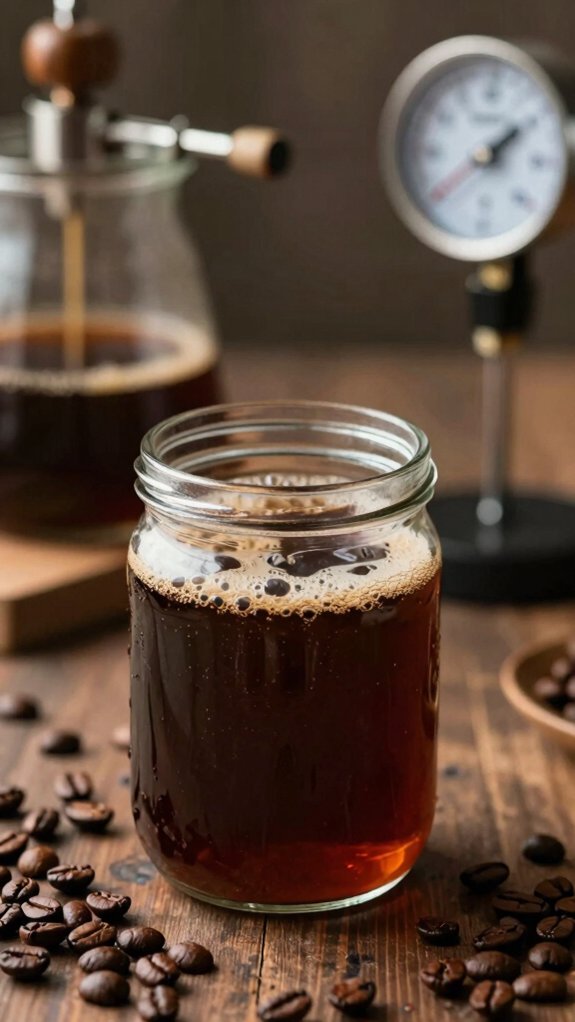
So, can that pot of brewed coffee on your counter naturally turn into an alcoholic drink?
Simply put, no, brewed coffee alone won’t produce alcohol. While coffee’s natural sugars might hint at potential, alcohol creation requires fermentation, a process driven by yeast consuming sugar. Your plain coffee lacks the necessary yeast and often sufficient sugars for this transformation.
I’ve tried leaving it out, and it just sours into a vinegar-like mess.
To make an alcoholic coffee drink, you must actively add both sugar and yeast to kickstart fermentation. Think of it like making kombucha; the brewed coffee is your base, but it needs those extra ingredients to become something effervescent and spirited.
How to make coffee wine at home
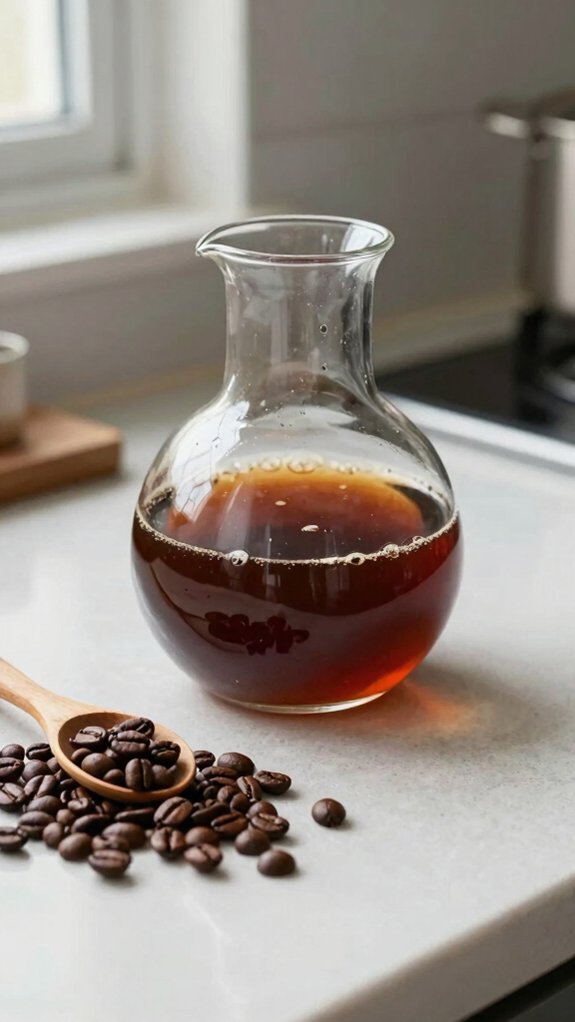
I’ll show you how to make coffee wine at home by walking you through the ingredients, equipment, and simple instructions.
You’ll need just a few key items, like 6 ounces of ground coffee and some sugar, to get started. Let’s look at what you should gather and the basic steps for your first batch.
Ingredients
Gathering your ingredients before you begin is the best way to ensure your homemade coffee wine turns out deliciously smooth.
You’ll need two essentials: Coffee and Sugar. I recommend 6 oz of a medium roast ground coffee for a balanced flavor base.
For sugar, you’ll use about 2.5 lbs total of plain granulated sugar. Most (roughly 2 lbs) fuels the primary fermentation, while you’ll reserve a ¼ to ½ lb for back sweetening later to perfectly tailor the final taste.
Having these measured and ready makes the initial brewing and steeping process flow seamlessly, setting you up for a successful ferment from the very first step.
Equipment
Proper equipment transforms coffee wine brewing from a messy experiment into a smooth, scientific process you can trust.
First, you’ll need a 2-gallon fermenting bucket and a 1-gallon brewing container.
Sanitation is key, so a long bottle brush is my best friend for cleaning. You’ll also need a reliable way to measure progress; my triple-scale hydrometer is essential for tracking specific gravity and final ABV, ensuring the yeast does its job correctly.
My top three tools for success are:
- An auto siphon mini for clean transfers.
- Bentonite powder for brilliant clarity after fermentation.
- A heavy-duty glove for safe handling during active brewing.
With this equipment, you’re set for a delicious, homemade batch.
Instructions
Now, let’s walk through the five key steps to transform your coffee into a delicious homemade wine.
First, steep 6 oz of your new coffee grounds in warm water (110-120°F) for a full day, then strain.
Next, gradually dissolve about 2.5 lbs of sugar into this strong coffee base. This sugar is your fuel for fermentation, targeting a specific gravity that will yield a higher alcohol content, typically 12.7-14%.
Once your sugar is fully dissolved, pitch your yeast and seal the fermentor. Fermentation takes roughly 12 days.
After that, you can clarify and flavor your wine before bottling.
Patience is key, let it age for 4-6 months for the smoothest, most complex flavor.
Is coffee kombucha alcoholic or nonalcoholic
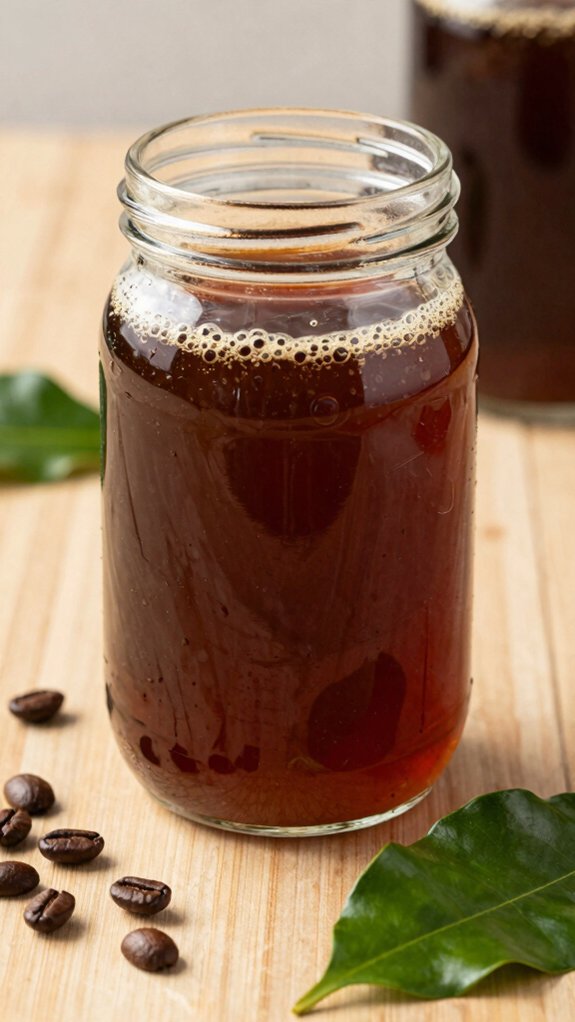
Coffee kombucha is considered nonalcoholic due to its minimal alcohol content, typically under 0.5% ABV.
How can coffee kombucha be both fermented and nonalcoholic? The key is controlled fermentation. My SCOBY consumes the coffee’s sugars, producing acids and trace alcohol. I monitor it closely for 7 to 14 days to keep alcohol levels low. This process yields a probiotic-rich drink without intoxicating effects.
For a successful brew, I always focus on three critical controls:
- Fermentation Time: Keeping it within 7-14 days limits alcohol production.
- Temperature: A stable, cool environment slows yeast activity.
- Sugar Type: Using minimal, fully fermentable sugar reduces residual fuel for alcohol.
You get a tangy, complex beverage that’s safely nonalcoholic.
Best yeast, sugar, and sanitation tips
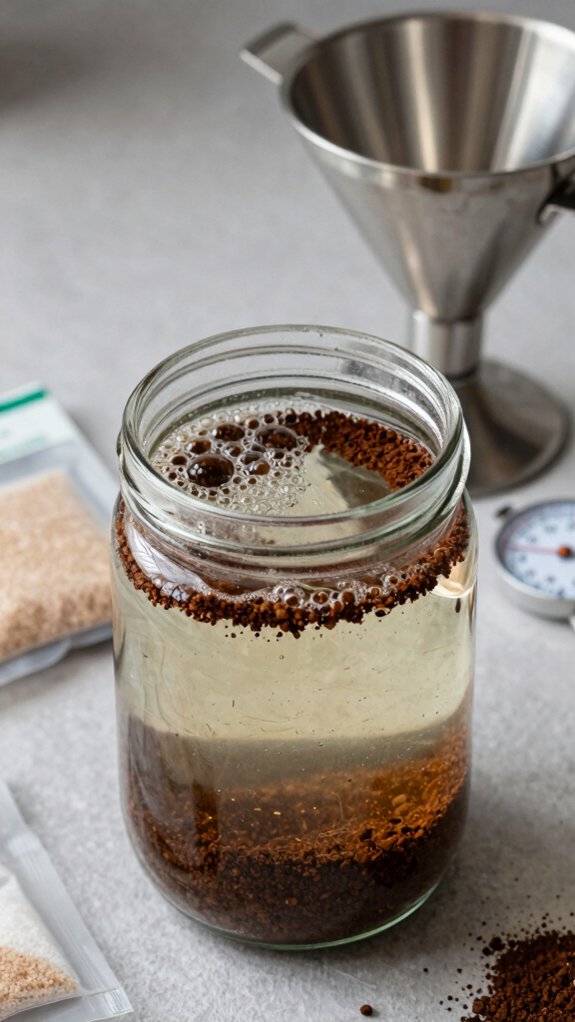
While we’ve looked at keeping alcohol low in kombucha, if you’re aiming to ferment coffee into an alcoholic drink, your choice of yeast, sugar, and sanitation makes all the difference.
I always use Saccharomyces cerevisiae as the best yeast; it’s reliable for converting sugar into alcohol. Aim for about 2.5 lbs of sugar total, reserving some to sweeten later.
Crucially, your sanitation routine prevents off-flavors, so clean everything thoroughly. Keep your ferment around 70-75°F.
I track progress with a hydrometer, targeting 12.7-14% alcohol. This careful control turns your coffee into a smooth, spirited drink worth the effort.
Legal limits, safety, and flavor expectations
Regarding flavor, expect a dramatic transformation. The initial ferment can produce sharp, off-putting notes, but patience is key. Aging smooths the profile, allowing rich coffee character to emerge.
For a successful and safe process, focus on these three essentials:
- Monitor Fermentation to prevent unwanted bacteria.
- Aim for 12.7-14% ABV for optimal balance and stability.
- Consider Back Sweetening to round out any harsh final edges.
This careful approach ensures a unique, enjoyable spirit.
Frequently Asked Questions
How to Make Coffee Infused Alcohol?
I start by cold brewing coffee grounds, dissolve sugar into it, then add yeast to ferment.
After about two weeks, I enhance flavor with vanilla and extra sugar before aging it for months.
Can I Ferment Coffee at Home?
Yes, you can ferment coffee at home using spent grounds, sugar, yeast, and water.
I’d caution you, though, as distilling the result to higher proof is often illegal where you live.
How to Make Coffee Liquor?
I’ll show you how I make my own coffee liquor by fermenting cold brew with sugar and yeast.
I steep the grounds, dissolve the sugar, and ferment for about 12 days.
I then age it for months.
Can Caffeine Turn Into Alcohol?
I can tell you caffeine itself doesn’t turn into alcohol. Yeast ferments the sugars in coffee, producing alcohol while reducing caffeine.
In Conclusion
Yes, you can safely turn coffee into alcohol at home. Just combine fresh grounds with sugar and yeast, then let time work its magic.
Keep everything clean and monitor the temperature to avoid any off-flavors. With patience, your brew will develop a rich, complex flavor profile as smooth as your favorite cold brew.
It’s a rewarding project that blends your love for coffee with the art of fermentation.