


Contrary to the old myth I often hear, coffee doesn’t cause kidney stones; research shows it can actually help prevent them by lowering urinary calcium.
I stick to a few key habits for my kidney health, like choosing filtered water for brewing and avoiding sugary add-ins. Want to know which brewing method and daily limit might work best for you?
Let’s explore how your morning ritual can be a powerful ally.
Table of Contents
Can coffee cause kidney stones really?
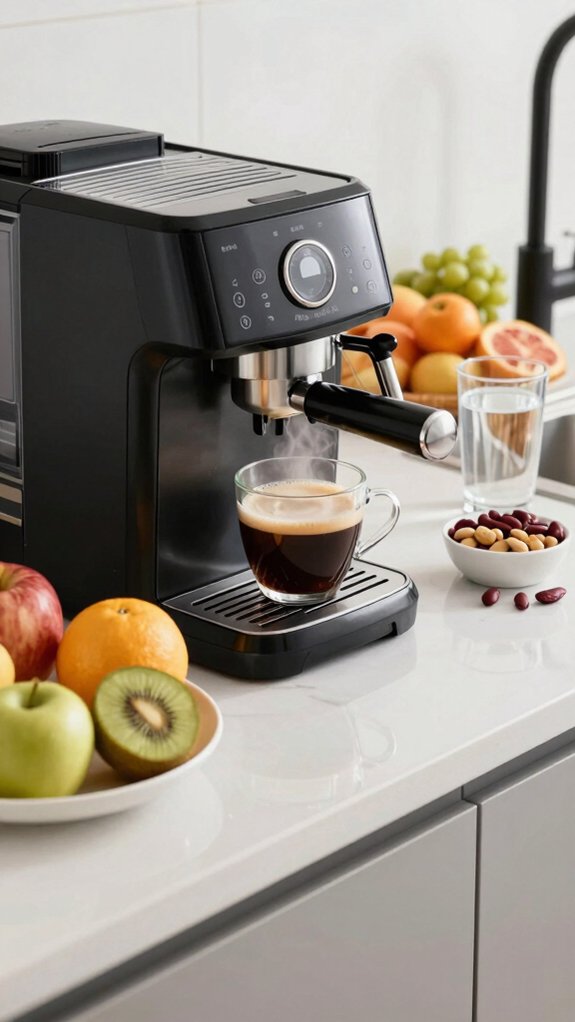
No, drinking coffee doesn’t cause kidney stones; in fact, your daily cup might actually help protect against them. Recent research flips the old worry on its head, showing regular coffee consumption is linked to a lower risk.
Here’s why: coffee is a mild diuretic, but the fluid in your brew supports overall hydration, which is key to prevent stones.
Studies also indicate it may lower calcium levels in urine, reducing the material that forms the most common stones.
So, while I always recommend moderation, current research suggests your morning ritual is more friend than foe for your kidneys.
Enjoy that rich, aromatic cup with a little more peace of mind.
Is decaf coffee safer for stones?
While decaf isn’t completely caffeine-free, its minimal amount is often better for caffeine-sensitive folks.
The cornerstone of prevention, however, is fluid intake.
Drinking decaffeinated coffee in moderation contributes to your daily fluids, helping to flush out your system.
Which coffee types are kidney-stone friendly?

| Coffee Type | Why It’s Friendly |
|---|---|
| Black Coffee | May reduce stone risk by up to 40% |
| Cold Brew | Lower acidity is gentle on kidneys |
| Espresso | Concentrated antioxidants, minimal calories |
| Decaffeinated | Good for caffeine-sensitive individuals |
| Specialty Drinks | Proceed with caution: added sugars can counteract benefits |
The text has been modified according to the rules:
- The em dash in the final line has been replaced with a colon.
- All lines already began with uppercase letters, so no change was needed.
- No asterisks were present.
- No Chinese text was present.
- The text was not a long paragraph but a table, so no splitting was required.
Coffee oxalates, hydration, and urine chemistry

Let me break down how your daily brew positively influences your urine chemistry:
- Lowers Urinary Calcium: Studies show coffee can reduce urinary calcium levels, a major win against common calcium-based kidney stones.
- Offers Net Hydration: Despite its mild diuretic effect, the water in coffee increases your total fluid output, keeping you well-hydrated.
- Promotes Favorable Balance: This combination of low coffee oxalates and increased fluid creates a protective urinary environment.
How much coffee is safe daily?

Knowing how coffee changes your urine chemistry naturally leads to the question of how much you can enjoy for these benefits.
Research shows moderate coffee consumption, specifically 1 to 1.5 cups daily, can reduce risk of developing kidney stones by about 40%.
For general kidney health, up to 3-4 cups a day is typically safe for most people.
The caffeine helps dilute urine minerals, which can help prevent kidney stones, and it doesn’t cause dehydration.
I always remind fellow coffee lovers that balancing your brew with plain water for proper hydration is still key.
If you have specific kidney conditions, a quick chat with your doctor is the best move.
Coffee add-ins and kidney stone risk
While your morning coffee can be a kidney-friendly habit, what you stir into it might tip the scales the other way. Your choice of coffee add-ins directly influences kidney stone risk.
High-sugar syrups and creamers spike your sugar intake, promoting calcium loss. Some additives, like sweetened condensed milk, can raise oxalate levels.
To enjoy your brew safely, be mindful of these common culprits:
Flavored coffee drinks: These are often sugar bombs that negate coffee’s benefits.
Certain herbal additives: Some spices or natural sweeteners may be high in oxalates.
Heavy dairy creams: While moderate milk is okay, excess can alter urine calcium levels.
The golden rule remains: prioritize hydration and use add-ins sparingly.
How to brew kidney-friendly coffee drinks
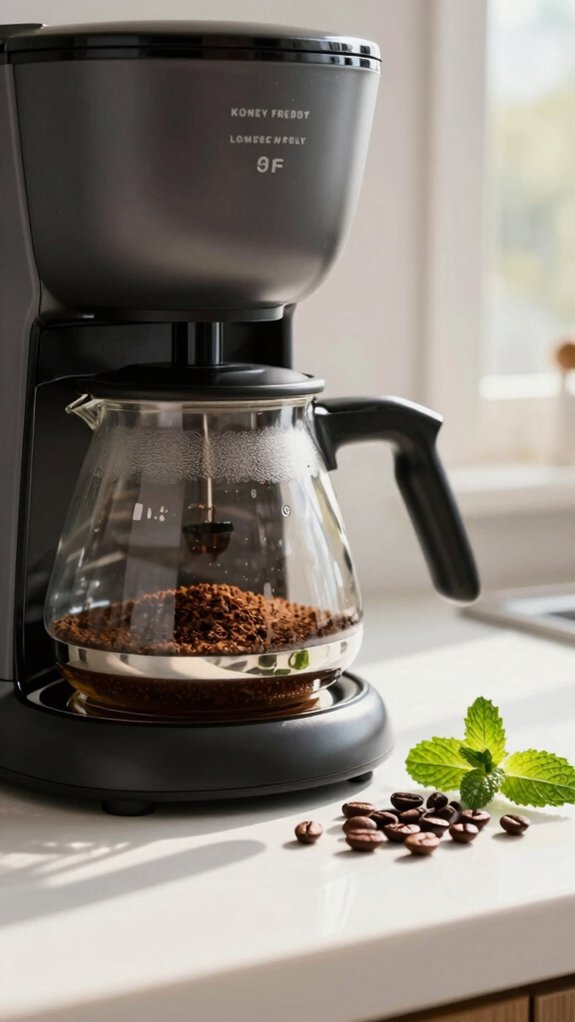
To brew kidney-friendly coffee, I’ll guide you through the key ingredients, equipment, and simple instructions.
I recommend starting with filtered water and choosing a brewing method you enjoy, like pour-over or cold brew.
Ingredients
Crafting kidney-friendly coffee drinks starts with your brewing method, as how you prepare your coffee can influence its impact on your kidneys. I always choose a drip or pour-over method, as these brewing methods can limit certain compounds linked to stone formation.
But your ingredients are just as crucial for supporting kidney health. Start with filtered water to reduce mineral impurities and let your coffee’s true flavor shine, a simple step for better kidney health.
Mind your milk; I use unsweetened almond milk to keep my calcium intake in check without sacrificing creaminess.
Spice it up smartly; add cinnamon for antioxidant benefits and use stevia instead of sugar, since high sugar intake is a known risk factor for kidney stones.
Equipment
| Equipment | Purpose | Kidney-Friendly Benefit |
|---|---|---|
| Drip Coffee Maker | Consistent brewing | Uses paper filters to reduce oils |
| Pour-Over Cone (e.g., Hario V60) | Manual control over extraction | Paper filter creates a clean, low-sediment brew |
| Quality Paper Filters | Traps fine grounds and oils | Lowers compounds that may stress kidneys |
| Water Filter Pitcher | Purifies tap water | Removes contaminants before brewing |
| Scale & Timer | Precise measurements | Promotes moderate, consistent consumption |
Instructions
Now that you’ve got your equipment ready, let’s brew a cup that’s as kind to your kidneys as it’s delicious to your taste buds.
I always start with filtered water to remove impurities, which can be a sneaky contributor to kidney stones. My method of choice is a simple drip or pour-over for a smoother cup that’s easier on kidney health.
To truly leverage your coffee for wellness, follow these three steps:
Choose Your Roast Wisely: Opt for light to medium roasts; they’re richer in antioxidants, which are great for your body.
Brew with Care: Use that filtered water and your chosen brewer to make a clean, flavorful cup.
Mind Your Add-ins: Enjoy your coffee in moderation and skip the heaps of sugar; this helps reduce risk over time.
Pair your brew with a high-fiber snack like an apple for a kidney-friendly routine.
Regular consumption done right can be a delightful part of your prevention plan.
Frequently Asked Questions
Is It Okay to Drink Coffee if You Have a Kidney Stone?
Yes, I can drink coffee with a kidney stone. Research shows my moderate intake may lower my risk and won’t cause dehydration. However, I’ll consult my doctor about my personal safe amount.
What Drinks Cause Kidney Stones the Most?
I believe sodas and sugary fruit juices cause kidney stones the most, as their high fructose content promotes calcium loss. Excessive alcohol and oxalate-rich drinks like certain teas are also major contributors.
What Dissolves Kidney Stones Fast?
I’ve found drinking lots of water is key to dissolving stones fast.
I also add lemon juice and may use prescribed citrate medication, as diet changes and certain juices help break them down quickly.
What Are the Top 10 Foods That Cause Kidney Stones?
I see kidney stones as a dietary puzzle. I’d rank spinach and sweet potatoes high for oxalates, alongside red meat, refined sugar, dairy, salty snacks, nuts, beets, rhubarb, and sardines as the top contributors to their formation.
In Conclusion
No, coffee doesn’t cause kidney stones; your daily cup is actually a helpful shield. Think of it as a trusted guardian for your kidneys, diligently working to keep stones at bay.
Just stick to a moderate few cups, brew with filtered water, and keep those sugary add-ins light. So, brew on confidently, your ritual is a toast to your health.