


I’ve found coffee doesn’t universally cause joint inflammation; for most, 1-2 daily cups are safe and may even help. But since our bodies react uniquely, I always suggest listening to yours. If you experience stiffness, switching to decaf is a smart move, as it keeps beneficial antioxidants while ditching most caffeine.
Let’s explore how your brewing method and even your morning timing can make a real difference for your joint comfort.
Table of Contents
Does coffee cause joint inflammation or help?

So, does coffee cause joint inflammation or help? The answer is complex.
For joint health, research shows coffee’s effects are mixed. For conditions like rheumatoid arthritis, some studies link higher consumption to a modestly increased risk.
However, moderate consumption might offer some anti-inflammatory benefits for other individuals, potentially lowering certain inflammatory markers.
The key is how your body responds. Pay close attention to your symptoms after drinking coffee.
Interestingly, coffee may help lower uric acid, which can benefit those with gout.
I recommend viewing it as a personal experiment: enjoy your brew in moderation, monitor your joints, and always consult your doctor for advice tailored to your health.
How much coffee is okay for joints?

How much coffee can you enjoy while still being kind to your joints? Stick to a moderate intake of 1-2 cups daily. This level is generally safe for joint health.
Research shows exceeding this can increase rheumatoid arthritis risk, as one extra daily cup is linked to a 6% higher risk.
So, while coffee has benefits for health, like lowering uric acid, heavy coffee consumption may worsen inflammation for some with arthritis.
My advice? Start moderate, monitor symptoms closely, and always pair your cup with water for proper hydration.
Your individual response guides the real answer, so let your body and doctor inform your habits for positive health implications.
Is decaf better for painful joints?

If you’re managing painful joints, you might wonder whether switching to decaf coffee is a smarter choice. I find that for many, it is.
Decaf coffee retains anti-inflammatory properties, like chlorogenic acid, which may help reduce inflammation without caffeine’s potential to aggravate arthritis symptoms. Research indicates it can also lower uric acid levels, a key factor in gout flares.
While individual sensitivity varies, your coffee consumption can shift from a risk to a benefit. For those with inflammatory diseases, choosing decaf means you’re likely gaining the benefits for arthritis, like antioxidants, while minimizing triggers.
It’s a simple swap that lets you enjoy your ritual without worsening joint pain.
Coffee and gout, rheumatoid arthritis, osteoarthritis effects

While coffee’s relationship with joint health might seem complex, its effects can vary significantly depending on whether you’re managing gout, rheumatoid arthritis, or osteoarthritis.
Based on research, here’s my breakdown:
For Gout Sufferers: Coffee can be a surprising ally. It may help lower uric acid levels, potentially reducing the frequency of painful gout flares.
For Rheumatoid Arthritis (RA): Be more cautious. Studies link each daily cup to a potential 6% increased risk of rheumatoid arthritis, though its antioxidant properties can also lower inflammatory markers.
For Osteoarthritis: Balance is key. While high caffeine might worsen inflammation in the body, moderate coffee consumption could offer health benefits due to its antioxidants, so monitor your personal joint pain.
Roast, brew, and add-ins that matter

The choices you make with your coffee roast, brew method, and add-ins directly influence its impact on joint inflammation. I recommend paying close attention to these details for better health implications.
For your roast, darker beans lose some antioxidant content but are lower in acidity, which can be gentler if you experience joint pain. Your brew method matters, too; filtered coffee removes more compounds linked to inflammation.
Most importantly, practice moderation in your coffee consumption, one to two cups daily is the sweet spot.
| Choice | Pro-Tip for Joints |
|---|---|
| Roast | Opt for a medium-dark roast for balance. |
| Brew Method | Use a paper filter to reduce certain oils. |
| Add-ins | Skip sugary syrups; try cinnamon instead. |
| Acidity | Choose cold brew for a smoother sip. |
| Serving Size | Stick to 1-2 cups to enjoy benefits in moderation. |
Mindful add-ins like plant-based milk help you maximize the benefits without negating them.
Coffee, arthritis medications, and timing tips
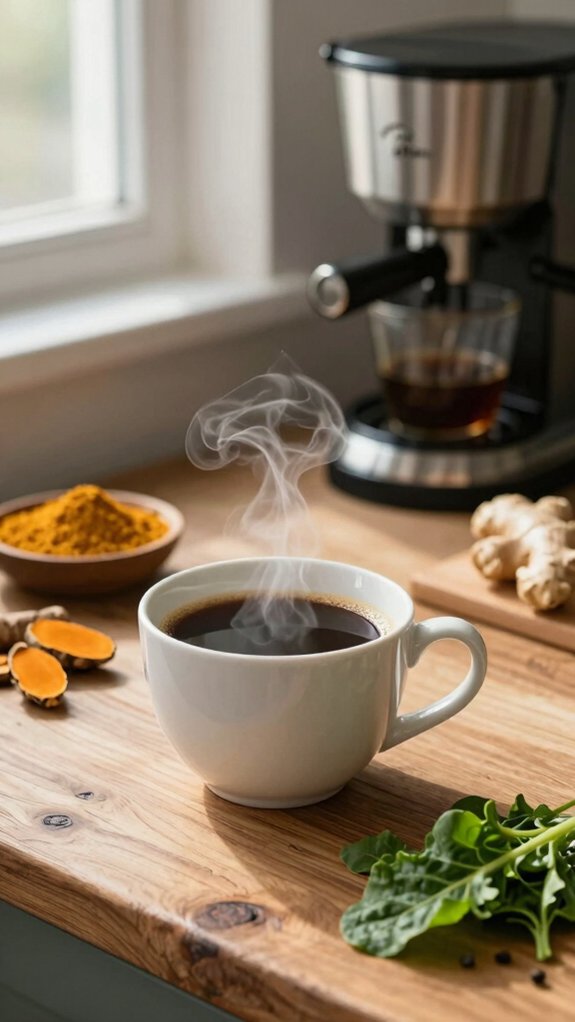
Since you’re managing arthritis and enjoy coffee, I’m glad to report you can usually keep drinking it alongside your medications, but timing and moderation are your best tools.
The caffeine can actually help with methotrexate intolerance for some. However, it might worsen sleep issues if you’re on prednisone. Always discuss new symptoms with your doctor.
To enjoy your cup wisely, consider these timing tips:
- Space it out: Have your coffee at least a few hours apart from your arthritis medications to minimize side effects.
- Practice moderation: Limit yourself to 1-2 cups daily to help manage inflammation and sleep.
- Monitor your body: Note how your joint feels; this personal data guides your best routine.
This mindful approach balances pleasure with positive health implications.
How to make joint-friendly coffee at home

I can show you how to brew a joint-friendly coffee at home by focusing on three key areas: the ingredients, the equipment, and the simple instructions.
Let’s start by choosing low-acid beans and anti-inflammatory add-ins like turmeric.
Then, I’ll walk you through the best brewing methods to keep your cup both delicious and gentle.
Ingredients
Sweeten Smartly: I skip refined sugar and use natural alternatives like raw honey or stevia.
Boost with Spices: I often stir in a pinch of turmeric or cinnamon for an extra anti-inflammatory kick.
Choose Your Creamer Wisely: I opt for plant-based milk, like almond or oat, which many find gentler than dairy.
Finally, to minimize acidity, I prefer cold brew, which is smoother on my system.
Equipment
| Equipment Choice | Key Benefit for Joints |
|---|---|
| French Press | Lower brewing temperature reduces acidity |
| Pour-Over | Paper filter traps oily irritants |
| Burr Grinder | Even extraction avoids bitter compounds |
| Scale & Thermometer | Precision prevents over-extraction |
Pair your equipment with low-acid coffee beans and skip added sugars from flavored syrups.
Instead, try adding anti-inflammatory cinnamon or turmeric to your cup, and use unsweetened plant-based milk for a creamy finish that’s easy on your system.
Instructions
Now that you’ve got your equipment ready, let’s walk through how to brew a cup that’s as kind to your joints as it’s delicious to your taste buds.
My method focuses on maximizing benefits while minimizing any risks related to joint inflammation.
Start with quality beans: Always choose organic coffee beans; this simple switch minimizes pesticide intake, which is a smart move for anyone managing conditions like rheumatoid arthritis.
Brew for wellness: Use your pour-over or French press to best preserve the coffee’s natural antioxidants and anti-inflammatory properties.
Mind your additions and intake: Strictly limit added sugars and creamy dairy.
Instead, try almond milk with a dash of cinnamon.
Most importantly, practice moderation; keeping your daily caffeine intake to 1-2 cups is one of the best health tips for balanced coffee consumption.
Frequently Asked Questions
How Do I Know if Coffee Is Causing Inflammation?
I track my symptoms, like joint pain or swelling after drinking it. I also consult my doctor and consider lab tests to see if my inflammation markers rise with my coffee consumption.
Why Do My Joints Hurt After Drinking Coffee?
My joints might hurt after coffee because caffeine can increase inflammation or lead to dehydration.
I’d monitor my body’s reaction and consider reducing my intake or switching to decaf to see if it helps.
Does Quitting Coffee Reduce Inflammation?
Yes, quitting coffee reduced my inflammation.
It felt like a coincidence, but my joint pain eased and I’ve felt better since.
Studies suggest caffeine can worsen inflammation, so my experience fits the pattern.
What Is the #1 Best Drink to Reduce Inflammation?
From my research, I believe the #1 best drink is water. It is fundamental, hydrating your body, helping transport nutrients, and removing waste. This directly supports reducing inflammation and maintaining joint health.
In Conclusion
I’m confident you can enjoy your daily cup without stirring up joint inflammation. Think of your coffee ritual as a dance-listen to your body’s cues, stay hydrated like a well-watered garden, and consider decaf as your gentle partner.
By tuning into these rhythms, you can savor each sip in harmony with your joint health.