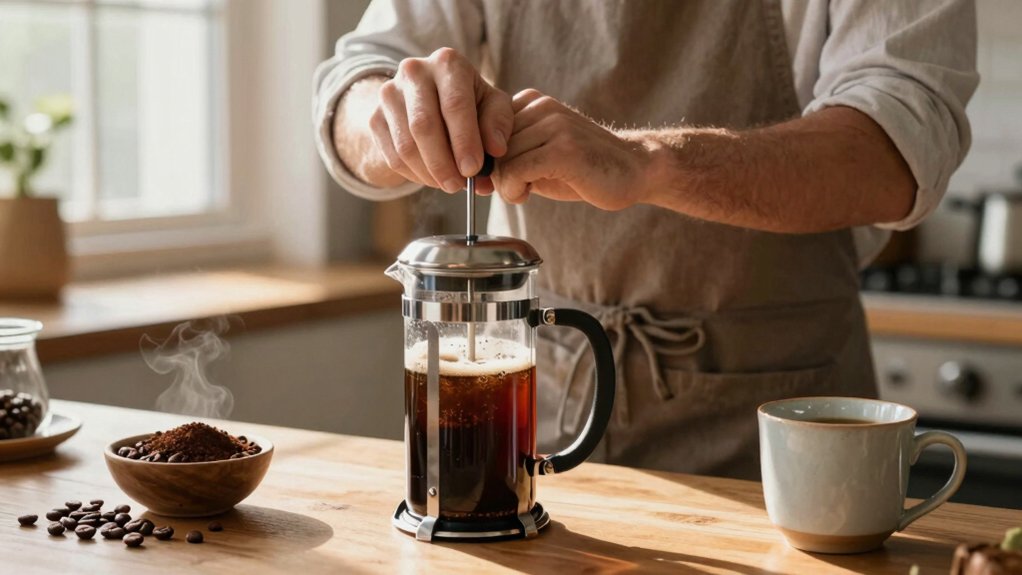
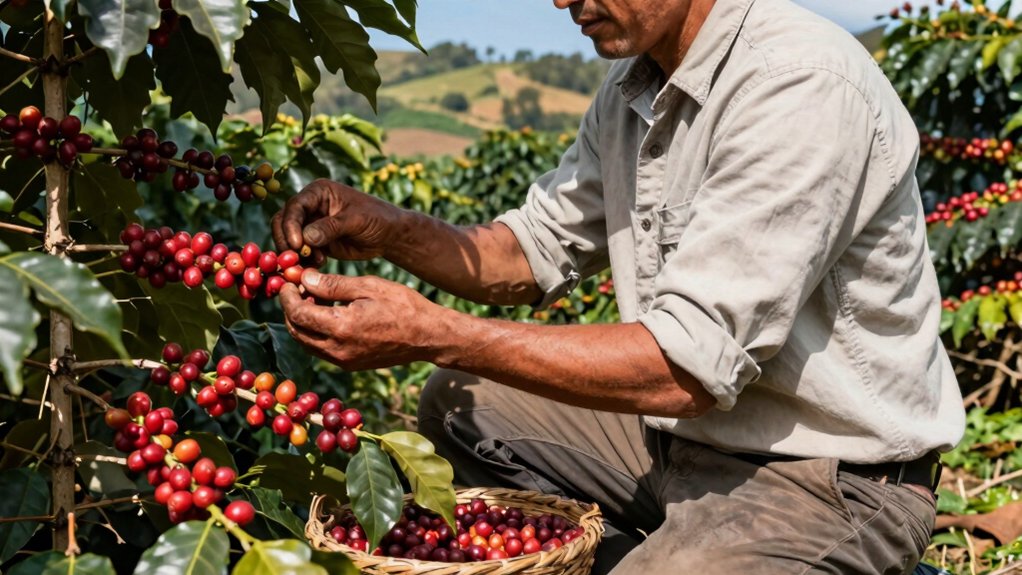

You might be surprised to learn that yes, we absolutely can grow coffee in the U.S., with Hawaii’s famous Kona region leading the way.
Our unique volcanic soil and microclimates create distinct flavors you can’t find elsewhere, though high costs keep production small. I’ll show you exactly where it thrives, how those conditions shape your cup, and what the future holds for American-grown beans.
Table of Contents
Can coffee be grown in the US?
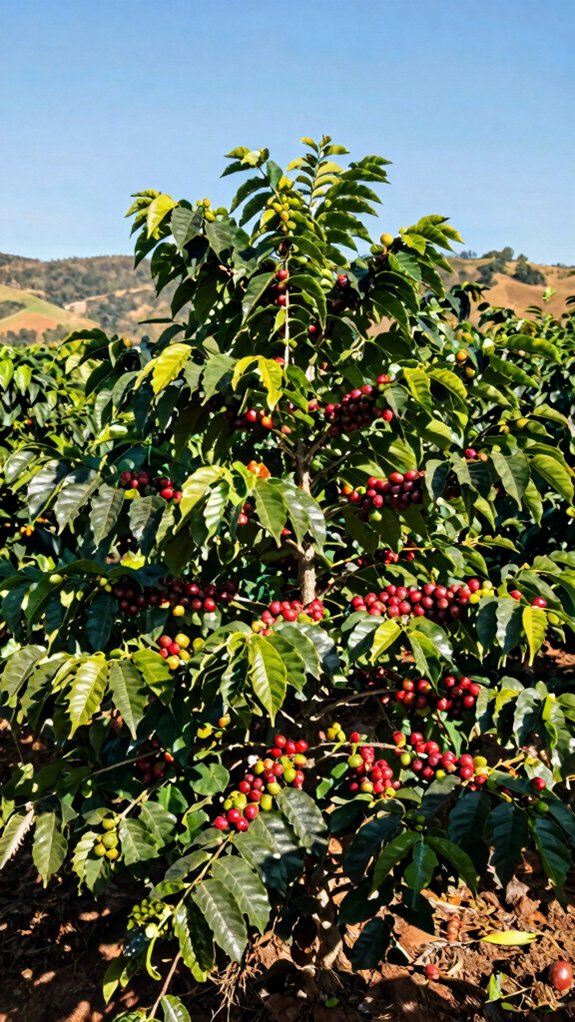
Yes, coffee can be grown in the U.S., though it thrives in very specific regions like Hawaii and, more recently, parts of California.
You’ve probably heard of famous Kona Coffee from Hawaii’s dedicated farms. Historically, Puerto Rico was also a key producer.
Today, total U.S. coffee production is tiny, just 4.2 million pounds in 2024. Our consumption is 800 times that!
Growing coffee here faces big hurdles: climate change, high costs, and water scarcity make it a challenging, niche endeavor.
So while the answer is yes, commercially viable and affordable domestic coffee is rare.
We rely almost entirely on imports to fuel our daily brew.
Which states actually grow coffee today?
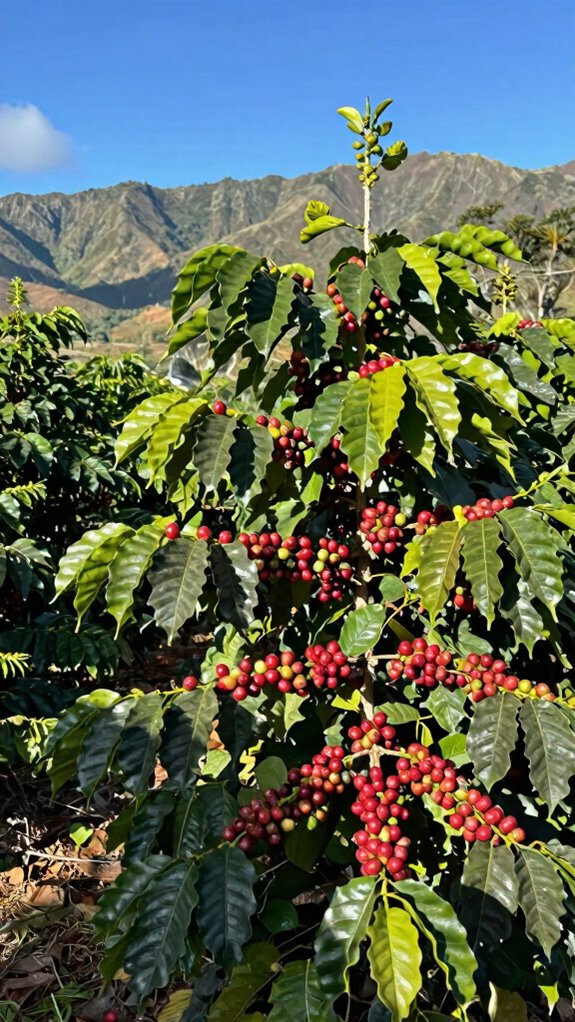
Beyond Hawaii, California coffee is an exciting, emerging story. Experimental farms are cultivating small batches of high-end Arabica beans.
While promising, the scale is tiny.
Coffee climate, altitude, and soil needs
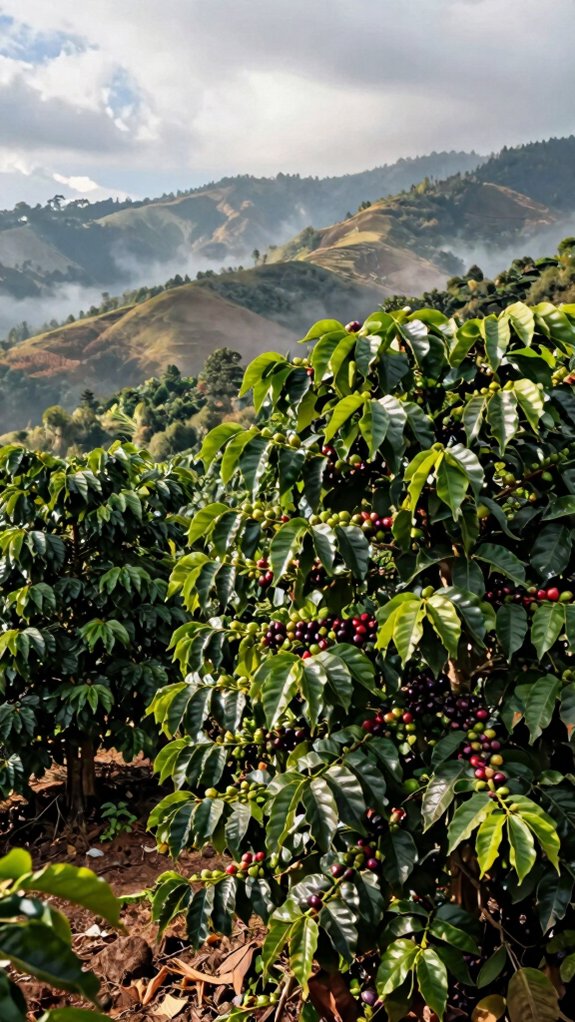
Since coffee plants are quite particular, let’s look at what they need to thrive: a specific blend of coffee climate, altitude, and soil needs. They love mild temperatures, high humidity, and rich, well-draining earth. That’s why the Kona region in Hawaii is perfect, its volcanic soil is packed with nutrients.
Altitude is key for flavor; in Hawaii, growing between 1,000–3,000 feet is ideal. But the right conditions are rare in the U.S., which is why our coffee farming industry is so small and focused.
| Need | Ideal Condition | Why It Matters |
|---|---|---|
| Climate | Mild, consistent, humid | Prevents stress, ensures steady growth |
| Altitude | 1,000–3,000 feet | Develops complex flavor profiles |
| Soil | Volcanic, well-draining | Provides essential nutrients for health |
Finding this combination elsewhere, like in California, is challenging but being explored.
Costs, yields, and regulations to know
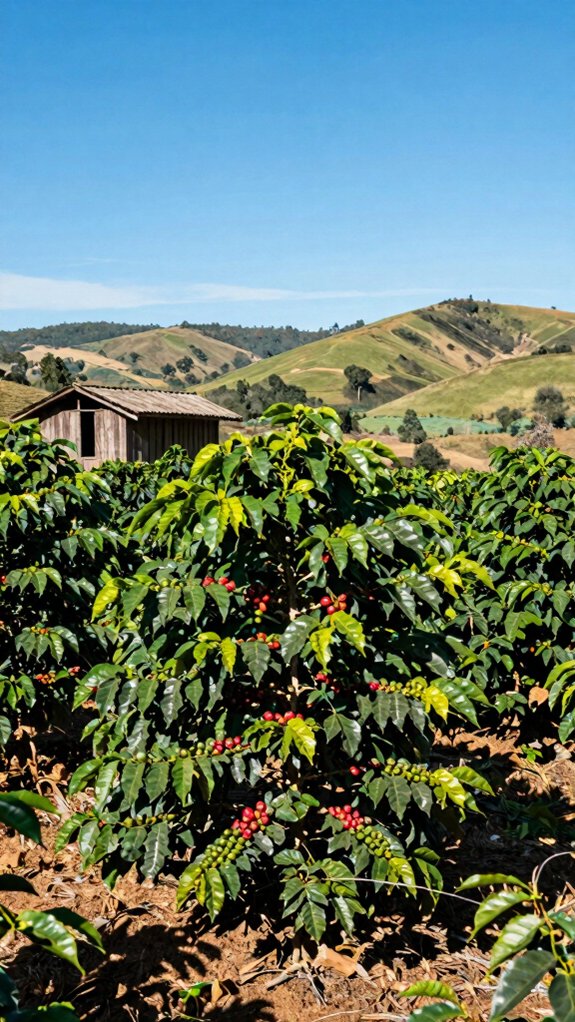
Here’s a quick breakdown:
Sky-High Prices: Expect to pay $160 to $256 per pound for California coffee, a premium for local, specialty beans.
Minute Volume: Domestic output is a drop in our coffee cup compared to national consumption.
Key Regulations: In California, laws like SGMA limit groundwater, directly impacting irrigation for thirsty coffee plants.
Can I grow coffee at home?
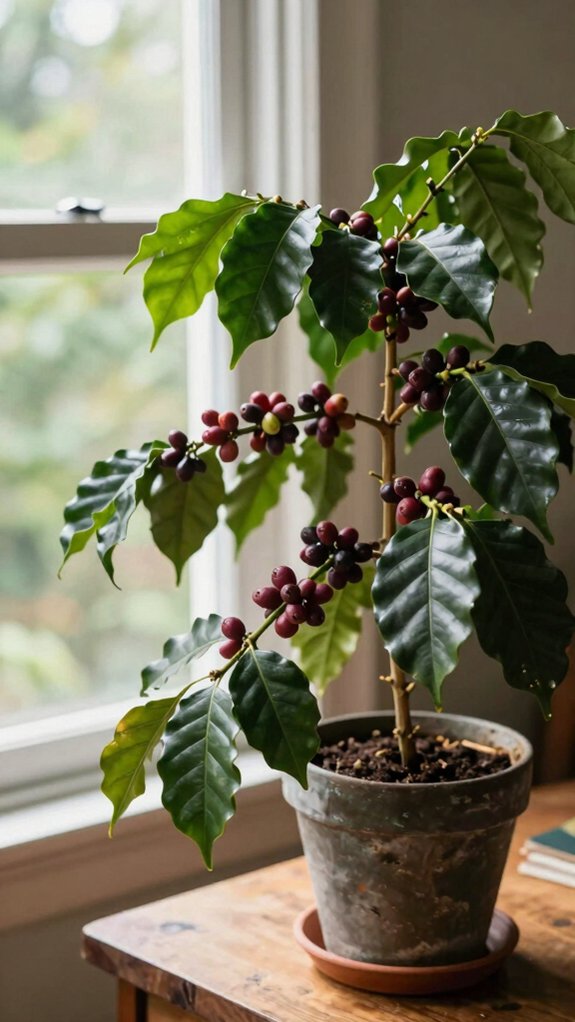
So, can you actually grow coffee at home? Absolutely, I’ve done it myself! You can have coffee plants right in your living room.
The key is mimicking their tropical origins. If you have a warm climate or a sunny indoor spot, you’re halfway there.
These plants love bright indirect sunlight and need well-draining soil that’s slightly acidic.
Keep the soil consistently moist and the air humid.
With patience, typically 3 to 4 years, your plant will produce beans. It’s a rewarding project for any coffee lover, turning your care into your own potential harvest.
What does US-grown coffee taste like?
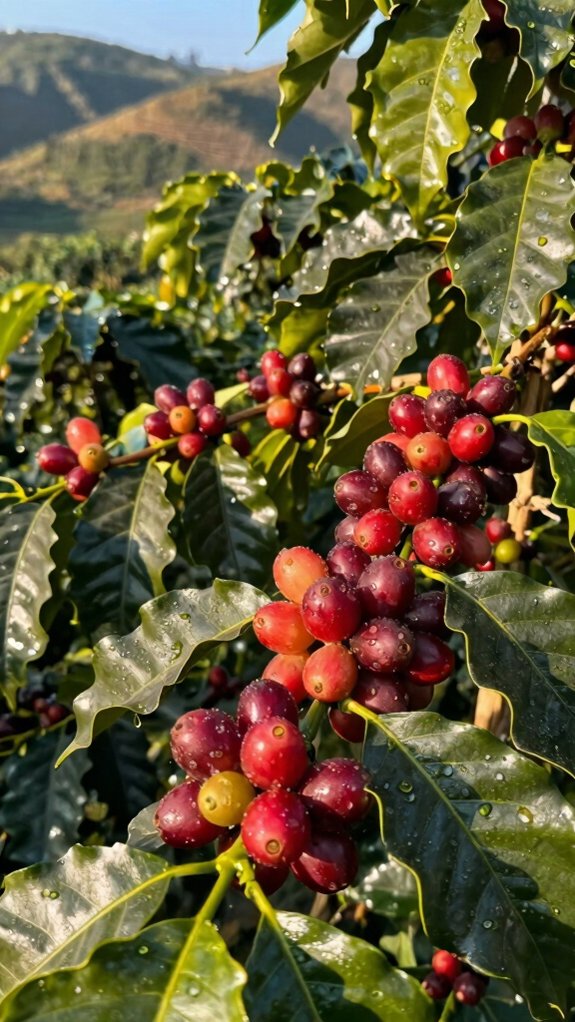
While you might think all great coffee comes from overseas, US-grown coffee has a distinct and often surprising flavor profile that’s absolutely worth exploring.
Our limited production, shaped by unique terroir, creates a special experience.
Hawaiian Nuance: Kona coffee offers a classic, smooth profile with slightly nutty and fruity notes, setting a high-quality benchmark for US coffee beans.
California Experimentation: California-grown coffee is where things get wild, with unique taste notes like cookie dough or black Twizzlers emerging from innovative farming.
Regional Diversity: The flavor profiles vary dramatically by local conditions, meaning each region’s US-grown coffee tells a different, delicious story.
Climate change, pests, and future outlook
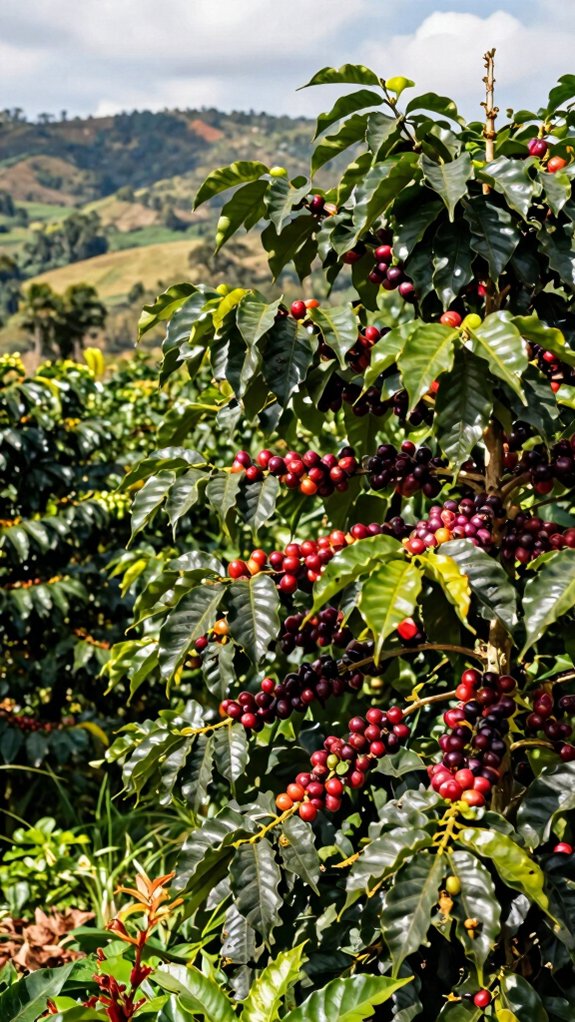
That’s why I’m encouraged by our focus on resilience.
Farmers are developing drought-resistant varieties and using innovative farming practices, like inter-planting with avocado trees, to build sustainable systems.
We’re also employing soil sensors for precise irrigation.
This proactive adaptation is key to securing coffee’s future in the U.S.
Frequently Asked Questions
Why Don’t We Grow Coffee in the US?
We don’t grow much coffee because our climate isn’t suitable, and it’s far too expensive here.
I can only cultivate it in a few places like Hawaii, and even there, my production is tiny.
What US States Can Grow Coffee?
You might think coffee can’t grow in the U.S., but it can! I’d point you to Hawaii for Kona, experimental farms in California, and Puerto Rico, though its production has sadly declined after hurricanes.
Can America Grow Its Own Coffee?
Yes, America can grow its own coffee, but it’s limited.
I primarily farm in Hawaii, with small experimental plots in California and Puerto Rico.
Our high costs and tiny scale mean we produce far less than we drink.
In Conclusion
Yes, we can grow coffee in the U.S., and I find its future as rich as a freshly brewed cup of Hawaiian Kona.
Picture those emerald-green coffee cherries ripening under a Pacific sun, nurtured by volcanic soil. While our domestic farms are a tiny, precious crop, they prove that with the right care, we can cultivate exceptional, terroir-driven coffee right here, offering a unique and promising sip of American flavor.