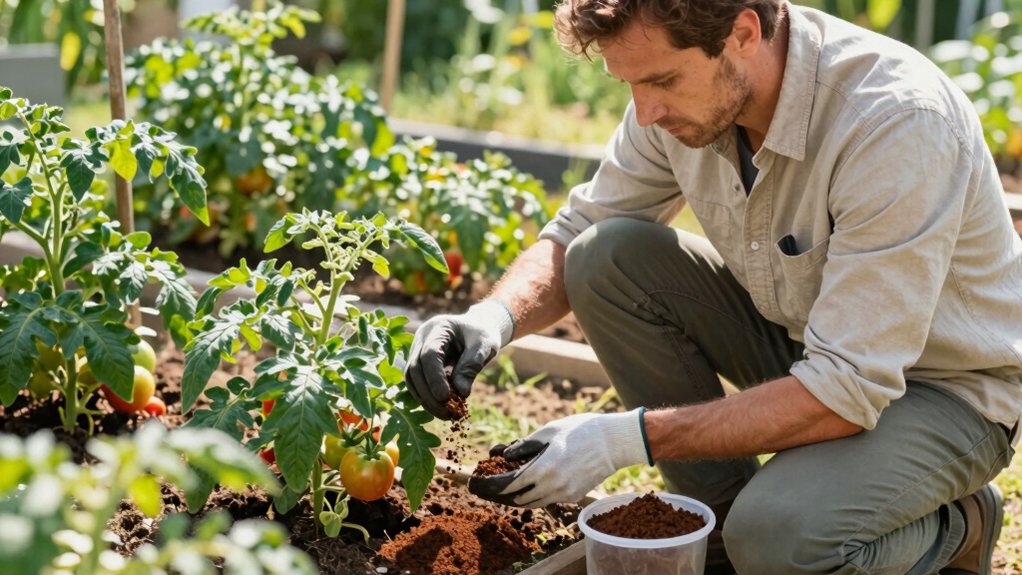
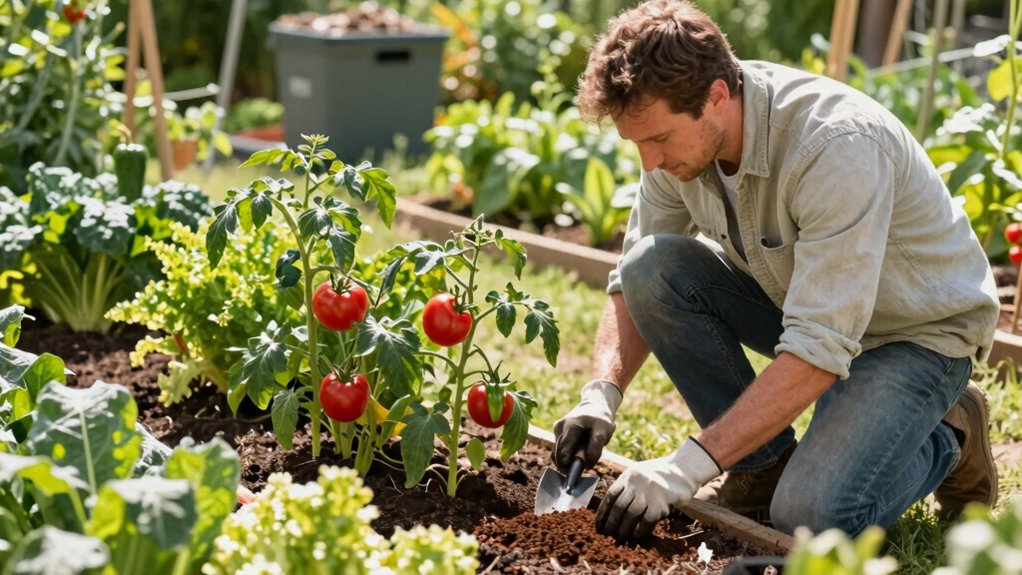
I’ve seen my tomato plants thrive after I worked composted coffee grounds into their soil. Adding grounds to your vegetable garden can be beneficial, but safe use is key.
I always compost them first to neutralize acidity, and I limit grounds to 20% of my compost volume to keep the soil balanced. This approach avoids harming seed germination while feeding acid-loving plants.
The real trick is knowing which of your vegetables will perk up with this treat and which might wither.
Table of Contents
Are coffee grounds good for vegetable garden?
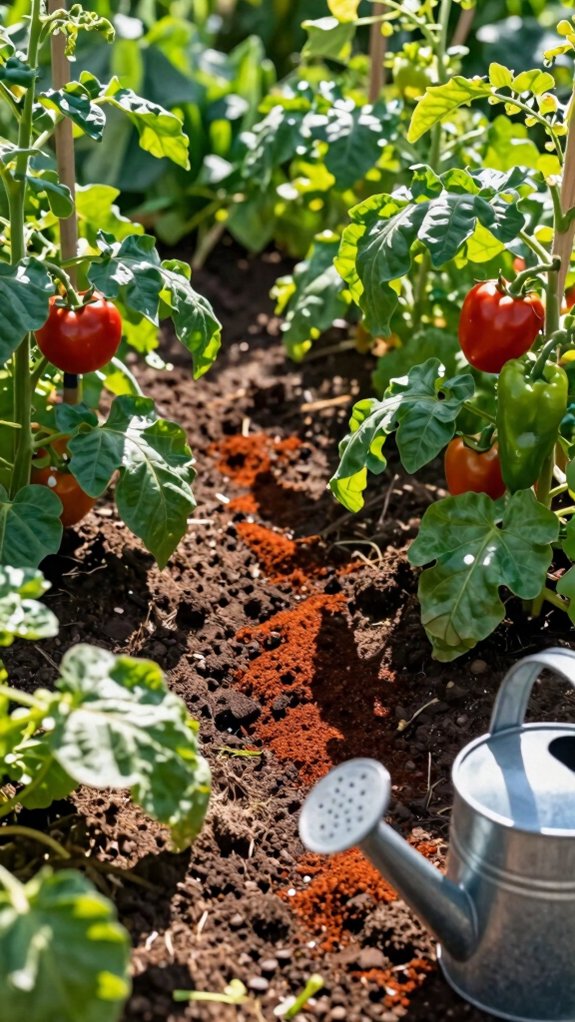
Absolutely, coffee grounds are fantastic for your vegetable garden when used correctly.
They’re nitrogen-rich, a key nutrient for leafy growth. I always add them to my compost pile first, creating composted coffee grounds. This prevents any potential issues with fresh grounds and creates a fantastic soil amendment.
For your vegetable garden, this organic matter works wonders. It helps improve soil structure and drainage while boosting overall soil fertility.
Your acid-loving plants, like tomatoes, will particularly thank you.
The trick is moderation. Keep coffee grounds to about 10-20% of your compost volume. This ensures a balanced nutrient profile for healthy, thriving veggies all season long.
Which vegetables like or hate coffee grounds?
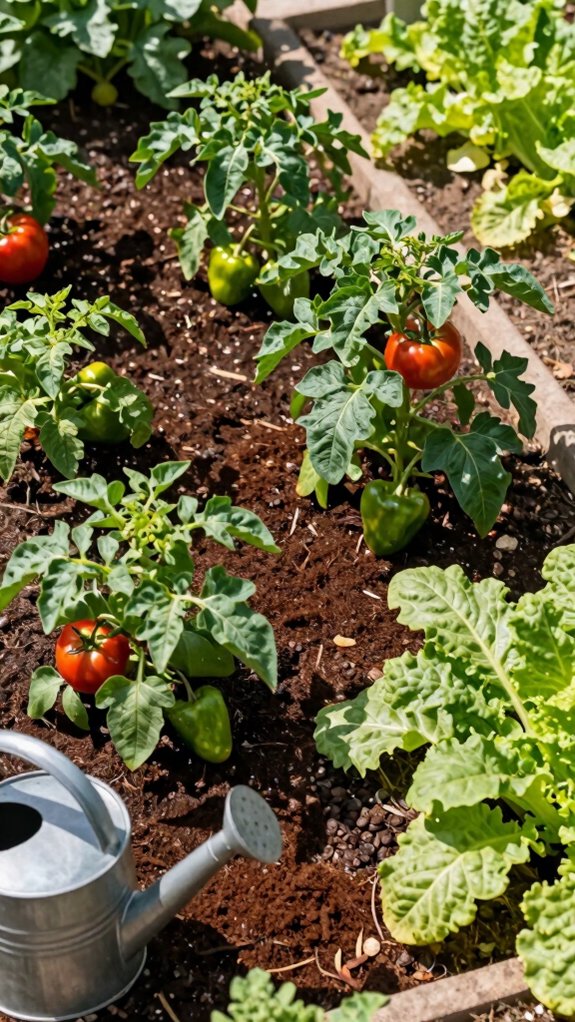
However, some plants can be harmed. Asparagus and lavender prefer alkaline soil, so acidic grounds inhibit them.
That’s why I always compost my grounds first, as it neutralizes acidity and prevents issues with seed germination.
Remember to limit grounds to 20% of your compost volume to keep your garden thriving.
Using coffee grounds around vegetables safely
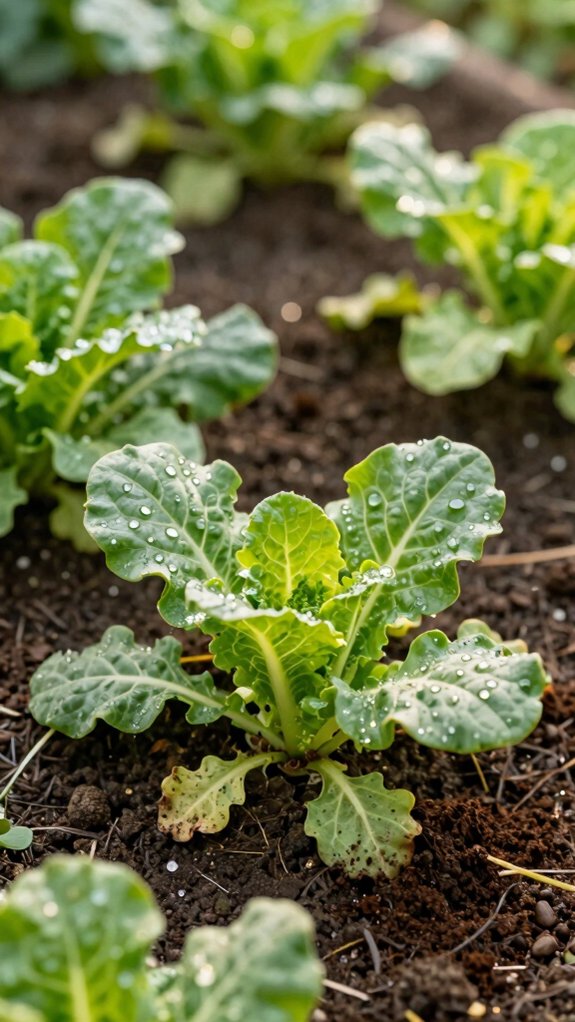
Since I want my veggies to thrive, I’ve learned that using coffee grounds safely comes down to how I prepare and apply them. I always compost them first, limiting coffee grounds to 20% of my pile. This transforms them into a great source of nitrogen for my vegetable garden without the risks.
I avoid fresh grounds near seeds, as studies show they can hinder germination. Instead, I use aged coffee grounds, which are milder.
I also check my soil pH, since overuse can make it too acidic for some plants. The key is always moderation.
When used correctly, they support healthy plant growth without any nasty surprises.
How much coffee grounds per square foot?
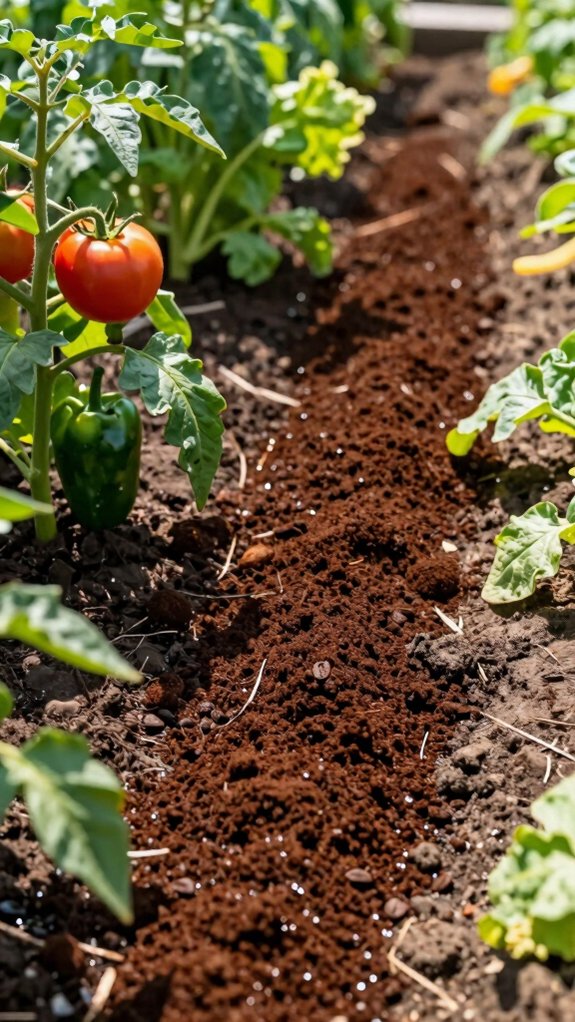
After applying, I monitor plant responses and check soil pH, as grounds are slightly acidic.
This careful approach lets coffee work its magic safely, feeding your soil and plants effectively.
Fresh vs used grounds, compost or mulch
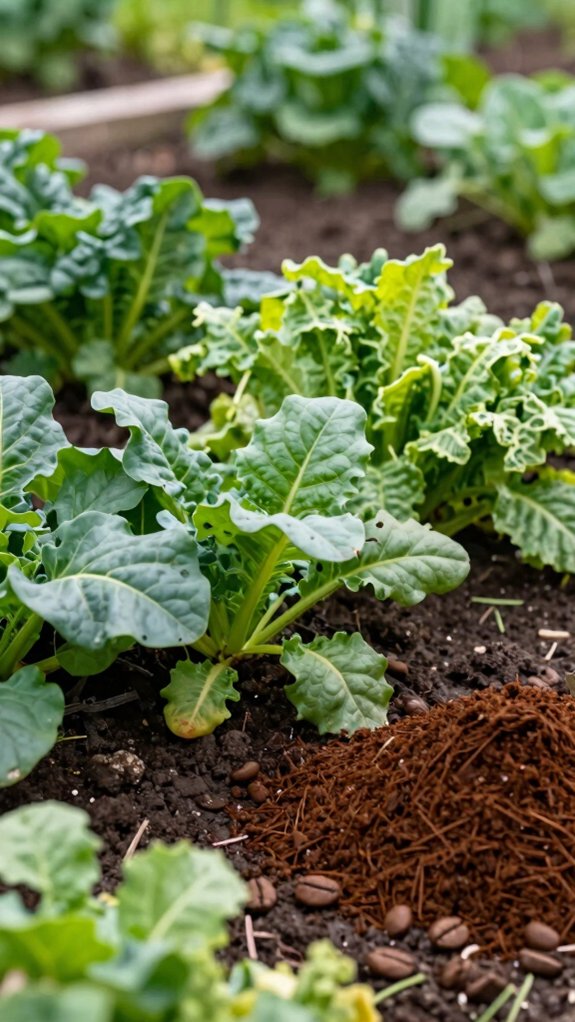
Now that you’re considering how to apply coffee grounds, let’s look at whether fresh or used grounds are better and how to use them as compost or mulch in your veggie garden.
First, always choose used coffee grounds; fresh coffee grounds can be harmful to plants, as their caffeine may inhibit growth.
Your best bet is to add them to your compost pile. My composting recommendation is to follow ideal ratios, mixing grounds with browns like leaves to unlock nitrogen and other nutrients.
While you might think of using them as mulch, heed this mulch caution: their fine texture can create a water-resistant crust.
Finished compost, however, is fantastic for acid-loving vegetables like tomatoes, giving them a perfect, nutrient-rich boost.
Do coffee grounds deter slugs and pests?
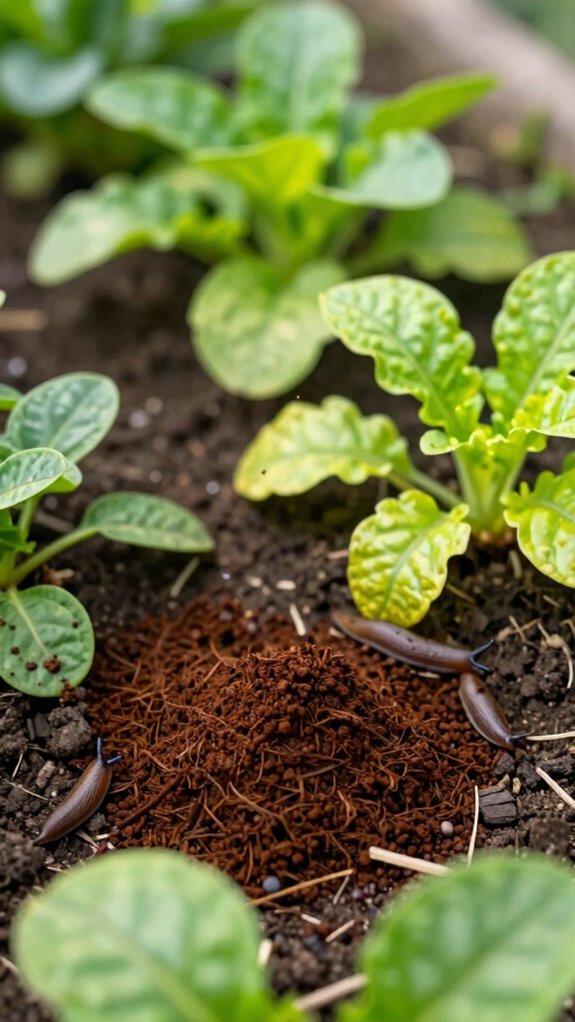
Sprinkling a fine, dark ring around tender seedlings.
A slug recoiling after touching the abrasive grounds.
Gently watering with a light-brown coffee solution into the soil.
Dense, matted grounds repelling water instead of nourishing plants.
Common mistakes, risks, and pet safety
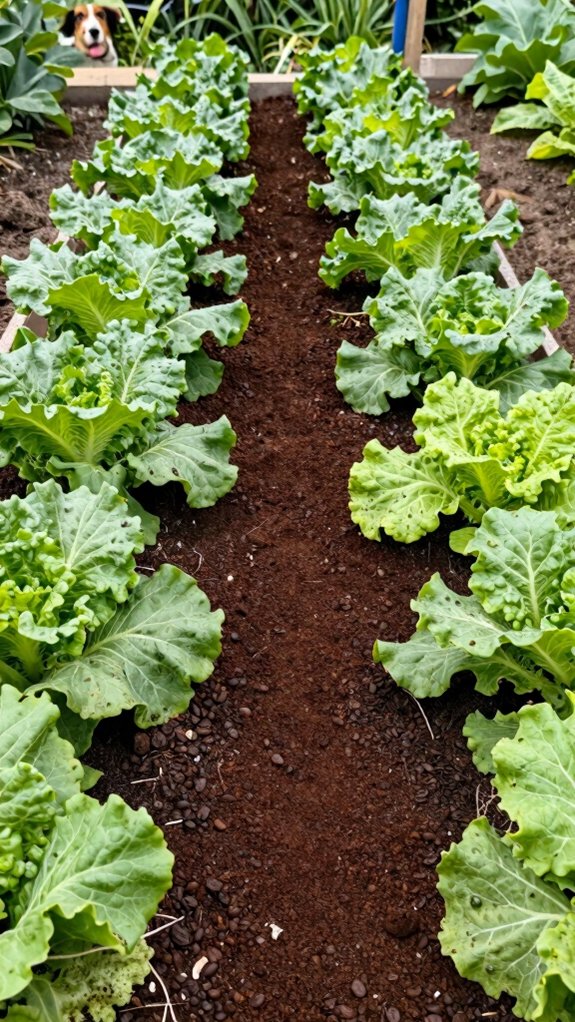
While coffee grounds can be a fantastic garden booster, it’s easy to make a few common mistakes that can harm your plants or even pose risks to pets.
The biggest error is over-application. Piling on fresh coffee grounds can create a water-repellent mat and cause excess soil acidity. Always mix them into your compost first, limiting them to 20% of the pile.
This protects earthworms from caffeine and maintains nutrient balance. For pet safety, keep grounds buried, as ingested caffeine is toxic to dogs.
Finally, always monitor plant responses after use. If leaves yellow, you may need to adjust your mix.
Frequently Asked Questions
What Vegetables Don’t Like Coffee Grounds?
I’d avoid coffee grounds for asparagus, lavender, and linden trees, as they prefer alkaline soil.
Fresh grounds can also stunt geraniums and asparagus ferns, and hinder clover and ryegrass seed germination.
When Should You Not Use Coffee Grounds in the Garden?
I’ve found the theory that ‘more is always better’ to be false. I wouldn’t use grounds on seedlings, alkaline-loving plants, or in thick layers, as this can burn roots, alter soil pH, and block water.
Which Vegetable Plants Like Coffee Grounds the Most?
I’ve found tomatoes, cabbage, and radishes love coffee grounds the most. They thrive on the nitrogen and acidity.
I always use aged grounds lightly to improve their soil without overwhelming them.
What Are the Disadvantages of Coffee Grounds as Fertilizer?
I find coffee grounds can acidify soil, repel water, and hinder germination. They may also harm earthworms and beneficial microbes if used fresh, so I always compost them first to avoid these issues.
In Conclusion
Yes, you can safely add coffee grounds to your vegetable garden. Think of them as a rich spice, best used with compost to mellow their acidity and unlock their nutrients.
I always treat them as a supporting player, not the star, to keep my soil’s balance in harmony. By tuning into my plants’ needs, I turn a simple waste product into a secret ingredient for a more thriving garden.