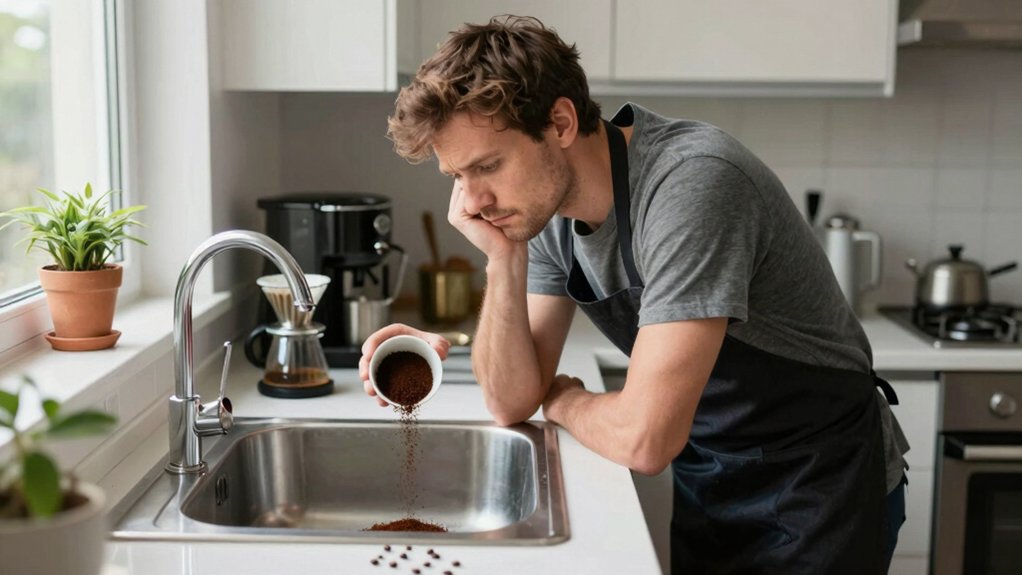

I’ve learned coffee grounds are a top cause of kitchen sink clogs, as they clump into a dense, plug-like mass in pipes.
While it seems harmless, this habit risks a costly plumbing visit, and I’ll explain why your garbage disposal isn’t a solution either.
Table of Contents
Should coffee grounds go down the sink
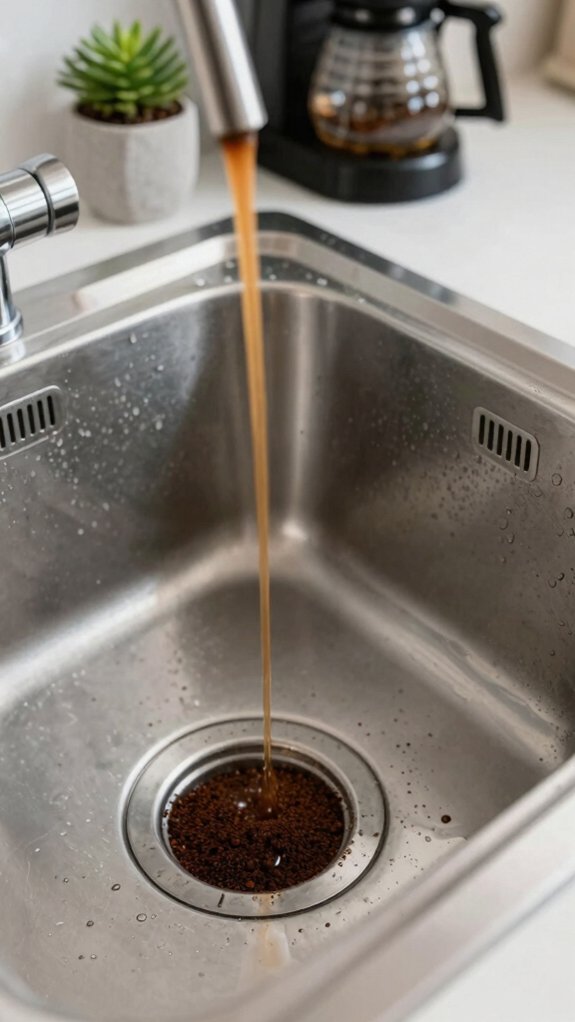
You mightn’t notice a problem immediately, but the accumulation is relentless.
A 2022 survey by plumbing professionals found coffee grounds contribute to over 15% of kitchen sink blockages.
So, please, never dispose of coffee grounds this way.
Your pipes and your wallet will thank you.
Why coffee grounds clog sinks and pipes
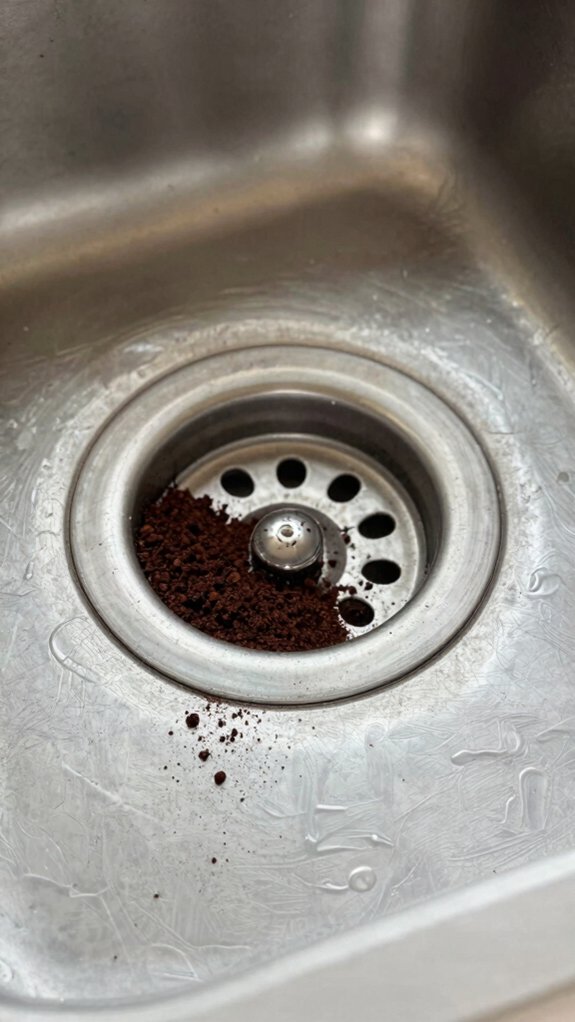
While it might seem like a quick cleanup, flushing coffee grounds down the drain is a direct path to a clog because they’re uniquely designed to stick together and settle.
I see them as tiny, dense particles that don’t dissolve. Instead, they clump into a wet mass inside your plumbing systems.
This sludge sinks and catches in pipe bends, building up over time. When mixed with grease, it forms a concrete-like barrier that severely restricts water flow.
Even a daily teaspoon can accumulate, causing slow drains and nasty odors.
The fix is simple: avoid the clogs altogether by using proper disposal methods like composting or the trash.
Your pipes will thank you.
Do coffee grounds ruin garbage disposals
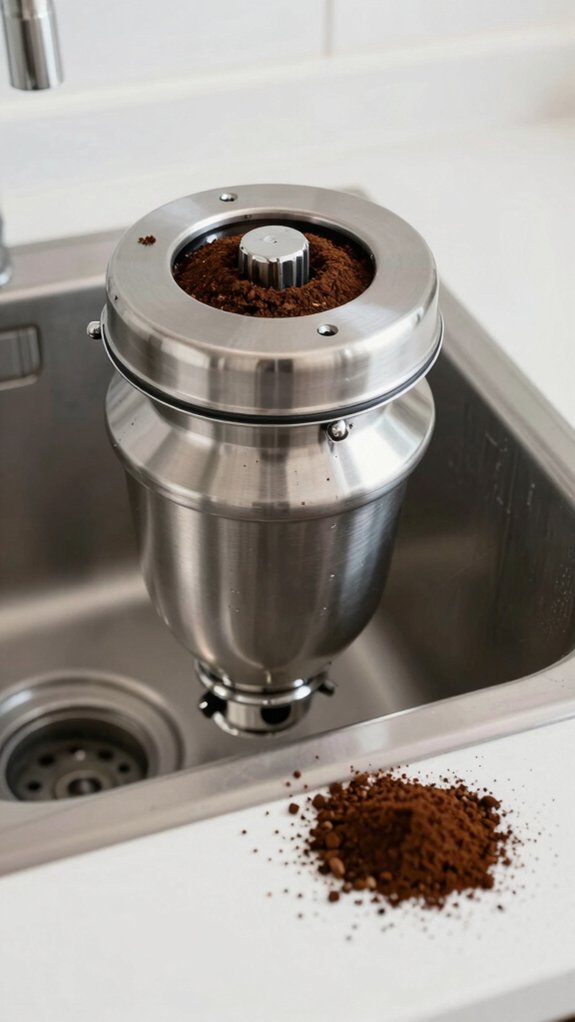
Many coffee lovers mistakenly believe that a garbage disposal can safely handle their used grounds, but this common habit is a fast track to plumbing trouble.
While the disposal’s blades chop them, coffee grounds aren’t dissolved. Their gritty texture lets them slip past, settling in pipes where they clump and create stubborn clogs.
This directly risks your plumbing.
I always compost my grounds instead; it’s fantastic for gardens. Tossing them in the trash is another safe option.
Trust me, avoiding the disposal prevents costly emergencies. Your sink and your morning routine will thank you for keeping those grounds out.
Septic tanks versus sewer key differences
Grasping your home’s wastewater system matters, especially because what you put down the drain can have very different consequences.
If you have septic tanks, you’re running a mini treatment plant. Dumping things like coffee grounds or food waste can overwhelm it, leading to clogs and costly repairs.
Septic systems need regular, owner-paid maintenance.
If you’re on municipal sewer systems, your waste travels to a central plant. While generally more robust, grounds can still contribute to pipe blockages over time.
Ultimately, knowing your system type directly informs your disposal habits, protecting your plumbing and your wallet.
Best ways to discard used coffee grounds
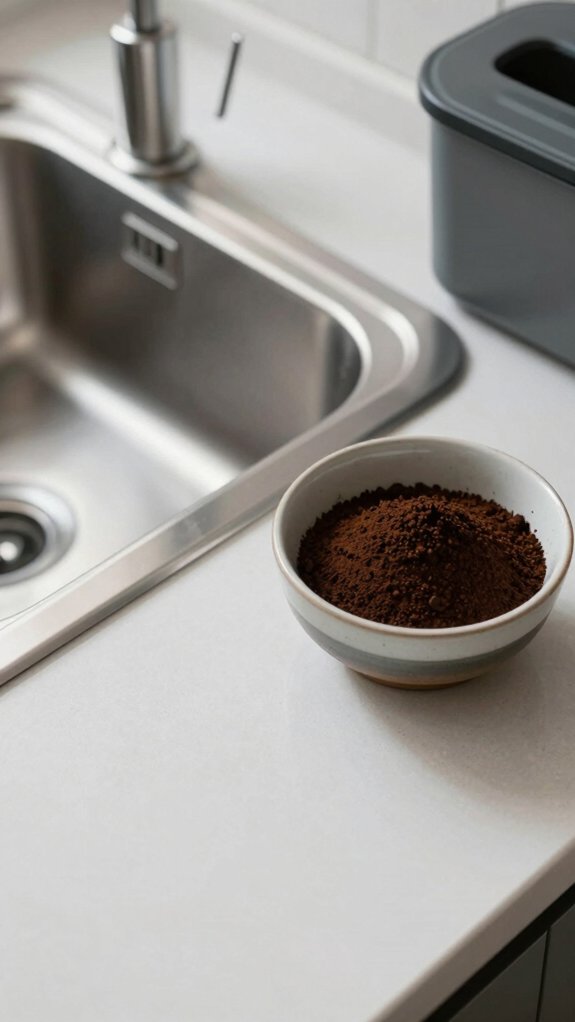
Since you now know to keep coffee grounds out of your sink, let’s explore the best ways to give them a second life, because these gritty leftovers are far too valuable to simply trash.
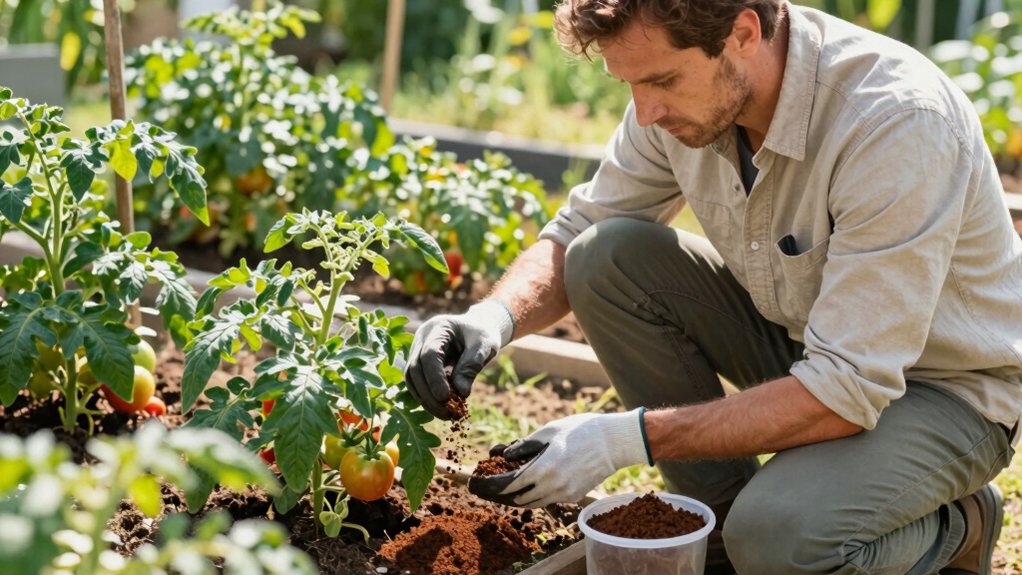
My favorite method is tossing used coffee grounds into a compost bin. They add nitrogen, speeding up decomposition.
If you don’t compost, mixing them directly into garden soil as a natural fertilizer works wonders for acid-loving plants like roses.
No garden? You can safely put them in the trash or compost. Just ensure they’re dry to avoid mess.
Remember, this simple choice prevents plumbing blockages. A 2022 plumbing survey found coffee grounds contribute to over 15% of kitchen sink clogs.
Get creative-they also deodorize fridges!
What to do if grounds clog sink
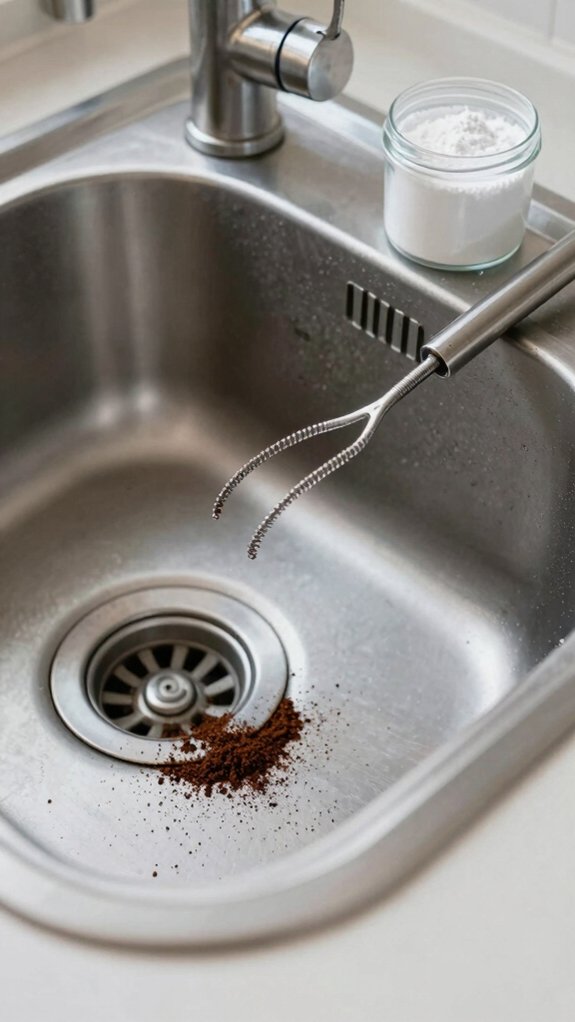
Even if you’ve accidentally sent coffee grounds down the drain and now face a clog, don’t panic. I can guide you through the safe, effective steps to take.
First, avoid chemical cleaners; as plumbers say, they rarely dissolve these clogs and can damage pipes. For a minor blockage, try a plunger. If that fails, a drain snake is your best DIY tool to manually pull the packed coffee grounds from your sink.
Stubborn clogs often need a pro. They might use hydrojetting, which clears everything safely.
To prevent future issues, regularly flush drains with hot water.
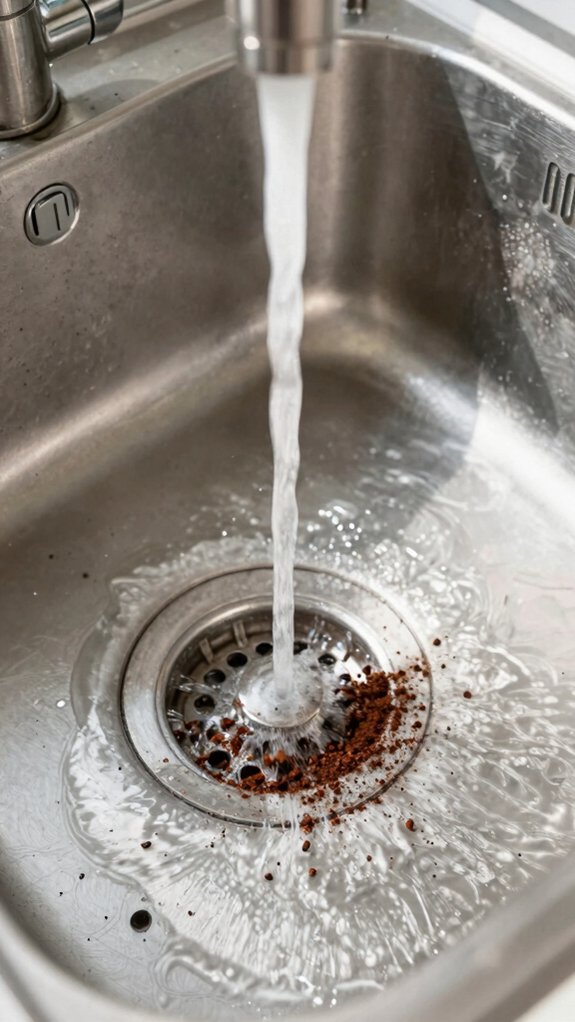
Does running hot water make it safe
| Common Belief | The Reality |
|---|---|
| Hot water dissolves grounds. | Grounds are insoluble and settle. |
| It flushes everything away. | It only moves the problem downstream. |
| It’s a quick fix. | It leads to costly plumbing issues. |
Stick to tossing them out, your pipes will thank you.
Frequently Asked Questions
Is It Okay to Throw Coffee Grounds Down the Sink?
No, I never put coffee grounds down the sink. They don’t dissolve and will clump up in your pipes, causing major clogs.
I always toss them in the trash or compost them instead.
How Should You Dispose of Coffee Grounds?
I see composting as the golden ticket, but I toss mine in the trash or use them to give my roses a boost, since sending grounds down the sink is a one-way street to clogged pipes.
Where Is the Best Place to Dispose of Used Coffee Grounds?
I would place them in my municipal food waste bin for composting.
If that is unavailable, I would add them directly to my own compost pile to enrich my garden’s soil, or dispose of them in the trash.
Do Coffee Grounds Dissolve?
No, they don’t dissolve. I wish they’d magically vanish, but instead they clump, settle, and host a stubborn sludge party in my pipes.
They’re the ultimate non-dissolving guests overstaying their welcome.
In Conclusion
No, you should never put coffee grounds down the sink, they’re a leading cause of clogs.
I learned this the hard way when my own pipes became as sluggish as a Monday morning without espresso. Just as a single bean needs the right grind to bloom, grounds need proper disposal.
Compost them instead, and you’ll nourish your garden, turning potential plumbing headaches into something that truly enriches your daily ritual.