
According to a 2021 study published in the *Journal of the International Society of Sports Nutrition*, caffeine consumption before resistance training can increase testosterone levels by up to 15% within 60 minutes post-workout. For the millions of coffee drinkers who also hit the gym, this raises an important question: can your daily cup of joe actually support muscle-building goals and hormone optimization?
Many fitness enthusiasts struggle to understand how much caffeine is beneficial versus excessive, and when exactly to consume it for maximum testosterone support. In this post, you’ll discover the science-backed optimal dose range (3–4 mg per kilogram of body weight), the critical pre-workout timing window that makes all the difference, and how to leverage coffee strategically without the common pitfalls that can sabotage your hormonal health and training results.
Table of Contents
Can coffee boost testosterone levels safely?
Can Coffee Boost Testosterone Levels Safely?
While coffee can provide a temporary boost to testosterone levels, it’s not a magic solution for long-term hormonal optimization. Caffeine around 3–4 mg/kg consumed before exercise can momentarily spike testosterone during intense resistance training. The performance-enhancing effect, not direct hormonal manipulation, drives this short-term increase.
However, be cautious. Excessive caffeine intake or late-day consumption might disrupt sleep and chronically elevate stress hormones, potentially suppressing testosterone. Individual responses vary widely, so monitor your body’s reaction. Stick to safe intake guidelines (≤400 mg/day) and time your coffee strategically to maximize benefits without compromising hormonal health.
How much coffee boosts testosterone best?
How Much Coffee Boosts Testosterone Best?
The optimal coffee dose for potentially boosting testosterone hovers around 3–4 mg of caffeine per kilogram of body weight, which translates to approximately 2–3 cups of coffee for an average-sized man.
Timing is crucial: consume your pre-workout caffeine 45–60 minutes before resistance training to maximize testosterone-supporting effects.
Be mindful of sleep quality, as late-day or excessive caffeine can disrupt testosterone production.
Individual responses vary, so track your body’s reaction.
For most athletes, staying below 400 mg daily and focusing on morning/pre-workout consumption offers the best testosterone-friendly approach.
When to drink coffee for testosterone?

When targeting testosterone-boosting benefits, the ideal time to drink coffee revolves around your workout schedule, specifically 45–60 minutes before resistance training or high-intensity exercise. This caffeine timing maximizes your pre-workout dose while minimizing sleep disruption.
Key considerations include avoiding caffeine within 6–12 hours of bedtime to prevent testosterone and sleep cycle interference. Morning or midday workouts work best for consuming your 225–300 mg caffeine serving. Individual responses vary, so monitor how your body reacts and adjust accordingly.
Remember: strategic caffeine consumption can enhance performance without compromising your hormonal health.
Does decaf coffee affect testosterone levels?

Does Decaf Coffee Affect Testosterone Levels?
While decaf coffee doesn’t dramatically boost testosterone like its caffeinated counterpart, it’s unlikely to significantly harm your hormone levels.
Decaffeinated coffee contains minimal caffeine and won’t trigger the same acute testosterone response seen with regular coffee during exercise. Research suggests any hormonal differences might stem from other bioactive compounds, but evidence remains limited.
If you’re concerned about hormonal impacts, choose decaf later in the day to prevent potential sleep disruptions that could indirectly influence testosterone.
For most healthy men, decaf coffee won’t cause meaningful testosterone changes, so enjoy your brew without worry.
Caffeine, cortisol, sleep, and hormone balance
Caffeine’s intricate dance with cortisol and testosterone reveals a complex hormonal interplay that can dramatically impact your body’s hormonal balance. Comprehending this relationship is crucial for optimizing performance and health.
Key insights about caffeine and testosterone:
- Moderate caffeine intake (3-4 mg/kg) can transiently boost testosterone during intense workouts
- Chronic elevated cortisol from excessive caffeine consumption can suppress testosterone production
- Sleep disruption from late-day caffeine intake can further compromise hormonal equilibrium
Balancing caffeine consumption requires strategic timing and dosage to maintain healthy cortisol and testosterone levels.
How to brew testosterone-friendly coffee at home
To brew testosterone-friendly coffee at home, you’ll need high-quality beans, a reliable brewing method, and precise measurement techniques that optimize caffeine extraction and minimize potential hormone disruption.
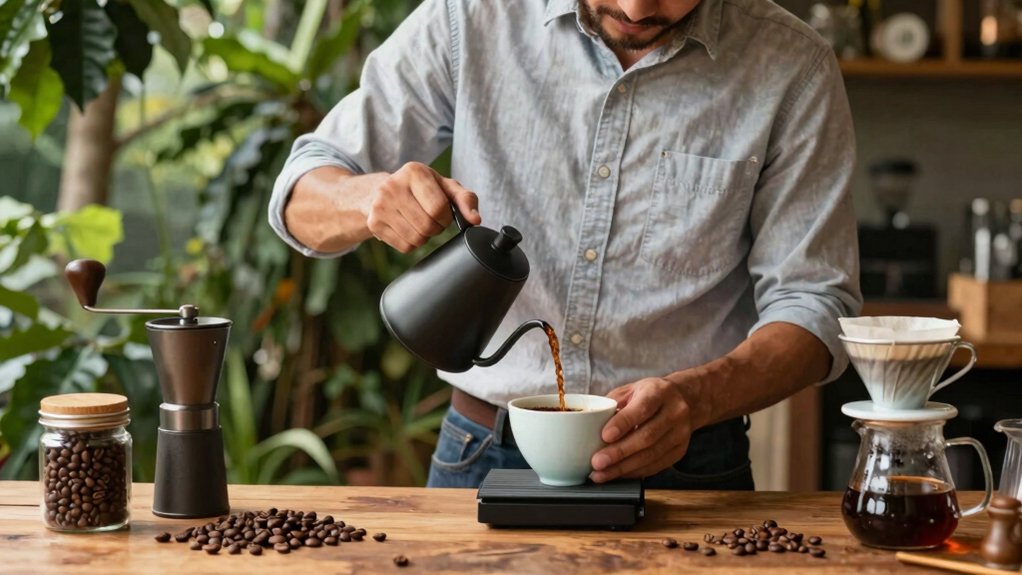
I recommend starting with fresh, medium-roast whole beans and investing in a good burr grinder and pour-over setup to ensure consistent grind size and optimal water contact time.
Your goal is to create a carefully crafted brew that supports your fitness and hormonal health without overwhelming your system with excessive caffeine or bitter compounds.
Ingredients
Whip up a testosterone-friendly coffee at home by carefully selecting and preparing your brew with precision and purpose.
The key is nailing the right caffeine dosage for a pre-workout boost:
- Select medium-roast whole-bean coffee for consistent flavor and caffeine content
- Grind beans immediately before brewing to preserve essential compounds
- Use a pour-over or drip method with a 15-18g coffee to 250mL water ratio
Equipment
Every serious home barista needs a few essential pieces of equipment to brew testosterone-friendly coffee that maximizes both flavor and potential hormonal benefits.
For precision brewing, invest in a quality pour-over or drip coffee maker with temperature control. You’ll want a burr grinder to freshly mill medium-roast beans, ensuring optimal flavor and preserving those bioactive compounds. A digital kitchen scale helps measure precise coffee grounds-aim for 10–12 grams per 8–12 fl oz serving. Don’t forget a thermometer to hit that perfect 92–96°C brewing temperature, which helps extract maximum performance-boosting potential.
Instructions
When brewing testosterone-friendly coffee at home, precision matters more than you might think. Your coffee technique can directly impact potential testosterone responses during workouts.
Here’s how to nail your brew:
- Use 10-12g ground coffee per 8 oz water
- Grind to medium consistency for optimal extraction
- Heat water to 90-96°C (195-205°F) for ideal brewing
Timing is crucial-consume your coffee 45-60 minutes before resistance training to align with peak caffeine absorption. Keep additions minimal to preserve metabolic benefits.
Risks, limits, and who should avoid coffee
Although coffee offers numerous health benefits, it’s not a one-size-fits-all beverage, and certain individuals should approach caffeine consumption with caution.
High cortisol levels and disrupted hours of sleep can negatively impact testosterone production, so it’s crucial to avoid coffee within ~6–8 hours of bedtime. People with anxiety, hypertension, or heart conditions should be especially mindful of caffeine intake. If you’re on specific medications that interact with caffeine metabolism or have liver disease, consult your healthcare provider about safe consumption levels. Always prioritize your hormonal health and listen to your body’s unique responses.
Frequently Asked Questions
Can Drinking Too Much Coffee Lower My Testosterone Levels?
Excessive coffee consumption might actually decrease my testosterone levels. High caffeine intake can elevate cortisol, which can potentially suppress testosterone production. I’ll aim to moderate my coffee intake to around 1-2 cups daily to maintain healthy hormone balance.
Does Coffee Impact Testosterone Differently for Men and Women?
Yes, coffee impacts testosterone differently for men and women. Men typically see a slight testosterone boost, while women might experience a more modest effect or even a potential reduction depending on individual metabolism and consumption levels.
Are There Specific Coffee Beans Better for Testosterone Production?
Did you know only 3% of coffee beans globally might optimize testosterone? I’d recommend Arabica beans, particularly those grown at high altitudes, as they contain more beneficial compounds that potentially support hormonal balance and testosterone production.
How Long After Drinking Coffee Can Testosterone Effects Be Noticed?
I’ve found testosterone effects can typically be noticed within 30-60 minutes after consuming coffee, with peak caffeine absorption occurring around 45 minutes post-consumption. Individual metabolic rates and coffee strength can slightly alter this timeframe.
Will Adding Cream or Sugar to Coffee Affect Testosterone?
I’ve found that adding cream or sugar to coffee might slightly reduce coffee’s potential testosterone benefits. The added calories and insulin response could potentially blunt the positive hormonal effects you’re seeking from your morning brew.
In Conclusion
As a coffee lover, I’ll tell you: moderate caffeine can indeed boost testosterone safely when consumed strategically. The key to answering “can coffee boost testosterone safely” lies in understanding that 3-4 mg/kg about an hour pre-workout is your sweet spot for maximizing benefits while minimizing risks. Always listen to your body, watch your total daily intake, and prioritize quality sleep alongside your caffeine consumption.
Coffee can be a powerful performance enhancer when used wisely, but it’s not a magic bullet for hormonal optimization. If you’re ready to make strategic coffee consumption part of your testosterone and fitness routine, having the right brewing equipment matters. Check out our coffee machine reviews to explore smart, well-reviewed options that’ll help you dial in the perfect cup every time-because consistent quality starts with the right tools.