


According to the National Coffee Association’s 2023 report, 62% of Americans drink coffee daily, yet most admit they don’t know how to properly prepare coffee with milk at home. If you’ve ever wondered why your homemade milk-based coffee tastes flat compared to your favorite café’s creamy cappuccino or latte, you’re not alone-the difference lies in technique, not equipment.
In this guide, I’ll show you exactly how to make coffee with milk using professional barista methods that work with any setup, from basic drip coffee makers to espresso machines. You’ll learn the secrets to perfectly frothing and steaming milk, the ideal milk-to-coffee ratios, and simple tricks that transform ordinary coffee into a café-quality beverage right in your own kitchen.
Table of Contents
How to make coffee with milk

Let me show you how to make a perfect coffee with milk, starting with gathering your key ingredients like coffee, milk, and optional sweeteners.
You’ll need basic equipment such as a coffee maker or brewing method, a milk heating tool, and something to froth your milk like a jar or handheld frother.
I’ll walk you through selecting your coffee brewing style, heating and frothing milk to the right temperature, and combining them in proportions that create a smooth, creamy beverage tailored to your taste.
Ingredients
When crafting the perfect coffee with milk, selecting the right ingredients is crucial for achieving that ideal balance of flavor and texture. Your frothy milk depends on choosing the right type: whole milk offers the creamiest mouthfeel, while 2% provides a lighter option. Nondairy alternatives like oat or soy milk foam beautifully for those seeking plant-based options.
| Milk Type | Texture | Flavor Profile |
|---|---|---|
| Whole Milk | Creamy | Rich, Full-bodied |
| 2% Milk | Light | Balanced |
| Oat Milk | Smooth | Slightly Sweet |
The key is experimenting to find your perfect milk-to-coffee ratio.
Equipment
Gearing up to craft the perfect milk-infused coffee starts with assembling the right equipment for a barista-worthy experience at home.
For frothy coffee, you’ll need a few key tools: a heat source like a stovetop or microwave, and a small saucepan or container. Specialized milk-frothing options include an espresso machine’s steam wand, an electric milk frother, or manual tools like a handheld battery frother, French press, or whisk.
No fancy gadgets? A mason jar works wonders-shake vigorously, then microwave to stabilize the foam.
Insider hint: A thermometer helps nail that perfect 60–65°C milk temperature.
Instructions
If you’re craving a creamy, café-style coffee at home, mastering the art of combining coffee and milk is easier than you might think.
Start by heating milk to around 150–160°F, just steaming but not boiling. Brew your espresso or instant coffee directly in the cup, then froth the warm milk by shaking in a sealed jar or using a handheld frother until you achieve a velvety microfoam. Pour the milk carefully into the coffee, holding back the foam with a spoon.
Top with the remaining foam for a professional touch. Add your favorite sweetener or spice, and enjoy immediately.
What milk froths best for coffee
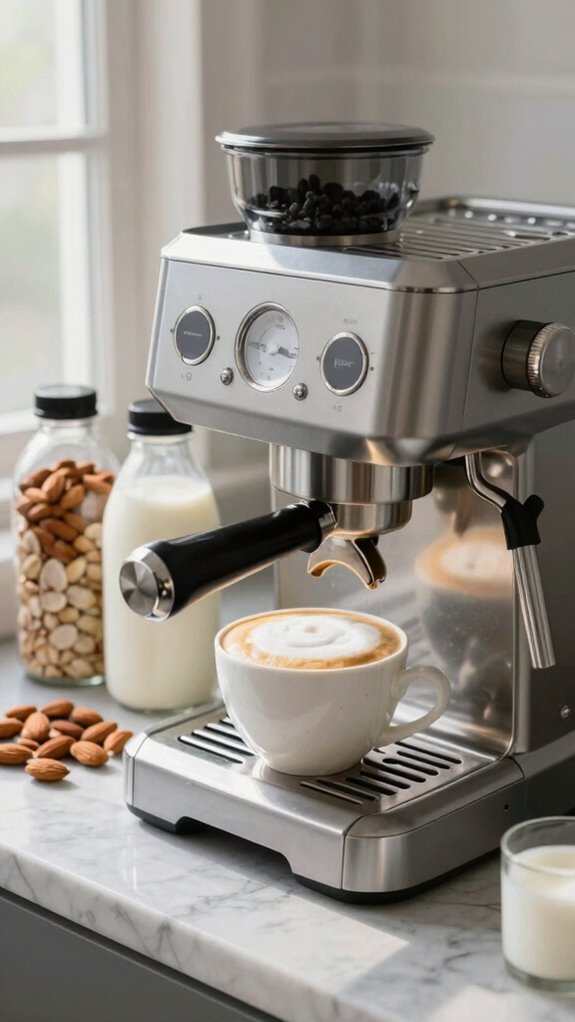
Ever wondered which milk creates the most heavenly coffee foam? Your perfect cup of coffee depends on milk choice! Here’s what I’ve learned as a coffee expert:
- Whole milk wins for creamy, stable foam
- Barista-style oat milk rivals dairy performance
- Skim milk produces largest but lighter bubbles
- Half-and-half creates rich, silky (but less voluminous) foam
- Fresh, cold milk froths best
Each milk type offers unique characteristics. Whole milk’s 3.5–4% fat content traps air perfectly, creating a velvety microfoam that transforms an ordinary drink into a luxurious experience.
Plant-based options like specially formulated oat milk now compete beautifully with traditional dairy, giving home baristas more delicious alternatives than ever before.
Latte, cappuccino, café au lait ratios

Comprehending milk-to-coffee ratios transforms home brewing from basic to barista-level craft, turning each cup into a personalized sensory experience. Your arm strength matters when steaming milk, but knowing precise ratios is key. Here’s a quick reference guide:
| Drink | Espresso | Milk | Foam |
|---|---|---|---|
| Latte | 30ml | 90ml | Thin layer |
| Cappuccino | 30ml | 30ml | 30ml |
| Café au Lait | None | Equal coffee/milk | None |
| Macchiato | 30ml | Dollop | Minimal |
Each ratio creates a unique texture and flavor profile, empowering you to craft coffee shop-quality beverages right in your kitchen.
Froth milk without a machine easily
Frequently, home baristas can create delightful milk foam without investing in expensive espresso machines, using simple kitchen tools and clever techniques.
Want to make frothy milk like a pro? Try these easy methods:
- Shake a jar with milk for 30 seconds
- Use a handheld frother for quick microfoam
- Whisk milk by hand until volume doubles
- Microwave shaken milk to increase foam
- Try the Dalgona method with instant coffee and sugar
Each technique transforms ordinary milk into a luxurious, creamy topping that’ll elevate your home coffee experience.
No fancy equipment needed-just creativity and a little practice.
How do I make iced milk coffee

How can you transform a simple glass of iced milk into a refreshing coffee masterpiece?
Start with a chilled glass packed ¾ full of ice, then grab your instant coffee.
Whip 2 tablespoons each of instant coffee, sugar, and hot water until thick and creamy-about 2-4 minutes with a mixer.
Pour cold whole milk over the ice, then crown your creation with the whipped coffee topping.
Pro tip: higher fat milk creates a creamier texture.
Want extra flair? Dust with cocoa or more instant coffee.
Enjoy your café-worthy iced milk coffee at home!
Milk coffee mistakes and quick fixes

Let’s dive right into the most common milk coffee pitfalls that can turn your brewing experience from smooth to sour. Here are the top mistakes when crafting a frothy drink:
- Overheating milk above 65°C kills sweetness and foam quality
- Using low-fat milk creates weak, unstable foam
- Overfilling your frothing container prevents proper aeration
- Incorrect whisking technique produces syrupy, inconsistent foam
- Attempting to whip brewed coffee instead of using instant powder
Quick fixes? Use whole milk, tilt your immersion blender, leave headspace in your container, and whisk vigorously for silky, professional-grade microfoam every time.
Dairy-free milk swaps for coffee lovers
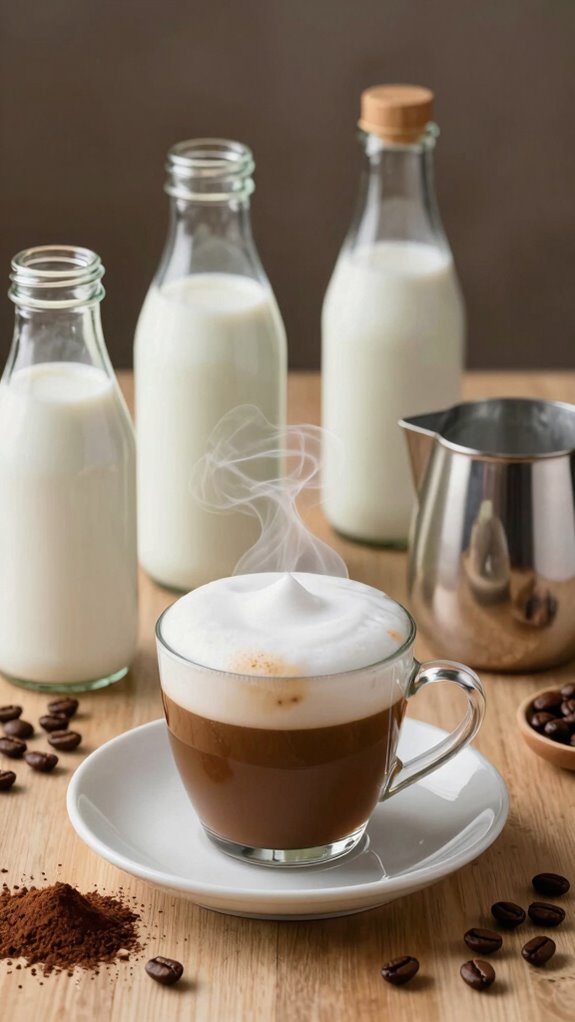
For those finding dairy milk less appealing or experiencing lactose intolerance, modern coffee culture offers a delightful array of plant-based milk alternatives that’ll transform your morning brew.
Oat milk emerges as the ultimate barista’s choice, delivering creamy microfoam and a smooth texture that rivals traditional whole milk. Its natural sugars and proteins create a dreamy coffee experience.
Whether you’re crafting lattes, cappuccinos, or cold brews, exploring these plant-based options can elevate your coffee game.
Each alternative-from soy to almond to coconut-brings unique flavor profiles and frothing capabilities, ensuring there’s a perfect match for every coffee lover’s palate.
Frequently Asked Questions
How to Get the Perfect Frothed Milk?
I’ll start with cold whole milk, steam it to 140–155°F, creating a whirlpool and introducing air gently. My technique stretches then polishes the milk, producing silky microfoam with tiny bubbles that’ll transform your coffee’s texture perfectly.
How to Make a Frothy Milk Coffee?
I whip my milk like a silky dance, then brew rich coffee’s embrace. Gently pour warm, frothed milk over espresso, holding back foam with a spoon. Scoop cloud-like bubbles atop, creating a creamy, dreamy morning symphony.
How to Make the Perfect Cup of Coffee With Milk?
I brew strong coffee, warm milk to 60-65°C, and create silky microfoam. I pour the milk slowly over espresso, balancing coffee-to-milk ratio around 1:3. The result? A perfectly creamy, frothy café-style coffee that’ll make your morning delightful.
Do You Add Frothed Milk Before or After Coffee?
I always add coffee first, then pour frothed milk. For lattes and cappuccinos, I start with espresso, add steamed milk, and top with microfoam, creating a creamy, layered drink that looks and tastes professional.
In Conclusion
Making coffee with milk at home is simpler than you might think, and with a little practice, you’ll be crafting café-quality drinks in your own kitchen. The key is finding the right balance of coffee strength, milk texture, and temperature that suits your taste. Whether you’re whisking milk by hand or using a dedicated frother, the techniques we’ve covered will help you achieve that perfect, creamy cup every time.
Ready to take your coffee game to the next level? Check out our coffee machine reviews to explore options that can make creating milky, frothy coffee even easier. From budget-friendly models to professional-grade equipment, we’ve tested and reviewed the best machines to help you find the perfect match for your morning routine and brewing style.