According to a 2023 study published in the Journal of Caffeine Research, over 85% of Americans consume caffeine daily, with energy drinks and coffee accounting for the vast majority of intake. Yet most people can’t accurately tell you which one delivers more caffeine or calories-a critical gap when you’re deciding what to reach for during that mid-afternoon slump.
If you’re constantly debating between Red Bull and coffee for your energy fix, this comparison will settle it once and for all. I’ll break down the exact caffeine content, calorie counts, and optimal use cases for each, so you can make an informed choice based on your specific energy needs, health goals, and daily routine.
Table of Contents
Red Bull vs coffee: which is better?
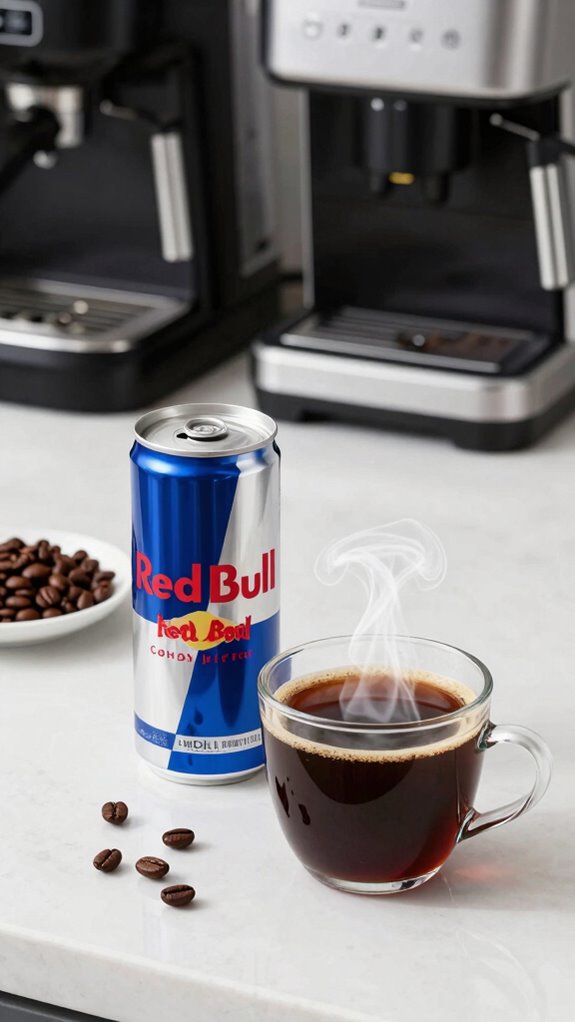
When it comes to choosing between Red Bull and coffee, coffee emerges as the healthier and more beneficial beverage for long-term consumption. Its rich polyphenol antioxidants combat oxidative stress and link to reduced risks of serious conditions like diabetes, Parkinson’s, and certain cancers. Caffeine intake limits recommend consuming no more than 400 mg per day to maximize health benefits while minimizing potential risks.
While Red Bull provides a quick energy surge, coffee offers more sustained mental focus and customizable strength. The natural brew supports metabolic health without the sugar crash and potential cardiovascular risks associated with energy drinks. For daily wellness and performance, coffee wins hands down – just moderate your intake and enjoy responsibly.
Caffeine, sugar, calories: a side-by-side comparison
Let’s break down the caffeine, sugar, and calorie content in Red Bull and coffee to help you make an informed beverage choice.
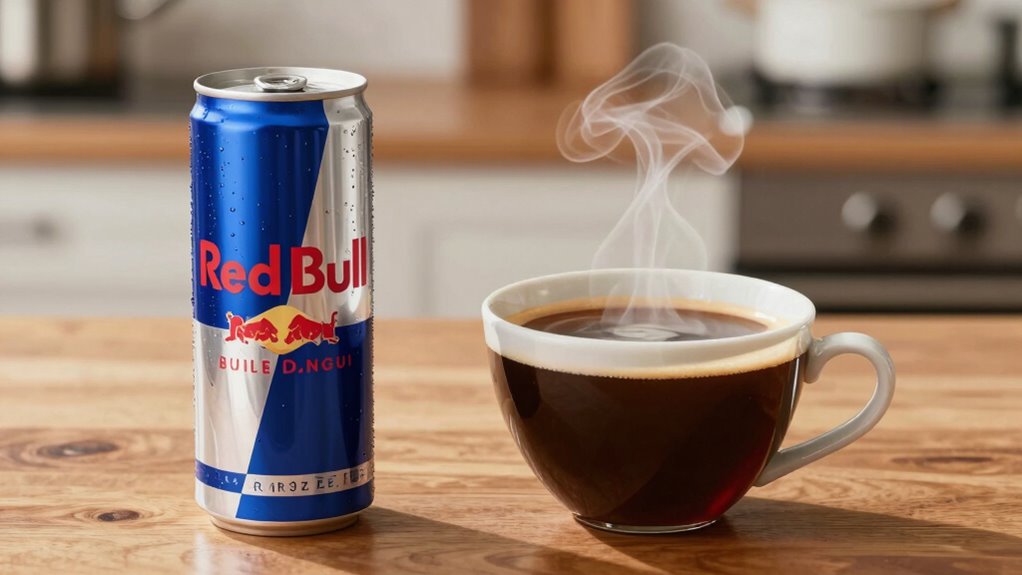
An 8.4 oz Red Bull packs 80 mg of caffeine and 27 grams of sugar, totaling 112 calories.
In contrast, a standard coffee offers 96 mg caffeine, zero sugar, and just 2 calories.
The sugar-free Red Bull version drops to 13 calories while maintaining 80 mg caffeine.
Coffee’s flexibility shines here-you can customize it without dramatically changing its nutritional profile.
Whether you’re seeking a quick energy boost or a mindful drink, grasping these metrics helps you choose wisely.
Nervous system stimulation from caffeine can enhance mental alertness and temporarily boost cognitive performance.
Health effects, safety, daily intake limits
Your daily caffeine choices significantly impact your health, making it crucial to understand the safety and intake limits of popular beverages like coffee and Red Bull. Caffeine receptor interactions demonstrate how these beverages interact with the body’s central nervous system, influencing alertness and energy levels. Most healthy adults can safely consume 400 mg of caffeine daily-roughly 4 cups of coffee or 5 Red Bull cans. Coffee offers natural benefits with minimal risks, providing antioxidants and essential nutrients. Red Bull, while convenient, contains high sugar and synthetic additives that may cause metabolic disruptions.
Pregnant women should avoid caffeine entirely.
For balanced energy, I recommend moderation: one to two cups of coffee or a single energy drink, prioritizing natural sources over processed alternatives.
When to pick Red Bull or coffee
Deciding between Red Bull and coffee depends on your specific energy needs, lifestyle, and personal preferences-each beverage offers unique advantages in different scenarios.
Consider these key selection criteria:
- Quick Energy: Red Bull wins for instant, portable caffeine when brewing isn’t possible.
- Caffeine Control: Coffee provides more flexibility in dosage and strength.
- Nutritional Profile: Red Bull offers added vitamins and stimulants; coffee provides natural antioxidants.
- Consumption Context: Choose based on environment-gas station pit stop or workplace break room.
Your ideal caffeine companion depends on the moment’s demands, balancing convenience, taste, and energy requirements.
Taste, convenience, cost: real-life tradeoffs
Navigating the real-world showdown between Red Bull and coffee reveals a complex landscape of flavor, accessibility, and budget considerations that impact daily energy consumption. Red Bull’s tangy, carbonated sweetness clashes with coffee’s rich, bitter comfort, making taste a personal battleground.
Convenience tilts toward Red Bull’s grab-and-go cans, while coffee demands brewing time and equipment.
Cost-wise, home-brewed coffee wins, offering multiple servings at a lower price point compared to single-serve energy drinks. Your lifestyle and preferences ultimately determine whether you’ll reach for a crisp Red Bull or a steaming mug of joe.
How to make a coffee energy drink
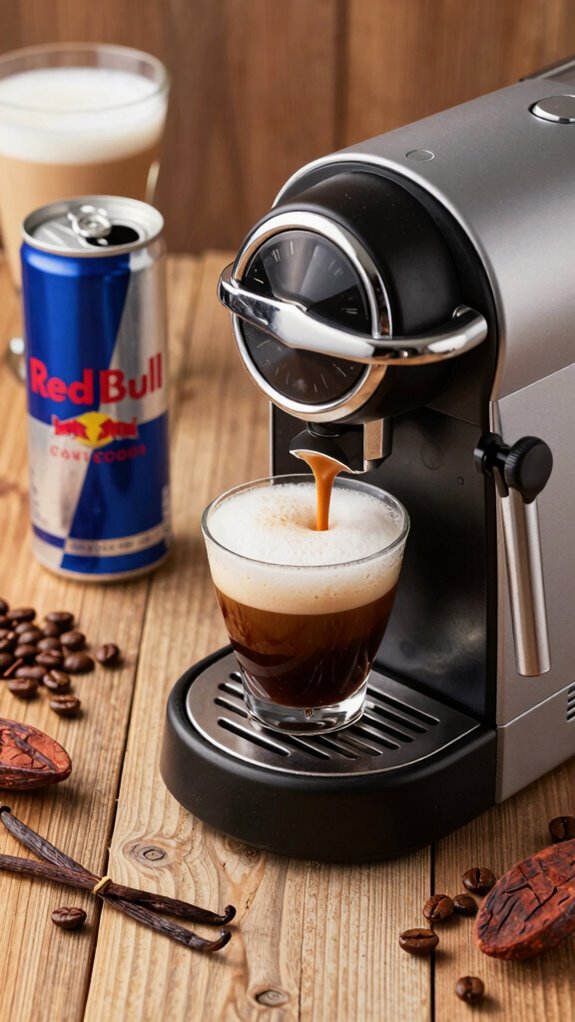
Want to craft your own coffee energy drink at home? I’ll walk you through the essential ingredients, simple equipment you’ll need, and straightforward instructions to transform your morning brew into a performance-boosting beverage.
Whether you’re looking to power up before a workout or need a quick energy boost, making your own coffee energy drink is easier than you might think.
Ingredients
Crafting a killer coffee energy drink starts with grasping its core ingredients and strategic combinations. Your custom brew needs precise components for maximum performance:
- Caffeine base: 120-180 ml strong coffee or 1-2 espresso shots
- Energy boosters: Simple sugars like honey or syrup for quick glucose
- Protein source: Dairy or plant milk (150-250 ml) for sustained energy
- Performance enhancers: Electrolytes, spices like cinnamon, or a dash of citrus
The magic happens when you balance these elements. A well-crafted coffee energy drink delivers rapid and sustained energy, trumping store-bought alternatives with personalized nutrition and fresher ingredients.
Equipment
Building your perfect coffee energy drink requires strategic equipment selection that transforms basic ingredients into a powerful, flavor-packed beverage.
You’ll need a drip coffee maker or espresso machine for brewing a strong caffeine base, paired with a quality grinder to optimize extraction.
Chilling and storage are crucial.
A refrigerator, insulated dispensers, and food-grade kegs help maintain your coffee’s quality.
For that premium touch, consider a nitrogen tank and infusion module to create a creamy, nitro-style drink with a luxurious texture that rivals commercial energy beverages.
Precision matters: use digital scales, blenders, and filtration tools to craft your ultimate coffee energy drink.
Instructions
Since creating a personalized coffee energy drink is easier than most people realize, I’ll walk you through a straightforward process that transforms basic ingredients into a performance-boosting beverage.
Here’s how to craft your perfect coffee energy drink:
- Brew a strong espresso or concentrated coffee (50 ml)
- Add 150-250 ml of water, milk, or plant milk
- Mix in 1 tsp honey or banana for quick-absorbing carbs
- Optional: Blend with ice for a frappé-style texture
Pro tip: Consume 20-45 minutes before activity to align caffeine’s peak blood levels with performance.
Adjust sweetness and creaminess to your taste, transforming a simple coffee into a customized energy booster.
Frequently Asked Questions
Can I Mix Red Bull With Coffee for Extra Energy?
I wouldn’t recommend mixing Red Bull and coffee. You’ll spike caffeine intake beyond safe limits, risking jitters, heart racing, and potential health issues. Stick to one caffeinated drink at a time for safer energy boost.
Does Red Bull Have More Side Effects Than Coffee?
By sheer coincidence, I’ve researched this extensively. Yes, Red Bull has more side effects than coffee-it’s riskier due to higher sugar content, added stimulants like taurine, and greater cardiovascular strain compared to regular coffee’s milder impact.
Is Red Bull Bad for Your Heart Compared to Coffee?
Red Bull’s higher sugar and taurine content make it worse for heart health compared to coffee. I’d recommend coffee for its antioxidants and lower cardiovascular risks, especially if you’re concerned about long-term heart wellness.
How Long Do Red Bull and Coffee Energy Effects Last?
Like a rocket igniting, Red Bull and coffee launch your energy for 3-6 hours. I’ll feel the strongest boost within the first hour, with effects tapering off gradually. Individual metabolism and tolerance can shift this duration.
Which Drink Is Better for Workout Performance and Focus?
I’d choose coffee for workout performance and focus. Its higher caffeine content and natural antioxidants provide sustained energy and cognitive benefits, without the sugar crash, making it superior for serious athletes and mental clarity.
In Conclusion
Coffee wins for health and sustained energy, but Red Bull has its place when you need a quick, portable boost. When weighing Red Bull vs. coffee, the answer depends on your lifestyle and goals-whether it’s a mindful morning brew or an emergency energy kick. The key is moderation, listening to your body, and understanding that not all caffeine sources are created equal.
If you’re leaning toward making coffee your daily go-to, investing in a quality coffee machine can transform your routine. Check out our coffee machine reviews to explore smart, well-reviewed options that deliver consistently great coffee at home, helping you skip the sugar-laden shortcuts while enjoying sustained energy throughout your day.